One Seat, Many Questions: Congress’s Ballot Test
The Constitution does not belong to any single political party.
Total Views |


The Congress party has suffered a significant political setback that cannot be brushed aside with another press conference, another street protest or another allegation against the Election Commission. The Legislative Council elections across Uttar Pradesh, Bihar, Maharashtra and Karnataka covered 28 constituencies. Congress eventually won just one seat in Maharashtra. The party, however, failed to win a single seat in Karnataka, where it is in power. The elections were conducted using ballot papers the very system Congress leaders have repeatedly advocated while questioning the credibility of electronic voting machines.
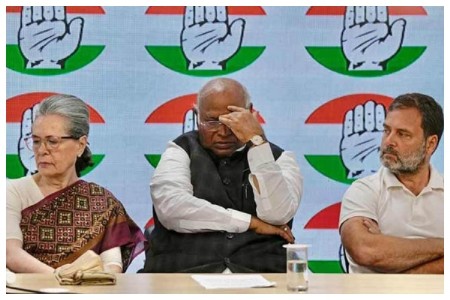 The result demands a more nuanced assessment than the initial claim that Congress drew a complete blank. Its Nagpur victory must be acknowledged. But one victory cannot conceal the party’s wider difficulties, particularly its inability to secure any of the four seats in Karnataka. The question confronting Congress is straightforward - if the electoral system itself is the problem, how does it explain its poor performance when votes are cast on ballot papers? The ballot papers were there, the opportunity to win was there, and the verdict was overwhelmingly unfavourable to Congress in most of the constituencies it contested.
When the Narrative Collides with the Ballot
Rahul Gandhi and his circle have invested considerable political energy in presenting Indian democracy as being under siege. Their campaign has repeatedly questioned electoral institutions, raised allegations of vote theft and demanded accountability from the Election Commission. Opposition to the government is entirely legitimate in a democracy. Questioning institutions is equally legitimate when supported by evidence. But allegations cannot become a substitute for political organisation, public credibility and electoral performance.
The MLC results expose the limitations of a campaign that seeks to explain political setbacks primarily through allegations of institutional manipulation. Congress cannot expect voters to accept every electoral defeat as evidence of a defective system while treating its victories as proof of democratic legitimacy. Democracy cannot operate according to such convenient rules.
The BJP has highlighted the irony of Congress performing poorly despite the use of ballot papers. Prime Minister Narendra Modi also drew attention to this contradiction after the results emerged. The political point was clear - a party that repeatedly demands a return to paper ballots must also explain its performance when that method is used.
But the larger issue goes beyond the BJP’s criticism. Congress must distinguish between legitimate questions about electoral transparency and allegations that require independent proof. If it believes that a particular election was compromised, it must present evidence and pursue the appropriate legal remedies. An unfavourable result, on its own, does not establish electoral wrongdoing.
A political narrative cannot survive indefinitely without confronting the evidence. Congress’s Nagpur victory demonstrates that the party remains capable of winning a contest. Its overall performance, however, raises questions about the effectiveness of its wider political strategy and its ability to convert its national campaign into electoral support.
Karnataka: The Most Embarrassing Setback
The most politically significant setback came from Karnataka. Congress is in power in the state, and party president Mallikarjun Kharge hails from Karnataka. But the party failed to win even one of the four Legislative Council seats contested there. The BJP retained three constituencies, while the JD(S), backed by the BJP, wrested the Bengaluru Teachers’ constituency from Congress. The BJP–JD(S) alliance thus swept all four seats.
This was not merely a failure to expand the party’s political footprint. Congress lost a seat it had held and failed to dislodge its opponents from the other three. The outcome raises questions about its organisation, candidate selection, campaign strategy and ability to mobilise support among teachers and graduates sections of the electorate whose professional concerns require sustained engagement.
For Kharge, the results carry an additional political dimension. The party president has been at the forefront of Congress’s attacks on Prime Minister Narendra Modi and the BJP. But the party’s failure to secure a single seat in his home state places its own leadership under scrutiny. A national president cannot treat electoral setbacks as somebody else’s responsibility while demanding accountability from political opponents.
The timing also invites attention. Just days before the voting, Kharge made a controversial remark about Modi at a Patna event. Responding to a heckler, he declared, “Modi ka baap bhi jayega.” The language triggered criticism over the standards expected from the head of a national political party.
It would be unjustified to claim that this remark determined how voters cast their ballots. The results do not establish such a causal connection. Nevertheless, the political contrast is striking: while the Congress president employed provocative language against the Prime Minister, his party was suffering a complete defeat in his home state.
The episode raises a broader question about political priorities. Does aggressive rhetoric strengthen a party’s electoral appeal, or does it distract from the organisational work necessary to win elections? The MLC results cannot answer that question conclusively, but they make introspection imperative.
Kharge’s position makes the Karnataka outcome particularly difficult to ignore. His criticism of Modi is part of legitimate political contestation; his party’s performance must be judged by the same democratic standards it invokes against the government. Congress cannot demand accountability from others while insulating its own leadership from questions about electoral failures.
Resignations for Others, Introspection for Congress?
Congress has demanded the resignations of Modi, Union Home Minister Amit Shah and Chief Election Commissioner Gyanesh Kumar over its allegations concerning electoral irregularities. Its leadership has also advocated changes to the electoral process, including a return to paper ballots.
But the latest results have turned the spotlight back on Congress itself. If the party believes that electoral arrangements must be changed to ensure fairness, it must confront the fact that the ballot-paper system has not delivered the victories it sought in most of the constituencies it contested.
The demand for resignations is a serious political instrument, not a substitute for evidence. Allegations of electoral wrongdoing must be examined on their merits, and proven irregularities must be addressed through appropriate constitutional and legal mechanisms. But an opposition party cannot presume that an unfavourable result establishes wrongdoing by the institutions responsible for conducting elections.
The Election Commission cannot reasonably be expected to face demands for resignation every time an opposition party loses. Nor can the Prime Minister and Home Minister automatically be held responsible for every electoral setback suffered by Congress. If the party believes a specific election was compromised, it must substantiate its allegations.
Otherwise, the repeated invocation of Vote Chori risks becoming a political slogan rather than a credible case for electoral reform.
There is a further contradiction. Congress speaks of saving the Constitution and protecting democratic institutions, yet its public campaign frequently places sweeping allegations at the centre of political mobilisation. Constitutional democracy requires scrutiny, but it also demands evidence, institutional responsibility and acceptance of lawful electoral outcomes.
Kharge, as party president, must recognise that this responsibility extends to the language and conduct of his own party. Demanding resignations from constitutional functionaries while failing to secure a single seat in Karnataka creates an uncomfortable contrast. It does not invalidate every criticism Congress makes, but it makes the case for greater internal accountability all the more compelling.
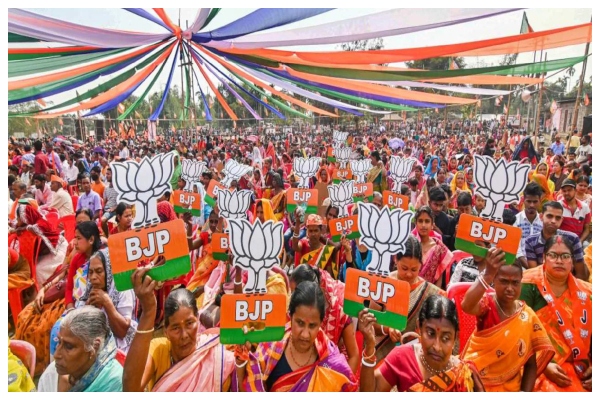
The Constitution does not belong to any single political party. Neither does democracy. Congress is entitled to question the government, criticise the Election Commission and mobilise citizens on matters of public concern. The same democratic framework, however, requires the party to accept the electorate’s verdict and recognise the legitimacy of its political opponents.
Rahul Gandhi has made Save Democracy and Save the Constitution prominent themes of his political campaign. But such slogans cannot replace the difficult work of rebuilding a political organisation, addressing voters’ concerns and presenting a convincing programme of governance.
Criticism of the government is not anarchy, and peaceful protest is a democratic right. But when allegations are repeatedly presented as established facts without sufficient evidence, political debate risks becoming a contest of accusations rather than an examination of verifiable claims. Congress must distinguish between exposing genuine irregularities and treating electoral defeat itself as proof of a compromised system.
The results across the four states do not establish that every Congress allegation is false. Nor do they constitute a nationwide referendum on Rahul Gandhi or Kharge. The elections involved specific teachers’ and graduates’ constituencies, and the results must be interpreted within that context. Congress’s Nagpur victory is a reminder that the party cannot simply be written off. At the same time, its limited success across the constituencies it contested, coupled with the complete defeat in Karnataka, represents a setback that demands serious examination.
The response from Karnataka’s Congress leadership has acknowledged the need to review the defeat and take corrective measures. That is a more constructive approach than assuming that voters, the voting system or constitutional institutions must be at fault. The party must ask why its candidates failed to secure support and what organisational shortcomings contributed to the outcome.
The Verdict Cannot Be Edited Away
The MLC elections offer Congress an opportunity to reconsider its political strategy. Repeatedly questioning institutions may generate headlines, but headlines are not votes. Dramatic speeches may energise party workers, but they cannot substitute for effective organisation, credible leadership or sustained engagement with voters.
The party must also understand that respect for constitutional institutions is not a demand made only of those in government. It applies equally to the Opposition. The right to criticise an institution does not confer a licence to undermine its credibility without substantiating allegations. Likewise, the right to challenge a government does not justify treating every unfavourable verdict as illegitimate.
The message from these elections is not that Congress has won nothing. It has won one seat in Nagpur, and that fact must be stated accurately. The message is that one victory cannot obscure the broader electoral challenge confronting the party, particularly in Karnataka, where the BJP–JD(S) alliance swept all four seats.
Congress can continue to demand accountability from Modi, Shah and the Election Commission. But it must be equally prepared to hold its own leadership accountable. Kharge’s position as party president makes this responsibility especially significant. His rhetoric against the Prime Minister may command attention, but political credibility ultimately depends on organisational strength, public engagement and electoral performance.
Democracy offers every party the right to oppose, question and campaign for change. It also requires every party to examine its shortcomings when voters reject its candidates. The Nagpur victory should be acknowledged; the Karnataka defeat cannot be ignored. Congress now faces a choice: continue to make electoral institutions the principal explanation for its setbacks, or undertake the hard work of winning back voters’ confidence.
The verdict cannot be edited away. Neither can it be reduced to a convenient slogan. The ballot papers have delivered a result that Congress must confront with honesty about its one victory, clarity about its wider losses and a willingness to introspect.
When the Narrative Collides with the Ballot
Rahul Gandhi and his circle have invested considerable political energy in presenting Indian democracy as being under siege. Their campaign has repeatedly questioned electoral institutions, raised allegations of vote theft and demanded accountability from the Election Commission. Opposition to the government is entirely legitimate in a democracy. Questioning institutions is equally legitimate when supported by evidence. But allegations cannot become a substitute for political organisation, public credibility and electoral performance.
The MLC results expose the limitations of a campaign that seeks to explain political setbacks primarily through allegations of institutional manipulation. Congress cannot expect voters to accept every electoral defeat as evidence of a defective system while treating its victories as proof of democratic legitimacy. Democracy cannot operate according to such convenient rules.
The BJP has highlighted the irony of Congress performing poorly despite the use of ballot papers. Prime Minister Narendra Modi also drew attention to this contradiction after the results emerged. The political point was clear - a party that repeatedly demands a return to paper ballots must also explain its performance when that method is used.
But the larger issue goes beyond the BJP’s criticism. Congress must distinguish between legitimate questions about electoral transparency and allegations that require independent proof. If it believes that a particular election was compromised, it must present evidence and pursue the appropriate legal remedies. An unfavourable result, on its own, does not establish electoral wrongdoing.
A political narrative cannot survive indefinitely without confronting the evidence. Congress’s Nagpur victory demonstrates that the party remains capable of winning a contest. Its overall performance, however, raises questions about the effectiveness of its wider political strategy and its ability to convert its national campaign into electoral support.
Karnataka: The Most Embarrassing Setback
The most politically significant setback came from Karnataka. Congress is in power in the state, and party president Mallikarjun Kharge hails from Karnataka. But the party failed to win even one of the four Legislative Council seats contested there. The BJP retained three constituencies, while the JD(S), backed by the BJP, wrested the Bengaluru Teachers’ constituency from Congress. The BJP–JD(S) alliance thus swept all four seats.
This was not merely a failure to expand the party’s political footprint. Congress lost a seat it had held and failed to dislodge its opponents from the other three. The outcome raises questions about its organisation, candidate selection, campaign strategy and ability to mobilise support among teachers and graduates sections of the electorate whose professional concerns require sustained engagement.
For Kharge, the results carry an additional political dimension. The party president has been at the forefront of Congress’s attacks on Prime Minister Narendra Modi and the BJP. But the party’s failure to secure a single seat in his home state places its own leadership under scrutiny. A national president cannot treat electoral setbacks as somebody else’s responsibility while demanding accountability from political opponents.
The timing also invites attention. Just days before the voting, Kharge made a controversial remark about Modi at a Patna event. Responding to a heckler, he declared, “Modi ka baap bhi jayega.” The language triggered criticism over the standards expected from the head of a national political party.
It would be unjustified to claim that this remark determined how voters cast their ballots. The results do not establish such a causal connection. Nevertheless, the political contrast is striking: while the Congress president employed provocative language against the Prime Minister, his party was suffering a complete defeat in his home state.
The episode raises a broader question about political priorities. Does aggressive rhetoric strengthen a party’s electoral appeal, or does it distract from the organisational work necessary to win elections? The MLC results cannot answer that question conclusively, but they make introspection imperative.
Kharge’s position makes the Karnataka outcome particularly difficult to ignore. His criticism of Modi is part of legitimate political contestation; his party’s performance must be judged by the same democratic standards it invokes against the government. Congress cannot demand accountability from others while insulating its own leadership from questions about electoral failures.
Resignations for Others, Introspection for Congress?
Congress has demanded the resignations of Modi, Union Home Minister Amit Shah and Chief Election Commissioner Gyanesh Kumar over its allegations concerning electoral irregularities. Its leadership has also advocated changes to the electoral process, including a return to paper ballots.
But the latest results have turned the spotlight back on Congress itself. If the party believes that electoral arrangements must be changed to ensure fairness, it must confront the fact that the ballot-paper system has not delivered the victories it sought in most of the constituencies it contested.
The demand for resignations is a serious political instrument, not a substitute for evidence. Allegations of electoral wrongdoing must be examined on their merits, and proven irregularities must be addressed through appropriate constitutional and legal mechanisms. But an opposition party cannot presume that an unfavourable result establishes wrongdoing by the institutions responsible for conducting elections.
The Election Commission cannot reasonably be expected to face demands for resignation every time an opposition party loses. Nor can the Prime Minister and Home Minister automatically be held responsible for every electoral setback suffered by Congress. If the party believes a specific election was compromised, it must substantiate its allegations.
Otherwise, the repeated invocation of Vote Chori risks becoming a political slogan rather than a credible case for electoral reform.
There is a further contradiction. Congress speaks of saving the Constitution and protecting democratic institutions, yet its public campaign frequently places sweeping allegations at the centre of political mobilisation. Constitutional democracy requires scrutiny, but it also demands evidence, institutional responsibility and acceptance of lawful electoral outcomes.
Kharge, as party president, must recognise that this responsibility extends to the language and conduct of his own party. Demanding resignations from constitutional functionaries while failing to secure a single seat in Karnataka creates an uncomfortable contrast. It does not invalidate every criticism Congress makes, but it makes the case for greater internal accountability all the more compelling.
Democracy Is More Than a Slogan
The Constitution does not belong to any single political party. Neither does democracy. Congress is entitled to question the government, criticise the Election Commission and mobilise citizens on matters of public concern. The same democratic framework, however, requires the party to accept the electorate’s verdict and recognise the legitimacy of its political opponents.
Rahul Gandhi has made Save Democracy and Save the Constitution prominent themes of his political campaign. But such slogans cannot replace the difficult work of rebuilding a political organisation, addressing voters’ concerns and presenting a convincing programme of governance.
Criticism of the government is not anarchy, and peaceful protest is a democratic right. But when allegations are repeatedly presented as established facts without sufficient evidence, political debate risks becoming a contest of accusations rather than an examination of verifiable claims. Congress must distinguish between exposing genuine irregularities and treating electoral defeat itself as proof of a compromised system.
The results across the four states do not establish that every Congress allegation is false. Nor do they constitute a nationwide referendum on Rahul Gandhi or Kharge. The elections involved specific teachers’ and graduates’ constituencies, and the results must be interpreted within that context. Congress’s Nagpur victory is a reminder that the party cannot simply be written off. At the same time, its limited success across the constituencies it contested, coupled with the complete defeat in Karnataka, represents a setback that demands serious examination.
The response from Karnataka’s Congress leadership has acknowledged the need to review the defeat and take corrective measures. That is a more constructive approach than assuming that voters, the voting system or constitutional institutions must be at fault. The party must ask why its candidates failed to secure support and what organisational shortcomings contributed to the outcome.
The Verdict Cannot Be Edited Away
The MLC elections offer Congress an opportunity to reconsider its political strategy. Repeatedly questioning institutions may generate headlines, but headlines are not votes. Dramatic speeches may energise party workers, but they cannot substitute for effective organisation, credible leadership or sustained engagement with voters.
The party must also understand that respect for constitutional institutions is not a demand made only of those in government. It applies equally to the Opposition. The right to criticise an institution does not confer a licence to undermine its credibility without substantiating allegations. Likewise, the right to challenge a government does not justify treating every unfavourable verdict as illegitimate.
The message from these elections is not that Congress has won nothing. It has won one seat in Nagpur, and that fact must be stated accurately. The message is that one victory cannot obscure the broader electoral challenge confronting the party, particularly in Karnataka, where the BJP–JD(S) alliance swept all four seats.
Congress can continue to demand accountability from Modi, Shah and the Election Commission. But it must be equally prepared to hold its own leadership accountable. Kharge’s position as party president makes this responsibility especially significant. His rhetoric against the Prime Minister may command attention, but political credibility ultimately depends on organisational strength, public engagement and electoral performance.
Democracy offers every party the right to oppose, question and campaign for change. It also requires every party to examine its shortcomings when voters reject its candidates. The Nagpur victory should be acknowledged; the Karnataka defeat cannot be ignored. Congress now faces a choice: continue to make electoral institutions the principal explanation for its setbacks, or undertake the hard work of winning back voters’ confidence.
The verdict cannot be edited away. Neither can it be reduced to a convenient slogan. The ballot papers have delivered a result that Congress must confront with honesty about its one victory, clarity about its wider losses and a willingness to introspect.