CJP’s Credibility vs Ground Reality
There is also a broader Indian political reality that any movement seeking a national audience has to understand.
NewsBharati 03-Oct-2026 11:32:37 AM
Total Views |


There is a political lesson in the agitation of the Cockroach Janta Party (CJP) that goes far beyond the number of people who gathered in Mumbai or Delhi. The real story is the contrast between the image created by social media and the reality on the ground. CJP had projected October 2 as a decisive day in its campaign against Chief Election Commissioner Gyanesh Kumar and the Special Intensive Revision (SIR) of electoral rolls. But the expected groundswell did not materialise.
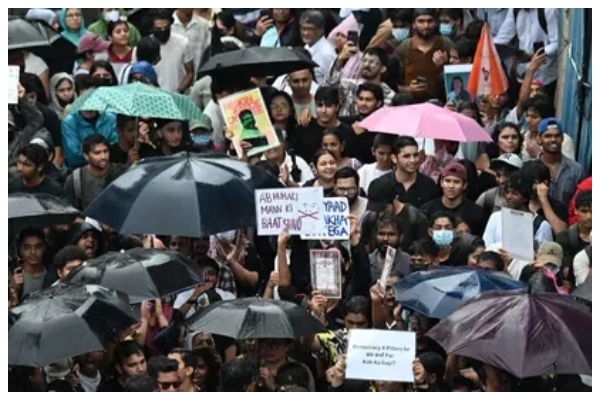 The question is not merely why the protest remained limited. The larger question is why a movement that had acquired visibility earlier has apparently lost some of its shine and appeal. The answer may lie partly in the issue CJP has chosen to fight.
SIR is not an obscure administrative exercise. It goes to the heart of the electoral system - who is entitled to vote and whether electoral rolls contain bogus, duplicate, deceased or otherwise ineligible entries. The Election Commission has defended SIR precisely on these grounds. More significantly, an India Today-CVoter Mood of the Nation survey conducted between July 1 and August 25 found that 60.2 per cent of respondents considered SIR necessary for removing bogus and duplicate voters. Another 19.5 per cent considered it necessary but believed that it was being implemented with bias. Only 10.5 per cent said it was designed to remove a particular group.That distinction is crucial.
A citizen can demand transparency in SIR, oppose wrongful deletion of a genuine voter and question the manner of implementation without opposing the basic principle of cleaning electoral rolls. CJP's campaign, however, has made the resignation of the CEC the central political demand. It is therefore attempting to mobilise people against an exercise whose basic objective appears to enjoy substantial public acceptance.
This is where the CJP may have misread the public mood.
Its earlier campaign had a much simpler political proposition. Young people angry over examination irregularities and alleged paper leaks could immediately identify with the grievance. The problem was tangible, personal and easily understood. SIR is fundamentally different. It requires citizens to engage with electoral rolls, documentation, verification procedures, institutional responsibility and competing claims about disenfranchisement. It is much harder to convert such an issue into spontaneous street mobilisation.
There is another factor that political movements often discover only after the cameras disappear - social media is not organisation. A movement can dominate X, Instagram or YouTube. It can generate millions of impressions, attract celebrities, produce viral videos and create the impression of a political wave. But a digital audience is not automatically a political cadre. A follower is not necessarily a worker. A hashtag can create visibility; it cannot, by itself, create sustained mobilisation.
The real test is what happens when people have to leave their phones, leave their homes and assemble on the ground.
Indian political history provides enough evidence of the difference. The Congress built an extensive grassroots structure. The RSS developed its shakha network. Communist parties created cadres, unions and local organisational networks. Other social and political movements, irrespective of their ideological differences, have survived because they developed people who could organise at the neighbourhood, village and constituency levels. One may agree or disagree with these organisations, but their history demonstrates one elementary truth of mass politics: organisation converts sentiment into mobilisation.
That resistance also operates in democratic politics. Indians can be intensely argumentative about governments, elections and institutions. They can oppose a policy, protest against an official and demand accountability. But that does not mean that every allegation against a constitutional institution will automatically acquire public legitimacy.
This is particularly relevant to the Election Commission.
Opponents of SIR should understand that the gap between the allegation and public acceptance cannot be bridged merely through social-media campaigns. This may explain why the October 2 mobilisation looks different from the earlier CJP phenomenon. The organisation may still possess digital visibility. But visibility should not be confused with mass political legitimacy. Compared with the expectations created by CJP's own rhetoric, the mobilisation appears to have fallen short of a broad-based national movement. That gap matters.
CJP's October 2 experience should therefore be read as a reality check. It has not merely lost organisational momentum. It has lost the political simplicity that made its earlier movement attractive. It is now fighting SIR at a time when a majority of surveyed Indians support the basic purpose of the exercise. And it has discovered that social-media visibility cannot automatically be converted into physical mobilisation.
The larger lesson is simple. The public opinion cannot be manufactured simply because something trends online. Ultimately, politics returns to the oldest instrument of mass mobilisation and organisation.
CJP has miserably failed to establish credibility and credentials. Its interventions are increasingly viewed with suspicion, with critics questioning whether it serves as a vehicle for interests that lie beyond India’s democratic and constitutional framework. The events of October 2 are therefore more than the failure of one agitation; they are an indicator of a changing public mood. People are becoming increasingly unwilling to rely on forces whose intentions, affiliations and sources of influence remain under question. In a democracy, credibility cannot be demanded it has to be earned, and once public trust begins to disappear, no amount of social-media noise can substitute for it.
SIR is not an obscure administrative exercise. It goes to the heart of the electoral system - who is entitled to vote and whether electoral rolls contain bogus, duplicate, deceased or otherwise ineligible entries. The Election Commission has defended SIR precisely on these grounds. More significantly, an India Today-CVoter Mood of the Nation survey conducted between July 1 and August 25 found that 60.2 per cent of respondents considered SIR necessary for removing bogus and duplicate voters. Another 19.5 per cent considered it necessary but believed that it was being implemented with bias. Only 10.5 per cent said it was designed to remove a particular group.That distinction is crucial.
A citizen can demand transparency in SIR, oppose wrongful deletion of a genuine voter and question the manner of implementation without opposing the basic principle of cleaning electoral rolls. CJP's campaign, however, has made the resignation of the CEC the central political demand. It is therefore attempting to mobilise people against an exercise whose basic objective appears to enjoy substantial public acceptance.
This is where the CJP may have misread the public mood.
Its earlier campaign had a much simpler political proposition. Young people angry over examination irregularities and alleged paper leaks could immediately identify with the grievance. The problem was tangible, personal and easily understood. SIR is fundamentally different. It requires citizens to engage with electoral rolls, documentation, verification procedures, institutional responsibility and competing claims about disenfranchisement. It is much harder to convert such an issue into spontaneous street mobilisation.
There is another factor that political movements often discover only after the cameras disappear - social media is not organisation. A movement can dominate X, Instagram or YouTube. It can generate millions of impressions, attract celebrities, produce viral videos and create the impression of a political wave. But a digital audience is not automatically a political cadre. A follower is not necessarily a worker. A hashtag can create visibility; it cannot, by itself, create sustained mobilisation.
The real test is what happens when people have to leave their phones, leave their homes and assemble on the ground.
Indian political history provides enough evidence of the difference. The Congress built an extensive grassroots structure. The RSS developed its shakha network. Communist parties created cadres, unions and local organisational networks. Other social and political movements, irrespective of their ideological differences, have survived because they developed people who could organise at the neighbourhood, village and constituency levels. One may agree or disagree with these organisations, but their history demonstrates one elementary truth of mass politics: organisation converts sentiment into mobilisation.
CJP's October 2 experience appears to underline precisely this limitation. Digital enthusiasm can be extraordinarily powerful in creating an initial political impression. But sustaining a movement requires volunteers, local networks, repeated meetings, disciplined communication, resources and people willing to work when there are no cameras around.
There is also a broader Indian political reality that any movement seeking a national audience has to understand. Indians have repeatedly demonstrated that they will not easily embrace political or violent campaigns perceived as threatening the country's unity, sovereignty or constitutional framework. India has confronted separatist insurgencies in Punjab and Jammu and Kashmir, prolonged insurgencies in the Northeast and Left-Wing Extremism in central India. These conflicts were different in their origins, ideology and methods, and they should not be equated with an electoral protest. But they demonstrate a broader historical fact: attempts to pull citizens away from the national mainstream face substantial resistance.
That resistance also operates in democratic politics. Indians can be intensely argumentative about governments, elections and institutions. They can oppose a policy, protest against an official and demand accountability. But that does not mean that every allegation against a constitutional institution will automatically acquire public legitimacy.
This is particularly relevant to the Election Commission.
Opponents of SIR should understand that the gap between the allegation and public acceptance cannot be bridged merely through social-media campaigns. This may explain why the October 2 mobilisation looks different from the earlier CJP phenomenon. The organisation may still possess digital visibility. But visibility should not be confused with mass political legitimacy. Compared with the expectations created by CJP's own rhetoric, the mobilisation appears to have fallen short of a broad-based national movement. That gap matters.
CJP's October 2 experience should therefore be read as a reality check. It has not merely lost organisational momentum. It has lost the political simplicity that made its earlier movement attractive. It is now fighting SIR at a time when a majority of surveyed Indians support the basic purpose of the exercise. And it has discovered that social-media visibility cannot automatically be converted into physical mobilisation.
The larger lesson is simple. The public opinion cannot be manufactured simply because something trends online. Ultimately, politics returns to the oldest instrument of mass mobilisation and organisation.
CJP has miserably failed to establish credibility and credentials. Its interventions are increasingly viewed with suspicion, with critics questioning whether it serves as a vehicle for interests that lie beyond India’s democratic and constitutional framework. The events of October 2 are therefore more than the failure of one agitation; they are an indicator of a changing public mood. People are becoming increasingly unwilling to rely on forces whose intentions, affiliations and sources of influence remain under question. In a democracy, credibility cannot be demanded it has to be earned, and once public trust begins to disappear, no amount of social-media noise can substitute for it.

Editor's Desk
Editor's Desk