NB IN PICS | Chhattisgarh’s "Hawkins" moment: Cyclone Arnab paints Chhattisgarh Blood-Red
As Cyclone Arnab brought rain, gusty winds and an overcast sky to parts of Chhattisgarh, an altogether different spectacle unfolded above the state’s Gariaband district on Wednesday.
Total Views |


Cyclone Arnab didn't just bring a storm it dragged the Upside Down right into Chhattisgarh. As 90 kmph gales roared like an unleashed Demogorgon, the afternoon sky twisted into a terrifying, blood-orange twilight, leaving bewildered locals wondering if Hawkins' darkest nightmare had finally found a home in India.
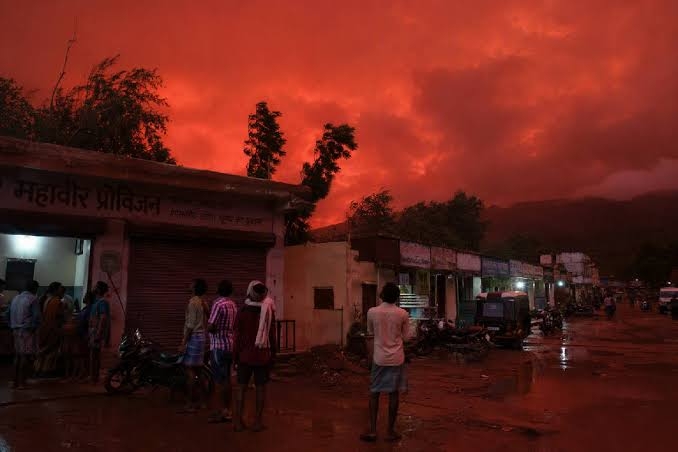
A striking red cloud appeared over Chhattisgarh’s Gariaband district this week as Cyclone Arnab brought unsettled weather to the state. While the spectacle coincided with the storm, atmospheric science offers a possible explanation for the unusual colour.
As Cyclone Arnab brought rain, gusty winds and an overcast sky to parts of Chhattisgarh, an altogether different spectacle unfolded above the state’s Gariaband district on Wednesday. A cloud, illuminated in an unusually deep shade of red, stood out against the sky, drawing the attention of residents who captured the fleeting phenomenon on their cameras.
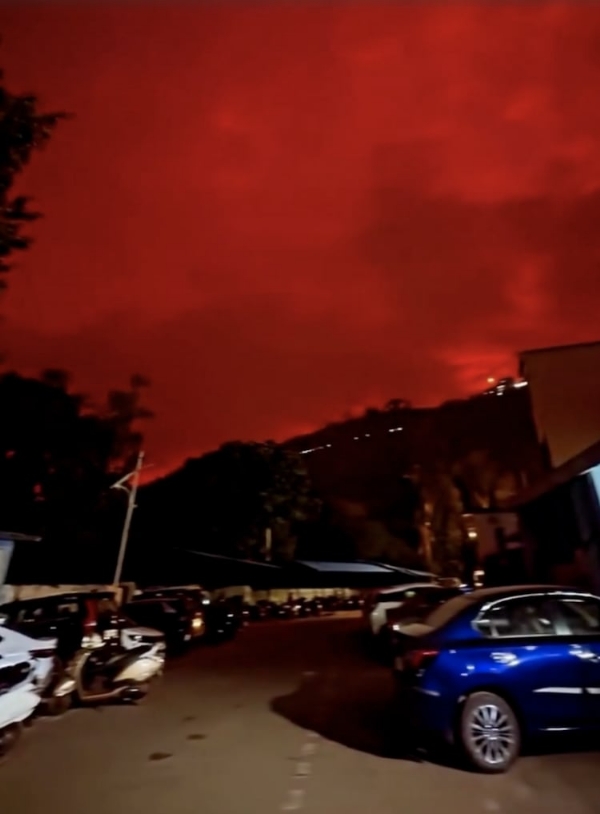
The sight was reported from Devbhog in Gariaband on Tuesday (October 27), when the effects of the cyclonic system were beginning to be felt across the state. Local news outlet Chhattisgarh News reported that residents witnessed the crimson-coloured cloud amid light winds, with several people photographing the unusual scene.
🚨 THE SKY OVER CHHATTISGARH TURNED BLOOD RED. THIS LOOKS LIKE A SCENE FROM THE END OF THE WORLD. 🔴🌩️
— Kaptan Hindustan™ (@KaptanHindustan) October 29, 2026
These striking visuals reportedly show the extraordinary crimson sky over Kirandul, in Dantewada district, Chhattisgarh, amid atmospheric disturbances associated with Cyclone… pic.twitter.com/VQ7wqyUxou
The weather system may have contributed to the conditions, but the available information does not establish a direct link between Cyclone Arnab and the unusual colour. Atmospheric conditions, cloud cover, airborne dust and the position of the Sun can all influence the colours seen in the sky.
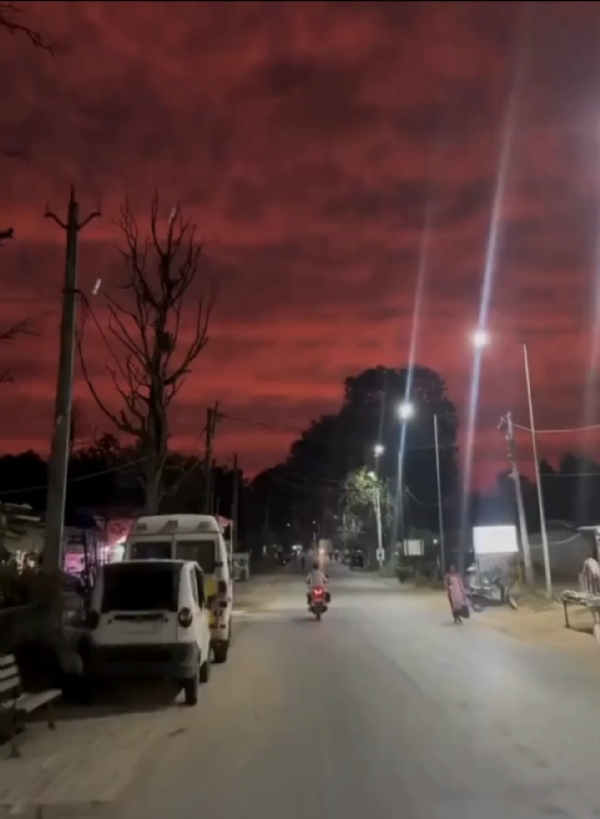
WHY DOES THE SKY TURN RED?
The reddish appearance of the sky is often linked to the scattering of sunlight by molecules and particles in the atmosphere.
During sunrise and sunset, sunlight travels through a longer stretch of the atmosphere. Shorter wavelengths, such as blue light, are scattered more strongly, allowing longer wavelengths, including red and orange, to become more prominent.
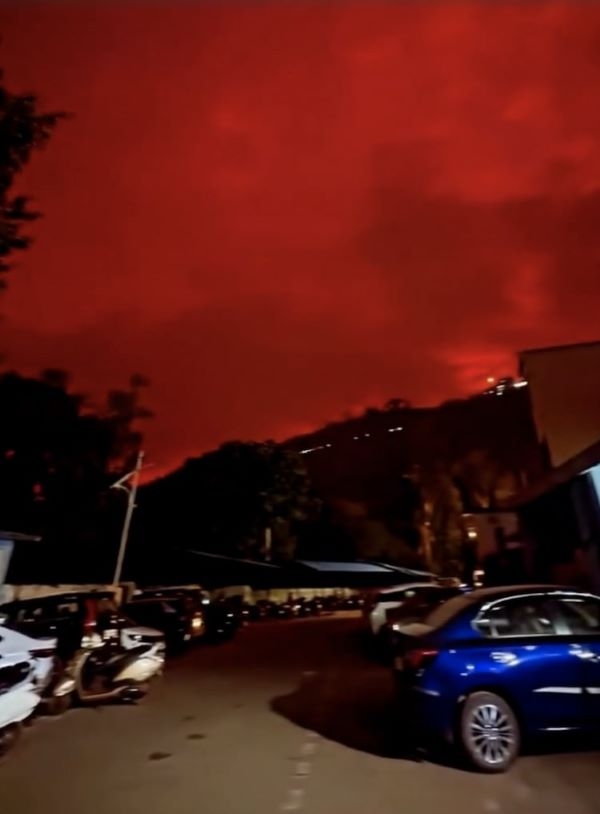
This process is commonly explained through Rayleigh scattering, although larger particles such as dust, smoke and water droplets can also influence the colour and intensity of the light through other scattering processes.
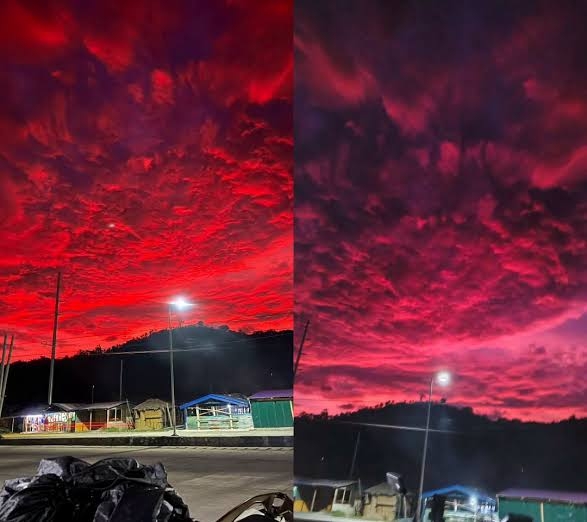
Storm clouds, suspended dust and changes in atmospheric visibility can produce unusual combinations of light and shadow, creating dramatic red or orange skies under certain conditions.