SpaceX Launches 27 Starlink Satellites into Orbit
Total Views |


New Delhi , October 31 : SpaceX successfully launched 27 Starlink internet satellites into low Earth orbit (LEO) aboard its Falcon 9 rocket from Vandenberg Space Force Base in California on October 31.
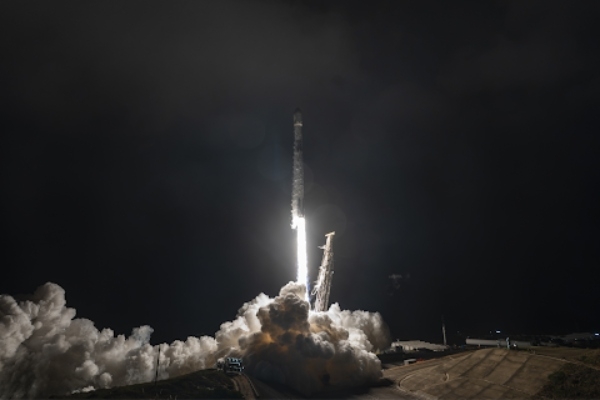
The rocket lifted off at 12:04 a.m. Eastern Daylight Time (9:04 p.m. local time on October 30), marking another mission in the company's ongoing efforts to expand its global satellite internet network.
The Falcon 9's first-stage booster returned to Earth as planned, landing on SpaceX's autonomous drone ship Of Course I Still Love You in the Pacific Ocean approximately eight and a half minutes after liftoff.
The booster, identified as B1093, completed its 18th flight with this mission. SpaceX has continued to reuse its rocket boosters to reduce launch costs and improve the frequency of its space missions. The company's current record for a Falcon 9 first-stage booster stands at 37 flights, achieved by booster B1067 in August 2026.
The Falcon 9's upper stage completed the satellite deployment approximately 62 minutes after launch. All 27 Starlink satellites were placed into low Earth orbit, where they will join the company's expanding satellite constellation.
Falcon 9 launches 27 @Starlink satellites from California pic.twitter.com/1brhyI7HGD
— SpaceX (@SpaceX) October 31, 2026
Starlink is SpaceX's satellite-based internet service, designed to provide broadband connectivity across different parts of the world, including remote and underserved regions. The network has grown to more than 11,000 spacecraft, making it the largest satellite constellation currently in operation.
The October 31 mission marked the 118th Falcon 9 launch of 2026. More than 70 per cent of these missions have been dedicated to expanding the Starlink network.
Apart from Falcon 9, SpaceX has also conducted three launches each of its Falcon Heavy and Starship rockets during the year. While Falcon Heavy is an operational launch vehicle used for carrying heavy payloads, Starship remains under development and continues to undergo test flights.
The company is also preparing for another Starship test launch, expected to take place in November 2026. Recent preparations have included testing the rocket's upper stage ahead of its next flight.