Europe’s Twin Challenge: The Radical Left and Islamism
The danger for Europe is not necessarily that one ideology will suddenly seize control.
NewsBharati 06-Oct-2026 12:29:18 PM
Total Views |


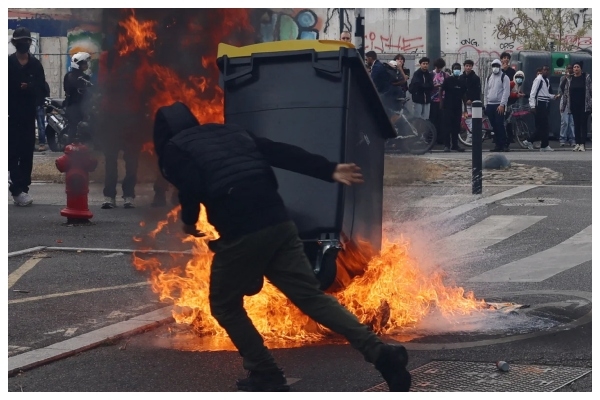
France is witnessing a disturbing escalation of youth unrest. What began on September 21 as a protest by high-school students over teacher shortages, overcrowded classrooms and deteriorating school infrastructure has spread across the country with extraordinary speed. By October 1, more than 1,000 high schools had been affected, and hundreds remained partially or completely closed. Violence, arson, clashes with police and attacks around schools have transformed a legitimate grievance into a wider public-order crisis.
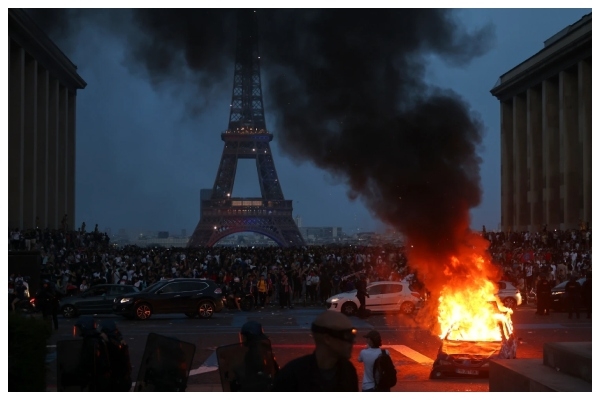 The answer emerging from French authorities is the radical left. The government has accused Jean-Luc Mélenchon’s La France Insoumise (LFI) and ultra-left groups of fuelling the mobilisation. Intelligence reporting cited by Le Monde has identified attempts by radical-left organisations and political structures to intervene in the movement. LFI has openly supported the student mobilisation, although it denies organising the violence.
This is the familiar politics of exploitation - find an existing grievance, attach it to a larger ideological struggle, mobilise anger against the state and turn social dissatisfaction into political confrontation. But France's problem is larger than the radical left.
For years, France has struggled with another challenge - Islamism and the failure of parts of the integration process. The country has confronted jihadist terrorism, radicalisation, disputes over secularism, parallel communities and recurring arguments over whether the French Republic's universalist model is being undermined by religious-political identities. Therefore, it would equally be a mistake to pretend that Islamism is irrelevant to France's bigger crisis.
Indeed, the most revealing feature of contemporary France may be the interaction of different forms of radicalism. The radical left attacks the state from one ideological direction; Islamist movements and networks challenge aspects of the secular republican order from another. Their objectives are not identical, but their opposition to aspects of the existing order can sometimes create political convergence without requiring formal coordination.
That distinction matters. Europe does not need a single secret command centre to experience destabilisation. Different ideological forces can exploit the same weaknesses: alienation, economic insecurity, institutional distrust, identity conflict and declining confidence in government.
France's present crisis therefore deserves to be watched beyond the immediate school issue, which is a part of sinister design. The problem in France surrounds integration and national identity.
The danger is that the grievances of young people become raw material for ideological entrepreneurs. The French state must, therefore, distinguish between students demanding better education and organised forces seeking confrontation with the Republic.
What is happening in France cannot simply be dismissed as an isolated French episode. Across Europe, governments are simultaneously confronting migration pressures, integration failures, parallel communities, radicalisation, political polarisation and a growing demand for stronger borders and national cohesion.
The Swedish Government has also acknowledged the growth of parallel social structures, including collectivist and patriarchal systems, alternative dispute-resolution mechanisms, informal economic structures and, in some cases, criminal networks capable of infiltrating public institutions.
Denmark is even more explicit. Its security service, PET, states that militant Islamism remains the main terrorist threat to Denmark, while also recognising threats from right-wing, left-wing and anti-establishment extremism. Its 2026 assessment says the militant-Islamist threat remains significant.
Britain, meanwhile, is wrestling with irregular migration, asylum accommodation, community tensions and the security consequences of radicalisation. The arrest of two Iranian nationals over an alleged plot targeting the Jewish community in Manchester has also highlighted the continuing intersection between foreign actors, extremist violence and domestic security.
The Netherlands has seen violent anti-immigration demonstrations involving far-right groups, showing the other side of Europe's polarisation. In September, police clashed with hundreds of protesters at an anti-immigration rally in The Hague.
Greece and several other EU countries are now pressing for stronger mechanisms to control irregular migration, including the possibility of temporarily suspending asylum applications during exceptional migration crises. The EU has also moved towards stronger return mechanisms and possible return hubs outside the bloc.
The European pattern is therefore unmistakable even if the causes are not identical.
The radical left continues to mobilise around inequality, migration, climate, minority rights and opposition to the established political order. Islamism represents a different ideological challenge, centred on religious-political identity, radicalisation and, in its violent form, terrorism. Meanwhile, the political right is gaining strength by promising tighter borders, stronger national identity and tougher law enforcement. These forces are producing a three-way political collision.
The danger for Europe is not necessarily that one ideology will suddenly seize control. It is that the failure of governments to resolve underlying problems allows competing radicalisms to feed upon one another.
The result can be a vicious cycle - migration creates integration pressures; poor integration creates social separation; separation creates radicalisation; radicalisation produces insecurity; insecurity produces nationalist backlash; the backlash strengthens the radical left; and the confrontation further weakens trust in the political centre. Europe therefore faces something larger than a series of unrelated protests.
It is confronting a crisis over who belongs, what binds society together and whether the state remains capable of enforcing one common civic order.
The immediate challenge is to confront every form of extremism by the same democratic standard whether it comes from the far left, the far right or Islamist movements. A democratic state cannot selectively defend itself. If Europe wants to preserve liberal democracy and freedom, it must be prepared to defend them against every ideology that seeks to replace the common civic order with an alternative system of power or identity.
The important question is no longer whether French students have genuine grievances. The more pertinent question is who is exploiting those grievances and pushing the movement beyond its original purpose.
This is the familiar politics of exploitation - find an existing grievance, attach it to a larger ideological struggle, mobilise anger against the state and turn social dissatisfaction into political confrontation. But France's problem is larger than the radical left.
For years, France has struggled with another challenge - Islamism and the failure of parts of the integration process. The country has confronted jihadist terrorism, radicalisation, disputes over secularism, parallel communities and recurring arguments over whether the French Republic's universalist model is being undermined by religious-political identities. Therefore, it would equally be a mistake to pretend that Islamism is irrelevant to France's bigger crisis.
Indeed, the most revealing feature of contemporary France may be the interaction of different forms of radicalism. The radical left attacks the state from one ideological direction; Islamist movements and networks challenge aspects of the secular republican order from another. Their objectives are not identical, but their opposition to aspects of the existing order can sometimes create political convergence without requiring formal coordination.
That distinction matters. Europe does not need a single secret command centre to experience destabilisation. Different ideological forces can exploit the same weaknesses: alienation, economic insecurity, institutional distrust, identity conflict and declining confidence in government.
France's present crisis therefore deserves to be watched beyond the immediate school issue, which is a part of sinister design. The problem in France surrounds integration and national identity.
The danger is that the grievances of young people become raw material for ideological entrepreneurs. The French state must, therefore, distinguish between students demanding better education and organised forces seeking confrontation with the Republic.
What is happening in France cannot simply be dismissed as an isolated French episode. Across Europe, governments are simultaneously confronting migration pressures, integration failures, parallel communities, radicalisation, political polarisation and a growing demand for stronger borders and national cohesion.
Sweden, perhaps, is the clearest example of how seriously the issue has now entered mainstream government thinking. In June, the Swedish Government established an inquiry specifically into political Islam and infiltration in Swedish society. It is examining the consequences of religious radicalisation for integration, social exclusion, democratic institutions and Swedish society.
The Swedish Government has also acknowledged the growth of parallel social structures, including collectivist and patriarchal systems, alternative dispute-resolution mechanisms, informal economic structures and, in some cases, criminal networks capable of infiltrating public institutions.
Denmark is even more explicit. Its security service, PET, states that militant Islamism remains the main terrorist threat to Denmark, while also recognising threats from right-wing, left-wing and anti-establishment extremism. Its 2026 assessment says the militant-Islamist threat remains significant.
Britain, meanwhile, is wrestling with irregular migration, asylum accommodation, community tensions and the security consequences of radicalisation. The arrest of two Iranian nationals over an alleged plot targeting the Jewish community in Manchester has also highlighted the continuing intersection between foreign actors, extremist violence and domestic security.
The Netherlands has seen violent anti-immigration demonstrations involving far-right groups, showing the other side of Europe's polarisation. In September, police clashed with hundreds of protesters at an anti-immigration rally in The Hague.
Greece and several other EU countries are now pressing for stronger mechanisms to control irregular migration, including the possibility of temporarily suspending asylum applications during exceptional migration crises. The EU has also moved towards stronger return mechanisms and possible return hubs outside the bloc.
The European pattern is therefore unmistakable even if the causes are not identical.
The radical left continues to mobilise around inequality, migration, climate, minority rights and opposition to the established political order. Islamism represents a different ideological challenge, centred on religious-political identity, radicalisation and, in its violent form, terrorism. Meanwhile, the political right is gaining strength by promising tighter borders, stronger national identity and tougher law enforcement. These forces are producing a three-way political collision.
The danger for Europe is not necessarily that one ideology will suddenly seize control. It is that the failure of governments to resolve underlying problems allows competing radicalisms to feed upon one another.
The result can be a vicious cycle - migration creates integration pressures; poor integration creates social separation; separation creates radicalisation; radicalisation produces insecurity; insecurity produces nationalist backlash; the backlash strengthens the radical left; and the confrontation further weakens trust in the political centre. Europe therefore faces something larger than a series of unrelated protests.
It is confronting a crisis over who belongs, what binds society together and whether the state remains capable of enforcing one common civic order.
The immediate challenge is to confront every form of extremism by the same democratic standard whether it comes from the far left, the far right or Islamist movements. A democratic state cannot selectively defend itself. If Europe wants to preserve liberal democracy and freedom, it must be prepared to defend them against every ideology that seeks to replace the common civic order with an alternative system of power or identity.

Editor's Desk
Editor's Desk