Guidelines for Journalists by Delhi Police, Valid I-card Mandatory
Total Views |


New Delhi: The Delhi Police has issued a four-point advisory for journalists covering protests in the national capital, asking media personnel to carry and prominently display valid identity cards, avoid obstructing police operations and maintain a safe distance from tense situations.
 Posting the guidelines on its official social-media account, Delhi Police said: “The story matters, so does how you get it!” The advisory was accompanied by the hashtag #EthicsofJournalism.
Under the first guideline, journalists assigned to cover protests have been advised to carry valid identity cards issued by their respective organisations and/or valid Press Information Bureau (PIB) or Delhi Information and Publicity (DIP) accreditation cards.
The second guideline asks journalists to keep their identification cards visibly displayed at all times to facilitate their identification by law-enforcement personnel at protest sites.
The police also advised journalists to ensure that their presence or activities do not obstruct police operations or the movement of law-enforcement personnel.
The fourth guideline relates to situations where protests turn tense. Journalists have been asked to maintain a “reasonable and safe distance” while covering and recording proceedings and to position themselves in a manner that clearly distinguishes them from protesters.
The complaints triggered protests by journalists and independent media personnel outside Parliament Street Police Station, with demonstrators demanding registration of FIRs against the police personnel allegedly involved. The Press Club of India also expressed concern over the treatment of journalists during the protests and called for journalists to be allowed to perform their duties freely.
Delhi Police, meanwhile, has maintained that the October 3 gathering had developed into a law-and-order situation and that action was taken after protesters allegedly failed to comply with prohibitory orders. The transfer of the journalists' complaints to the Crime Branch was presented by police as a measure intended to ensure an independent investigation because personnel from the concerned police units were themselves involved in protest-related duties.
The latest advisory comes as Delhi prepares for further political demonstrations linked to the dispute over electoral-roll revision. Security has been strengthened around Jantar Mantar and the Election Commission headquarters amid continuing protests and heightened political activity.
The guidelines therefore seek to establish a clearer distinction between journalists covering demonstrations and participants in the protests, particularly during situations involving crowd-control measures and police action.
The advisory, issued on Monday, comes amid heightened security around protest sites following demonstrations in Delhi over the Election Commission and the Special Intensive Revision (SIR) of electoral rolls. It also follows complaints by three women journalists who alleged that they were sexually harassed and manhandled by police personnel while covering a protest near Jantar Mantar on October 3.
Under the first guideline, journalists assigned to cover protests have been advised to carry valid identity cards issued by their respective organisations and/or valid Press Information Bureau (PIB) or Delhi Information and Publicity (DIP) accreditation cards.
The second guideline asks journalists to keep their identification cards visibly displayed at all times to facilitate their identification by law-enforcement personnel at protest sites.
The police also advised journalists to ensure that their presence or activities do not obstruct police operations or the movement of law-enforcement personnel.
The fourth guideline relates to situations where protests turn tense. Journalists have been asked to maintain a “reasonable and safe distance” while covering and recording proceedings and to position themselves in a manner that clearly distinguishes them from protesters.
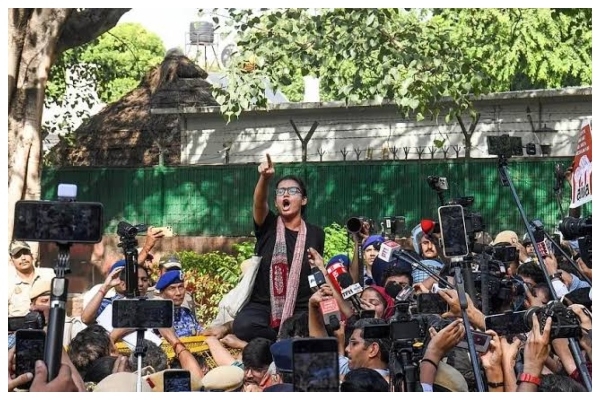
The advisory comes against the backdrop of a confrontation between protesters and police in the New Delhi area on October 3. Demonstrations were held demanding the resignation of Chief Election Commissioner Gyanesh Kumar over allegations concerning the SIR exercise. Police had invoked prohibitory provisions and detained protesters after they allegedly continued to assemble despite being asked to leave.
The story matters, So does how you get it!
— Delhi Police (@DelhiPolice) October 5, 2026
Guidelines for journalists.#DPUpdates #EthicsofJournalism pic.twitter.com/Uu4nguCbJk
Three women journalists subsequently complained that police personnel had inappropriately touched or manhandled them while they were covering the protest. Delhi Police said the complaints had been transferred to the Crime Branch for a “fair and impartial enquiry.” The police also appealed to witnesses to provide video footage relating to the allegations to the Crime Branch.
The complaints triggered protests by journalists and independent media personnel outside Parliament Street Police Station, with demonstrators demanding registration of FIRs against the police personnel allegedly involved. The Press Club of India also expressed concern over the treatment of journalists during the protests and called for journalists to be allowed to perform their duties freely.
Delhi Police, meanwhile, has maintained that the October 3 gathering had developed into a law-and-order situation and that action was taken after protesters allegedly failed to comply with prohibitory orders. The transfer of the journalists' complaints to the Crime Branch was presented by police as a measure intended to ensure an independent investigation because personnel from the concerned police units were themselves involved in protest-related duties.
The latest advisory comes as Delhi prepares for further political demonstrations linked to the dispute over electoral-roll revision. Security has been strengthened around Jantar Mantar and the Election Commission headquarters amid continuing protests and heightened political activity.
The guidelines therefore seek to establish a clearer distinction between journalists covering demonstrations and participants in the protests, particularly during situations involving crowd-control measures and police action.