My Lord, Don’t Cross Your Limits Please
It is a defence of judicial propriety, professionalism and ethics.
Total Views |


There is a fundamental principle of judicial administration that should never be sacrificed for public applause - a judge must not appear to decide a case before hearing it. This is not a question of etiquette. It is a question of judicial propriety, professional ethics, institutional discipline and public confidence in the judiciary.
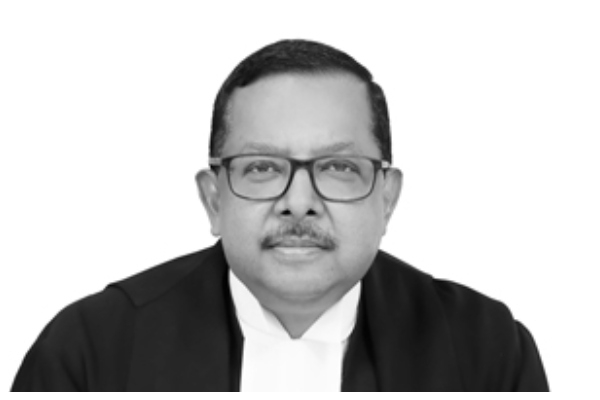
The point is fundamental. Justice Bhuyan did not make an abstract observation about the importance of voting. He spoke in the middle of a highly contentious legal and political dispute over SIR, with the matter before the Supreme Court. His language was categorical. He described any process resulting in the disenfranchisement of “millions and millions” of Indian citizens as “intrinsically arbitrary” and a negation of the constitutional order. He also compared separating the right to vote from citizenship to “taking out the soul from the body”.
Why Speak Before the Hearing?
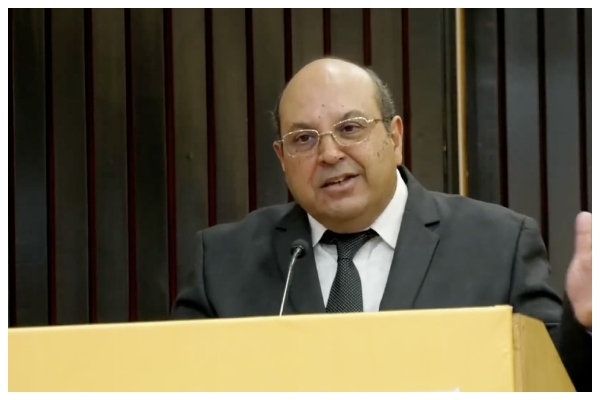
The timing makes the matter still more troubling. Justice Bhuyan is an experienced constitutional judge. Justice Rohinton Fali Nariman, who has also entered the controversy, is a former Supreme Court judge and former Solicitor General of India. Neither can plausibly be regarded as unfamiliar with the meaning of a matter being sub judice, with judicial procedure or with the ethical expectations surrounding the Bench.
But Nariman publicly attacked the Election Commission's handling of SIR, while Bhuyan subsequently made strong observations on the same controversy.
Nariman said that the right to vote was “at great peril”. Referring to the West Bengal SIR, he alleged that around 90 lakh voters had been disenfranchised and characterised the exercise as a “completely illegal knocking out” of ordinary citizens so that “a government obtains what it wants”. He also criticised the mechanism for appointing Election Commissioners and called for an early judicial decision on the challenge to the 2023 law.
There is nothing inherently wrong with a retired judge participating in constitutional debate. Retirement does not erase responsibility and ethics. Also is the question of timing, language and institutional influence cannot simply be brushed aside.
When a former Supreme Court judge makes categorical statements on the legality and purpose of a matter immediately before the Court, those words inevitably enter the public arena carrying the prestige of his judicial career.
And when a sitting Supreme Court judge makes equally emphatic observations on a pending controversy, the problem becomes more serious.
The question therefore needs to be asked plainly: what was the need to make such statements when the judicial process was already seized of the matter?
Gavai's Intervention Matters
Former CJI Gavai's intervention should not be reduced to an internal disagreement between judges. It is a defence of an institutional principle.
Gavai did not say that SIR cannot be challenged. He did not say that the Election Commission is beyond scrutiny. He did not deny citizens the right to challenge wrongful exclusion from electoral rolls.
He made a narrower and more important point - a sitting judge should not publicly comment on an issue pending adjudication before the same court. That is judicial restraint.
Judicial independence does not mean judicial licence. A judge must be free to decide without fear or favour, but that freedom carries a corresponding obligation not to become a participant in the public controversy surrounding a case that may require adjudication.
A politician can make a statement and face a counter-statement. A civil society organisation can campaign for a position. A newspaper can publish an editorial. But when a judge speaks publicly, his words cannot be separated completely from the authority of the office.
Courts are designed to hear competing arguments, examine evidence, study statutory provisions, consider constitutional principles and precedents and then pronounce judgment.
That sequence matters.
If a judge publicly describes a disputed government process as “arbitrary” or “illegal” before the Court has completed its examination, the public can reasonably ask whether the judicial mind remains genuinely open.
The issue is not whether the judge's eventual conclusion will be right or wrong. The issue is whether the appearance of pre-judgment has been created. That distinction is crucial.
A judge may have strong personal views. Judges are human beings. But judicial office demands that those views be disciplined by the process of adjudication. The courtroom is where the conclusion must emerge not the public platform.
The principle that justice must not only be done but must also be seen to be done applies with particular force here.
Do Not Confuse Citizenship With Electoral Registration
The SIR controversy also requires precision.
The right to vote is undoubtedly central to representative democracy. But citizenship and electoral registration are not identical legal concepts.
A revision of electoral rolls necessarily involves determining who is entitled to remain on a particular electoral roll. Questions can arise over deceased voters, duplicate entries, migration, changes of residence, eligibility and other irregularities. Such verification does not, by itself, mean that citizenship has been extinguished.
Indeed, the Supreme Court has recognised the Election Commission's authority to undertake electoral-roll revision while distinguishing electoral registration from the determination of citizenship.
Therefore, describing every deletion or disputed entry as “disenfranchisement” risks collapsing two separate legal questions into one emotionally charged proposition.
The proper question is straightforward - Was the procedure lawful, fair and constitutionally compliant? That is precisely what a court should determine after hearing all sides.
Citizenship Is Not Merely a Contract
There is an even larger issue that deserves to be brought into the debate. Citizenship is not merely a contractual relationship between an individual and the State. It is also a civic and emotional relationship between an individual and the nation.
The citizen receives constitutional rights and protection from the State, but citizenship also represents membership of a political community. It carries obligations, allegiance and a sense of belonging.
Voting is one of the most important expressions of that citizenship. But it does not follow that every dispute over an electoral roll is automatically a dispute over citizenship itself.
Equally, the State cannot be expected to maintain an electoral roll indefinitely without verification. A democracy has two simultaneous obligations: protect every genuine citizen's right to vote and protect the integrity of the electoral process.
Neither obligation can simply be sacrificed in the name of the other.
Who Ultimately Chooses the Government?
This is where judicial overreach, if it occurs, becomes particularly sensitive.
The Constitution distributes power among institutions. Parliament legislates. The executive administers. The Election Commission conducts elections within its constitutional mandate. Citizens vote. Governments are formed through that process. Courts adjudicate disputes and enforce constitutional limits.
No institution should substitute itself for the electorate.
The judiciary certainly has the power and the duty to strike down unlawful action. But there is a profound difference between reviewing the legality of an electoral process and effectively determining beforehand who constitutes the electorate.
If the judiciary begins speaking as though electoral-roll verification itself is illegitimate, the institutional boundary becomes blurred.
That is where the question of illegal immigration and infiltration cannot simply be dismissed as political rhetoric. Every constitutional democracy has the right to know who its citizens are and who is legally entitled to participate in its elections.
The answer must always be constitutional and lawful. But the question itself is legitimate.
This is perhaps the most uncomfortable aspect of the controversy.
Neither Nariman nor Bhuyan is inexperienced. Both understand the enormous influence that judicial pronouncements carry in public life. Both understand the difference between a private opinion and a statement delivered in a public forum by someone associated with the highest court in the land.
That is why questions about intent, propriety and timing inevitably arise.
It would be irresponsible to claim, without evidence, that either judge intended to influence the Court's proceedings.
But it would be equally irresponsible to pretend that public statements of this nature have no potential to influence the judicial environment. Intent cannot simply be presumed. Perception, however, cannot simply be ignored.
And when the perception is that judicial authority is being deployed in a live constitutional controversy before adjudication is complete, the damage is not merely personal. It affects the credibility of the institution.
The Judiciary Must Know Its Limits
India does not need a judiciary that competes with political institutions for public approval. It needs a judiciary whose authority rests on law, evidence, reasoning and restraint.
The judiciary is powerful because the Constitution gives it enormous responsibility. That power becomes legitimate through discipline.
The more powerful the institution, the greater the obligation to observe boundaries.
A judge cannot become an advocate for one side of a controversy and then sit in judgment over it. A retired judge should equally recognise that his words can carry an influence far beyond that of an ordinary commentator.
This is why Gavai's intervention is so important.
He has reminded the judicial fraternity of something elementary but increasingly important- judicial independence and +
Independence protects the judge from external pressure.
The Real Test Is Institutional Integrity
The controversy should therefore not be reduced to whether one supports or opposes SIR. The larger question is whether constitutional institutions respect the boundaries assigned to them.
The Election Commission must be accountable for its actions under law. The government must defend its policy. Citizens must have effective remedies against wrongful exclusion. Parliament must legislate within constitutional limits. And the Supreme Court must decide the controversy in court, on the record, after hearing all sides. That is how constitutional democracy is supposed to function.
There is nothing courageous about a judge saying publicly what he may later be required to decide judicially. The real courage lies in maintaining silence until the evidence has been heard and the law has been applied. A judge's greatest strength is not the ability to command public attention. It is the ability to resist it.
If judges begin announcing conclusions outside the courtroom before the courtroom has spoken, the distinction between adjudication and advocacy begins to disappear. That is a dangerous road. The judiciary must guard the Constitution. But it must also guard the limits of its own power.
Gavai's reminder is therefore not an attack on judicial independence. It is a defence of judicial propriety, professionalism and ethics. Bhuyan, as a sitting judge, has a special responsibility to understand that distinction. Nariman, as a former judge of the Supreme Court, has an equally compelling reason to respect it.
The Constitution does not need judges who speak first and hear later. It needs judges who hear first and let the judgment speak.
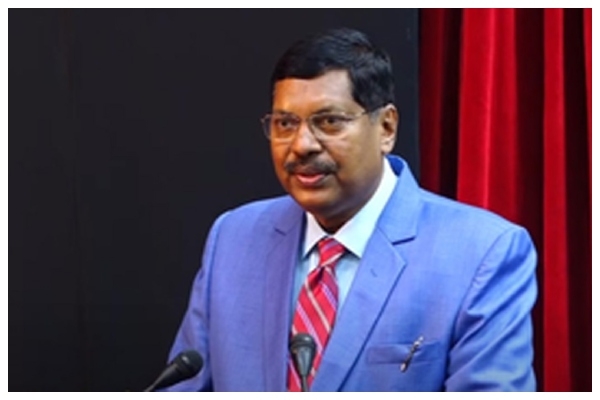
That is why former Chief Justice of India B.R. Gavai’s criticism of Justice Ujjal Bhuyan’s public remarks on the Special Intensive Revision (SIR) of electoral rolls deserves serious attention. Gavai said that “judicial propriety” would not permit a sitting judge to comment on a matter pending before the Supreme Court.
The point is fundamental. Justice Bhuyan did not make an abstract observation about the importance of voting. He spoke in the middle of a highly contentious legal and political dispute over SIR, with the matter before the Supreme Court. His language was categorical. He described any process resulting in the disenfranchisement of “millions and millions” of Indian citizens as “intrinsically arbitrary” and a negation of the constitutional order. He also compared separating the right to vote from citizenship to “taking out the soul from the body”.
These are powerful political formulations. Coming from a sitting Supreme Court judge, they inevitably carry something more: the authority of judicial office.
The timing makes the matter still more troubling. Justice Bhuyan is an experienced constitutional judge. Justice Rohinton Fali Nariman, who has also entered the controversy, is a former Supreme Court judge and former Solicitor General of India. Neither can plausibly be regarded as unfamiliar with the meaning of a matter being sub judice, with judicial procedure or with the ethical expectations surrounding the Bench.
But Nariman publicly attacked the Election Commission's handling of SIR, while Bhuyan subsequently made strong observations on the same controversy.
Nariman said that the right to vote was “at great peril”. Referring to the West Bengal SIR, he alleged that around 90 lakh voters had been disenfranchised and characterised the exercise as a “completely illegal knocking out” of ordinary citizens so that “a government obtains what it wants”. He also criticised the mechanism for appointing Election Commissioners and called for an early judicial decision on the challenge to the 2023 law.
There is nothing inherently wrong with a retired judge participating in constitutional debate. Retirement does not erase responsibility and ethics. Also is the question of timing, language and institutional influence cannot simply be brushed aside.
When a former Supreme Court judge makes categorical statements on the legality and purpose of a matter immediately before the Court, those words inevitably enter the public arena carrying the prestige of his judicial career.
And when a sitting Supreme Court judge makes equally emphatic observations on a pending controversy, the problem becomes more serious.
The question therefore needs to be asked plainly: what was the need to make such statements when the judicial process was already seized of the matter?
Gavai's Intervention Matters
Former CJI Gavai's intervention should not be reduced to an internal disagreement between judges. It is a defence of an institutional principle.
Gavai did not say that SIR cannot be challenged. He did not say that the Election Commission is beyond scrutiny. He did not deny citizens the right to challenge wrongful exclusion from electoral rolls.
He made a narrower and more important point - a sitting judge should not publicly comment on an issue pending adjudication before the same court. That is judicial restraint.
Judicial independence does not mean judicial licence. A judge must be free to decide without fear or favour, but that freedom carries a corresponding obligation not to become a participant in the public controversy surrounding a case that may require adjudication.
A politician can make a statement and face a counter-statement. A civil society organisation can campaign for a position. A newspaper can publish an editorial. But when a judge speaks publicly, his words cannot be separated completely from the authority of the office.
That is precisely why judges must exercise greater restraint than politicians, activists or commentators.
A Speech Cannot Become a Pre-Verdict
Courts are designed to hear competing arguments, examine evidence, study statutory provisions, consider constitutional principles and precedents and then pronounce judgment.
That sequence matters.
If a judge publicly describes a disputed government process as “arbitrary” or “illegal” before the Court has completed its examination, the public can reasonably ask whether the judicial mind remains genuinely open.
The issue is not whether the judge's eventual conclusion will be right or wrong. The issue is whether the appearance of pre-judgment has been created. That distinction is crucial.
A judge may have strong personal views. Judges are human beings. But judicial office demands that those views be disciplined by the process of adjudication. The courtroom is where the conclusion must emerge not the public platform.
The principle that justice must not only be done but must also be seen to be done applies with particular force here.
Do Not Confuse Citizenship With Electoral Registration
The SIR controversy also requires precision.
The right to vote is undoubtedly central to representative democracy. But citizenship and electoral registration are not identical legal concepts.
A revision of electoral rolls necessarily involves determining who is entitled to remain on a particular electoral roll. Questions can arise over deceased voters, duplicate entries, migration, changes of residence, eligibility and other irregularities. Such verification does not, by itself, mean that citizenship has been extinguished.
Indeed, the Supreme Court has recognised the Election Commission's authority to undertake electoral-roll revision while distinguishing electoral registration from the determination of citizenship.
Therefore, describing every deletion or disputed entry as “disenfranchisement” risks collapsing two separate legal questions into one emotionally charged proposition.
The proper question is straightforward - Was the procedure lawful, fair and constitutionally compliant? That is precisely what a court should determine after hearing all sides.
Citizenship Is Not Merely a Contract
There is an even larger issue that deserves to be brought into the debate. Citizenship is not merely a contractual relationship between an individual and the State. It is also a civic and emotional relationship between an individual and the nation.
The citizen receives constitutional rights and protection from the State, but citizenship also represents membership of a political community. It carries obligations, allegiance and a sense of belonging.
Voting is one of the most important expressions of that citizenship. But it does not follow that every dispute over an electoral roll is automatically a dispute over citizenship itself.
Equally, the State cannot be expected to maintain an electoral roll indefinitely without verification. A democracy has two simultaneous obligations: protect every genuine citizen's right to vote and protect the integrity of the electoral process.
Neither obligation can simply be sacrificed in the name of the other.
Who Ultimately Chooses the Government?
This is where judicial overreach, if it occurs, becomes particularly sensitive.
The Constitution distributes power among institutions. Parliament legislates. The executive administers. The Election Commission conducts elections within its constitutional mandate. Citizens vote. Governments are formed through that process. Courts adjudicate disputes and enforce constitutional limits.
No institution should substitute itself for the electorate.
The judiciary certainly has the power and the duty to strike down unlawful action. But there is a profound difference between reviewing the legality of an electoral process and effectively determining beforehand who constitutes the electorate.
If the judiciary begins speaking as though electoral-roll verification itself is illegitimate, the institutional boundary becomes blurred.
That is where the question of illegal immigration and infiltration cannot simply be dismissed as political rhetoric. Every constitutional democracy has the right to know who its citizens are and who is legally entitled to participate in its elections.
The answer must always be constitutional and lawful. But the question itself is legitimate.
Neither Judge Is Naive About the Consequences
This is perhaps the most uncomfortable aspect of the controversy.
Neither Nariman nor Bhuyan is inexperienced. Both understand the enormous influence that judicial pronouncements carry in public life. Both understand the difference between a private opinion and a statement delivered in a public forum by someone associated with the highest court in the land.
That is why questions about intent, propriety and timing inevitably arise.
It would be irresponsible to claim, without evidence, that either judge intended to influence the Court's proceedings.
But it would be equally irresponsible to pretend that public statements of this nature have no potential to influence the judicial environment. Intent cannot simply be presumed. Perception, however, cannot simply be ignored.
And when the perception is that judicial authority is being deployed in a live constitutional controversy before adjudication is complete, the damage is not merely personal. It affects the credibility of the institution.
The Judiciary Must Know Its Limits
India does not need a judiciary that competes with political institutions for public approval. It needs a judiciary whose authority rests on law, evidence, reasoning and restraint.
The judiciary is powerful because the Constitution gives it enormous responsibility. That power becomes legitimate through discipline.
The more powerful the institution, the greater the obligation to observe boundaries.
A judge cannot become an advocate for one side of a controversy and then sit in judgment over it. A retired judge should equally recognise that his words can carry an influence far beyond that of an ordinary commentator.
This is why Gavai's intervention is so important.
He has reminded the judicial fraternity of something elementary but increasingly important- judicial independence and +
Independence protects the judge from external pressure.
Restraint protects the judiciary from itself.
The controversy should therefore not be reduced to whether one supports or opposes SIR. The larger question is whether constitutional institutions respect the boundaries assigned to them.
The Election Commission must be accountable for its actions under law. The government must defend its policy. Citizens must have effective remedies against wrongful exclusion. Parliament must legislate within constitutional limits. And the Supreme Court must decide the controversy in court, on the record, after hearing all sides. That is how constitutional democracy is supposed to function.
There is nothing courageous about a judge saying publicly what he may later be required to decide judicially. The real courage lies in maintaining silence until the evidence has been heard and the law has been applied. A judge's greatest strength is not the ability to command public attention. It is the ability to resist it.
If judges begin announcing conclusions outside the courtroom before the courtroom has spoken, the distinction between adjudication and advocacy begins to disappear. That is a dangerous road. The judiciary must guard the Constitution. But it must also guard the limits of its own power.
Gavai's reminder is therefore not an attack on judicial independence. It is a defence of judicial propriety, professionalism and ethics. Bhuyan, as a sitting judge, has a special responsibility to understand that distinction. Nariman, as a former judge of the Supreme Court, has an equally compelling reason to respect it.
The Constitution does not need judges who speak first and hear later. It needs judges who hear first and let the judgment speak.