“Nadeem: Just the Tip of the Iceberg”
This is not a question that can be brushed aside by invoking minority rights or religious freedom.
Total Views |


The Nadeem case raises a question that the country cannot afford to ignore. Nadeem Ahmed is 24. According to Delhi Police, he studied at a madrasa in Saket, failed to clear Class 10 and subsequently presented himself as an independent journalist. He created an Instagram news handle in April 2026 which, within a few months, reportedly acquired around 24,000 followers and carried more than 1,200 posts. Police arrested him after tracing allegedly fabricated material circulated during the Jantar Mantar controversy to his account. Investigators are now examining whether others were involved in the alleged conspiracy.
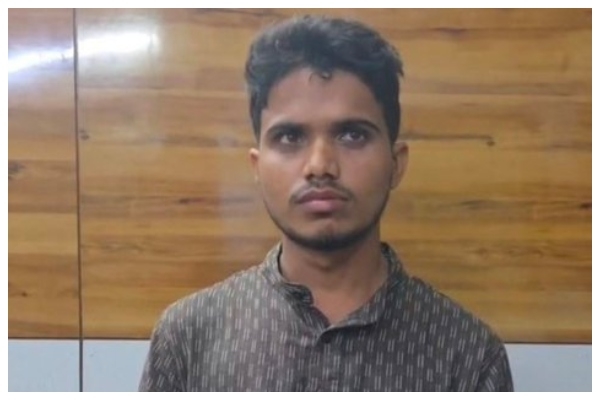
The question is unavoidable - Is Nadeem an isolated individual or is he merely the visible tip of a much larger iceberg? And that leads to an even more uncomfortable question.
India has thousands of madrasas. What is happening inside them? What kind of education, civic understanding and worldview are being imparted to young people who pass through these institutions?
This is not a question that can be brushed aside by invoking minority rights or religious freedom. Every educational institution that shapes the minds of young Indians must also be subjected to legitimate questions about curriculum, civic education, constitutional values and the preparedness of its students to participate constructively in national life.
The Nadeem case makes that question particularly urgent. The country cannot simply look at the final act the allegedly fabricated material, the social-media account and the arrest and stop there. It has to look backwards.
What shaped the individual? What influences did he encounter? Who were his associates? Who encouraged him? Who helped him establish and expand his platform? Who supplied information or material? Who amplified his output? And, most importantly, was he acting alone?
These are precisely the questions Delhi Police are now examining. The answers could determine whether Nadeem was merely a reckless individual or part of something substantially larger.
India has entered an extraordinarily contentious political period in which every controversy can be converted into a weapon. An allegation is enough to create outrage. A provocative claim is enough to mobilise people. A manufactured controversy can be turned into a street confrontation. Institutions can be discredited before facts have had a chance to emerge.
The objective of such activity is not necessarily to persuade people. It can be to divide them. To make citizens suspicious of one another. To make citizens suspicious of the police, the Election Commission and other constitutional institutions. To create the impression that the country is permanently in conflict with itself. And once that atmosphere is created, political forces can exploit it for their own narrow interests. This is where the Nadeem case becomes much bigger than Nadeem.
The question is simple - when an accused person with a madrasa educational background emerges in a case involving alleged attempts to create unrest, does the state have any mechanism to examine what kind of education is being imparted in thousands of such institutions? Does the curriculum adequately expose students to the Constitution? Does it teach them the obligations of citizenship along with religious learning? Does it prepare them for modern India? Are there mechanisms of academic oversight? Who regulates these institutions? Who examines their curricula? Who knows what ideological material is being taught? These are not communal questions. They are questions of national interest.
A country that spends enormous resources building schools, universities and institutions for modern education cannot afford to remain indifferent to educational ecosystems operating outside the mainstream system. The answer, however, cannot be collective suspicion. It must be accountability, transparency and scrutiny based on evidence.
The Nadeem case should therefore trigger a much wider investigation—not a witch-hunt. If his madrasa background has no connection whatsoever with his alleged activities, the investigation should establish that clearly. But if investigators discover that other individuals from similar networks are involved in coordinated activity, the country deserves to know.
There is another danger. The political ecosystem that feeds on such individuals can be far more important than the individuals themselves. Nadeem may be replaceable. If one operator disappears, another can emerge. That is why the government must not merely ask, “What did Nadeem do?” It must ask - “Who created the environment in which a Nadeem could emerge?” “Who gave him the confidence, reach and political usefulness to operate?” “Who benefits when his activities create public anger and institutional distrust?” And above all - “How many more are there?”
This is where the investigation must go. India cannot permit democratic freedoms to become instruments for manufacturing anarchy. Protest is legitimate. Opposition is legitimate. Criticism of government and institutions is legitimate. But deliberate efforts to create disorder, divide citizens and weaken faith in the constitutional system are a different matter altogether.
The state must draw that line firmly. There is no room for complacency. One Nadeem may be dismissed as an aberration. Ten Nadeems cannot be dismissed so easily. A hundred operating through different platforms and different networks would constitute a serious national challenge. That is why the government must go to the roots.
Follow the people. Follow the money. Follow the organisations. Follow the ideological influences. Follow the political connections. Follow the networks. Do not stop with the individual who happens to be caught. The Nadeem episode may ultimately prove to be an isolated case. Or it may open the door to something much larger. The responsibility of the state is to find out. Because if Nadeem is only the tip of the iceberg, the real danger is not the man who has been arrested. The real danger is everything that remains beneath the surface.
Read that profile once again. A 24-year-old madrasa-educated Class 10 dropout establishes a news platform, acquires a substantial following in a short period and allegedly becomes involved in material that police say was intended to tarnish the image of the police and create unrest.
The question is unavoidable - Is Nadeem an isolated individual or is he merely the visible tip of a much larger iceberg? And that leads to an even more uncomfortable question.
India has thousands of madrasas. What is happening inside them? What kind of education, civic understanding and worldview are being imparted to young people who pass through these institutions?
This is not a question that can be brushed aside by invoking minority rights or religious freedom. Every educational institution that shapes the minds of young Indians must also be subjected to legitimate questions about curriculum, civic education, constitutional values and the preparedness of its students to participate constructively in national life.
The Nadeem case makes that question particularly urgent. The country cannot simply look at the final act the allegedly fabricated material, the social-media account and the arrest and stop there. It has to look backwards.
What shaped the individual? What influences did he encounter? Who were his associates? Who encouraged him? Who helped him establish and expand his platform? Who supplied information or material? Who amplified his output? And, most importantly, was he acting alone?
These are precisely the questions Delhi Police are now examining. The answers could determine whether Nadeem was merely a reckless individual or part of something substantially larger.
India has entered an extraordinarily contentious political period in which every controversy can be converted into a weapon. An allegation is enough to create outrage. A provocative claim is enough to mobilise people. A manufactured controversy can be turned into a street confrontation. Institutions can be discredited before facts have had a chance to emerge.
The objective of such activity is not necessarily to persuade people. It can be to divide them. To make citizens suspicious of one another. To make citizens suspicious of the police, the Election Commission and other constitutional institutions. To create the impression that the country is permanently in conflict with itself. And once that atmosphere is created, political forces can exploit it for their own narrow interests. This is where the Nadeem case becomes much bigger than Nadeem.
If there are other individuals operating in a similar manner, they need to be identified. If there are networks, they need to be exposed. If there is financing, the money trail needs to be followed. If there are political links, those links must be established through evidence. If there are ideological influences that encourage hostility towards the Indian state or its constitutional institutions, those influences deserve serious scrutiny.
Team of Cyber Police station, @DCPNewDelhi arrested one self claimed independent journalist for circulating a fabricated video falsely portraying Sh. Vivek Bhagat, ACP, Delhi Police in bad light.
— Delhi Police (@DelhiPolice) October 6, 2026
The accused person circulated the incriminating video reel through one Instagram… pic.twitter.com/zcNG7np2ZE
The country cannot afford to discover the network only after it has succeeded in creating disorder. And the madrasa question cannot simply be avoided.
The question is simple - when an accused person with a madrasa educational background emerges in a case involving alleged attempts to create unrest, does the state have any mechanism to examine what kind of education is being imparted in thousands of such institutions? Does the curriculum adequately expose students to the Constitution? Does it teach them the obligations of citizenship along with religious learning? Does it prepare them for modern India? Are there mechanisms of academic oversight? Who regulates these institutions? Who examines their curricula? Who knows what ideological material is being taught? These are not communal questions. They are questions of national interest.
A country that spends enormous resources building schools, universities and institutions for modern education cannot afford to remain indifferent to educational ecosystems operating outside the mainstream system. The answer, however, cannot be collective suspicion. It must be accountability, transparency and scrutiny based on evidence.
The Nadeem case should therefore trigger a much wider investigation—not a witch-hunt. If his madrasa background has no connection whatsoever with his alleged activities, the investigation should establish that clearly. But if investigators discover that other individuals from similar networks are involved in coordinated activity, the country deserves to know.
There is another danger. The political ecosystem that feeds on such individuals can be far more important than the individuals themselves. Nadeem may be replaceable. If one operator disappears, another can emerge. That is why the government must not merely ask, “What did Nadeem do?” It must ask - “Who created the environment in which a Nadeem could emerge?” “Who gave him the confidence, reach and political usefulness to operate?” “Who benefits when his activities create public anger and institutional distrust?” And above all - “How many more are there?”
This is where the investigation must go. India cannot permit democratic freedoms to become instruments for manufacturing anarchy. Protest is legitimate. Opposition is legitimate. Criticism of government and institutions is legitimate. But deliberate efforts to create disorder, divide citizens and weaken faith in the constitutional system are a different matter altogether.
The state must draw that line firmly. There is no room for complacency. One Nadeem may be dismissed as an aberration. Ten Nadeems cannot be dismissed so easily. A hundred operating through different platforms and different networks would constitute a serious national challenge. That is why the government must go to the roots.
Follow the people. Follow the money. Follow the organisations. Follow the ideological influences. Follow the political connections. Follow the networks. Do not stop with the individual who happens to be caught. The Nadeem episode may ultimately prove to be an isolated case. Or it may open the door to something much larger. The responsibility of the state is to find out. Because if Nadeem is only the tip of the iceberg, the real danger is not the man who has been arrested. The real danger is everything that remains beneath the surface.