With five new cubs at Kuno, Cheetah population in India Rises to 60
The development marks another generation of cheetahs being born in India since the launch of the reintroduction programme
Total Views |


New Delhi , October 6 : India’s cheetah population has reached 60 after KJP21, a 32-month-old Indian-born female cheetah, gave birth to five healthy cubs at Kuno National Park in Madhya Pradesh, marking another milestone in Project Cheetah.
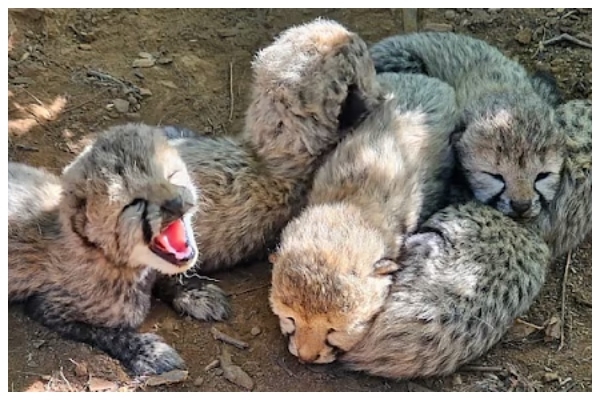
Union Environment, Forest and Climate Change Minister Bhupender Yadav announced the development in a post on social media platform X. He said KJP21 is the third Indian-born female cheetah to give birth in India, after Mukhi and KGP12.
The birth of the five cubs also marks the beginning of the Botswana lineage in India, as the cubs were born to a Botswana-born male cheetah. The addition is expected to strengthen the genetic diversity of India’s growing cheetah population.
With the latest births, India is now home to 60 cheetahs, including 41 born on Indian soil. The development marks another generation of cheetahs being born in India since the launch of the reintroduction programme.
Project Cheetah enters a new phase
Project Cheetah was launched on September 17, 2022, when Prime Minister Narendra Modi released the first eight cheetahs brought from Namibia into Kuno National Park. The initiative was aimed at restoring cheetahs in India after the species was declared extinct in the country in 1952.
The programme was expanded in February 2023 with the arrival of 12 cheetahs from South Africa. In February 2026, another nine cheetahs were brought from Botswana to strengthen the genetic pool and support the long-term conservation programme.
Another historic and joyous milestone for Project Cheetah! 🐆❤️
— Bhupender Yadav (@byadavbjp) October 5, 2026
KJP21, a 32-month-old Indian-born female cheetah, has given birth to five healthy cubs in Kuno National Park today.
KJP21 is the third Indian-born female cheetah to give birth, after Mukhi and KGP12—an important… pic.twitter.com/j9mc9E5SMO
The project initially faced challenges related to health, adaptation to Indian climatic conditions and cub survival. Over time, India-born cubs began surviving and adapting to the local environment.
Before the latest births, 13 India-born cubs had survived beyond one year of age, indicating progress in the breeding and survival of cheetahs in Indian habitats.
Cheetahs expanding beyond Kuno
The project has also moved beyond the initial reintroduction stage, with efforts focused on allowing cheetahs to establish territories in open landscapes.
Cheetahs were released into free-ranging areas in 2025 and are being monitored continuously by forest officials and wildlife experts. Kuno National Park remains the main centre of the programme, while Gandhi Sagar Wildlife Sanctuary in Madhya Pradesh has also become part of India’s expanding cheetah landscape.
As of September 2026, 17 cheetahs were reported to be free-ranging in the open wild at Kuno, while 32 remained in soft-release bomas. Of these, 19 were cubs below one year of age awaiting future release.
The latest birth is being seen as an important step in building a self-sustaining cheetah population in India. The next phase of Project Cheetah will focus on expanding suitable habitats, developing wildlife corridors and connecting landscapes to support the long-term movement and survival of the species.