Democracy is India's DNA , Not Your Ancestral Property, Rahul
Rahul Gandhi"s lectures on democracy also carry a heavy historical irony.
NewsBharati 07-Oct-2026 12:51:36 PM
Total Views |


Rahul Gandhi has now declared that Narendra Modi, Amit Shah and Chief Election Commissioner Gyanesh Kumar have “finished democracy” in India. He has gone further, accusing them of “hijacking” the country and calling what has allegedly been done “treason”.
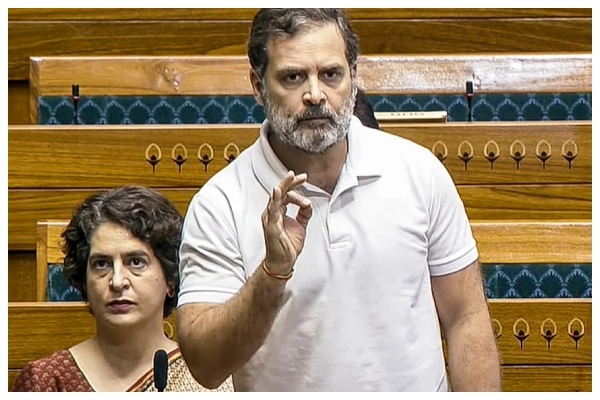
These are not ordinary political allegations. They are accusations against the legitimacy of the country's democratic system itself. And Rahul Gandhi should therefore be asked a very simple question - what does he do when the people reject him? Does he accept the verdict and ask why? Does he examine his party, its leadership, its politics, its ideology and its failures? Or does he blame the Election Commission, the electoral system, institutions and finally democracy itself?
Rahul Gandhi's lectures on democracy also carry a heavy historical irony. Congress's own history is hardly a story of spotless internal democracy. In 1946, when the Congress was deciding who would lead the interim government, 12 of the 15 Provincial Congress Committees backed Sardar Vallabhbhai Patel. Nehru did not have the backing of any PCC; Gandhi's preference for Nehru ultimately prevailed, Patel withdrew, and Nehru emerged unopposed as Congress president. That decision paved the way for his becoming the head of the interim government and subsequently independent India's first Prime Minister. This episode certainly destroys the simplistic moral posture that Congress alone has always represented some pristine democratic tradition.
Then came Indira Gandhi. The Emergency remains the darkest reminder of what happens when political power becomes concentrated in one leader and institutional restraints are treated as obstacles. Opposition leaders were jailed, civil liberties were curtailed and the press was subjected to censorship.
And then came the most enduring feature of Congress politics - dynasty. Nehru. Indira. Rajiv. Sonia. Rahul. Democracy is not merely the right to vote once every five years. Democracy means that an ordinary party worker can dream of becoming its leader. It means that political authority cannot become a family inheritance. It means that the son of a farmer, a teacher, a labourer or a small trader must believe that he too can rise to the highest office in the land.
India does not need such lectures. The Indian voter has demonstrated his democratic maturity repeatedly. Governments have been elected and defeated. Prime ministers have been removed. Political parties that once appeared invincible have been pushed aside. States have changed governments through the ballot box. No family, no party and no political ideology has been given a permanent lease on power. That is democracy.
And that is precisely why Rahul Gandhi's present rhetoric deserves to be questioned. The Election Commission does not own the vote. The Prime Minister does not own the vote. Congress does not own the vote. Rahul Gandhi does not own the vote. The vote belongs to the Indian citizen. If the voter rejects Congress, that is democracy. If the voter rejects Rahul Gandhi, that is democracy. If the voter repeatedly chooses somebody else, the answer cannot be that the voter was cheated every time.
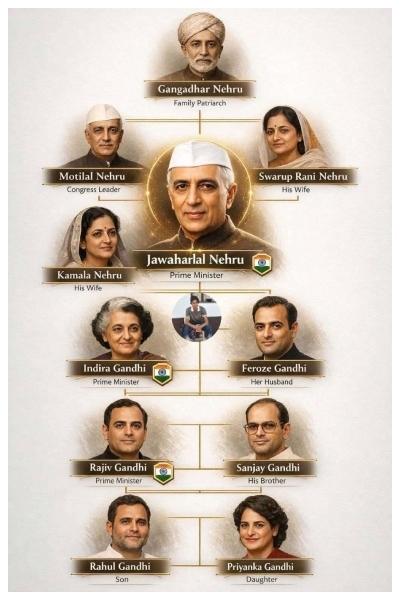
There is another contradiction Rahul Gandhi cannot escape. A party that claims to be the custodian of democracy must also demonstrate tolerance towards opposition, respect for institutions and faith in constitutional processes. Congress's record raises difficult questions on all three. The Emergency remains the starkest example: opposition leaders were jailed, civil liberties suspended and the press censored. The dismissal of elected State governments under Article 356 became a recurring instrument of central political power, most notoriously during the Nehru and Indira Gandhi eras. Political opponents were not always treated as legitimate competitors; too often, they were treated as obstacles to be removed. The Congress system also repeatedly placed party and family authority above internal dissent. The result was a political culture in which power was expected to remain within an established establishment and disagreement was often viewed as disloyalty.
This is why Rahul Gandhi's latest sermon on democracy deserves scrutiny. Democracy is not merely the freedom to speak when in opposition. It is the willingness to accept defeat, respect institutions when they do not deliver the desired outcome, and acknowledge that constitutional authorities do not become illegitimate simply because their decisions are politically inconvenient.
India is not the property of the Gandhi family. Indians are not its subjects. They are citizens of a free Republic with a political consciousness far older than any contemporary party. And there is something Rahul Gandhi should understand before he invokes words like “treason” and declares that democracy has been finished.
Democracy is India's DNA. It is not a gift from the Gandhi family, nor a doctrine that any political party can claim as its private property. The Indian people have a long tradition of debate, dissent, argument, accommodation and collective decision-making. The Constitution gave that democratic instinct an institutional framework; it did not hand sovereignty to a dynasty. Governments will change. Leaders will rise and fall. Parties will win and lose. But the Indian voter remains sovereign.
That is the real India. Its democracy belongs to its people, not to a dynasty. Rahul Gandhi should learn to respect the Indian voter before lecturing India about democracy.

Editor's Desk
Editor's Desk