Modi at 25: Nation First, Politics Beyond Vote Banks
Total Views |


NEW DELHI, October 7: Prime Minister Narendra Modi on Wednesday used the completion of 25 years of his journey as the head of a government to present his political philosophy as a continuing mission rather than a personal ambition, declaring that “Nation First” remained his guiding principle and that his next goal was to make India a developed nation by 2047.
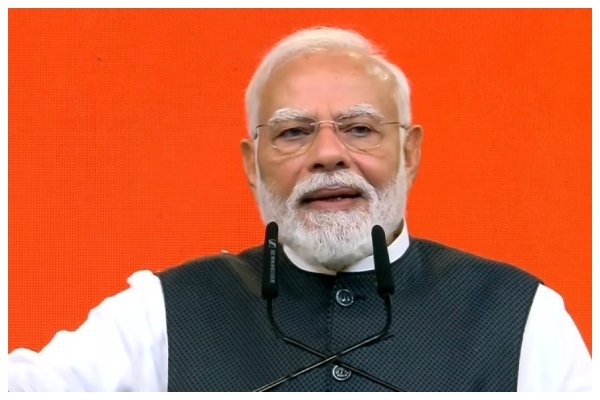
The Prime Minister's address, however, went beyond a personal reflection on 25 years in public life. He used the occasion to outline a political vision in which development, national interest and social unity take precedence over what he described as politics based on dividing society for votes.
Modi said one of India's major challenges was the tendency to divide society on the basis of electoral calculations. He questioned the logic of viewing basic developmental problems through the prism of caste or community.
If a farmer's field does not receive water, he asked, does the problem affect only one caste? If electricity is unavailable, does darkness fall only on one community?
The message was clear: governance cannot be reduced to vote-bank arithmetic when the problems confronting citizens are universal.
Modi contrasted this approach with an alternative politics centred on delivery of basic services, economic opportunity and development for all sections of society. His argument was that the state's responsibility is not to identify citizens according to their electoral value but to address their common needs.
The Prime Minister linked this approach to the larger objective of Viksit Bharat 2047. He said India would achieve the goal of becoming a developed nation through visionary policies, hard work and collective determination.
Modi sought to project development not merely as an economic programme but as a unifying political principle. Water, electricity, infrastructure, employment, manufacturing and technological advancement do not belong to one caste, religion or region. They are requirements of citizenship.
This approach also fits into the larger political vocabulary of the Modi government, which has increasingly presented welfare delivery and development schemes as instruments of saturation and universal access, rather than benefits restricted to selected vote banks.
At the same time, Modi used his 25-year journey to underline the importance of democratic politics. He said critics had helped him introspect, while opponents had taught him the power of democracy.
His remarks were significant at a time when political differences in India have increasingly been accompanied by arguments over the credibility of democratic institutions and the conduct of elections.
Modi said that the democratic system had allowed him to move from heading the Gujarat government to leading the country and that the journey had been sustained by the trust of the people.
He also recalled his childhood in Vadnagar and described himself as a continuing student. The statement reflected an attempt to present longevity in political office not as entitlement but as an ongoing responsibility to learn and improve.
The larger message of Modi's address was therefore not simply that he had completed 25 years in government. Modi sought to turn Viksit Bharat from a government slogan into a long-term national political project.
Addressing a public function in New Delhi, Modi said his political journey from Gujarat to the national stage had been driven by a commitment to public service. He said he had not entered politics with the ambition of occupying positions but with a mission to serve the country.
The Prime Minister's address, however, went beyond a personal reflection on 25 years in public life. He used the occasion to outline a political vision in which development, national interest and social unity take precedence over what he described as politics based on dividing society for votes.
Modi said one of India's major challenges was the tendency to divide society on the basis of electoral calculations. He questioned the logic of viewing basic developmental problems through the prism of caste or community.
If a farmer's field does not receive water, he asked, does the problem affect only one caste? If electricity is unavailable, does darkness fall only on one community?
The message was clear: governance cannot be reduced to vote-bank arithmetic when the problems confronting citizens are universal.
Modi contrasted this approach with an alternative politics centred on delivery of basic services, economic opportunity and development for all sections of society. His argument was that the state's responsibility is not to identify citizens according to their electoral value but to address their common needs.
The Prime Minister linked this approach to the larger objective of Viksit Bharat 2047. He said India would achieve the goal of becoming a developed nation through visionary policies, hard work and collective determination.
He set out an ambitious national agenda that includes taking India among the world's three largest economies, strengthening self-reliance, making the country a global manufacturing hub, hosting the Olympics and taking the Indian space programme to new heights.
मेरे लिए कर्म ही सबकुछ है। कर्म ही मेरा धर्म है: माननीय प्रधानमंत्री श्री @narendramodi जी#25YearsOfSeva pic.twitter.com/mF97SsH79y
— Kiren Rijiju (@KirenRijiju) October 7, 2026
The political significance of the message lies in the shift from the politics of entitlement to the politics of aspiration.
Modi sought to project development not merely as an economic programme but as a unifying political principle. Water, electricity, infrastructure, employment, manufacturing and technological advancement do not belong to one caste, religion or region. They are requirements of citizenship.
This approach also fits into the larger political vocabulary of the Modi government, which has increasingly presented welfare delivery and development schemes as instruments of saturation and universal access, rather than benefits restricted to selected vote banks.
At the same time, Modi used his 25-year journey to underline the importance of democratic politics. He said critics had helped him introspect, while opponents had taught him the power of democracy.
His remarks were significant at a time when political differences in India have increasingly been accompanied by arguments over the credibility of democratic institutions and the conduct of elections.
Modi said that the democratic system had allowed him to move from heading the Gujarat government to leading the country and that the journey had been sustained by the trust of the people.
He also recalled his childhood in Vadnagar and described himself as a continuing student. The statement reflected an attempt to present longevity in political office not as entitlement but as an ongoing responsibility to learn and improve.
The larger message of Modi's address was therefore not simply that he had completed 25 years in government. Modi sought to turn Viksit Bharat from a government slogan into a long-term national political project.