Shree Anna: How India’s Millets Are Shaping a Sustainable Food Future
One of the biggest advantages of millets is their ability to grow in areas
Total Views |


Once considered traditional coarse grains, millets are now gaining importance as India looks for healthier diets, climate-resilient agriculture and more sustainable food systems. Popularly promoted as “Shree Anna”, millets include jowar (sorghum), bajra (pearl millet), ragi (finger millet) and several small millets such as kodo, kutki and barnyard millet.
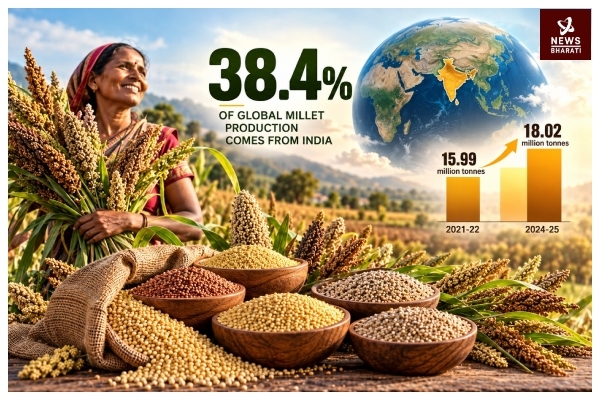
India is currently the world’s largest producer of millets. According to the Press Information Bureau (PIB), citing FAO data for 2023, India contributed 38.4 per cent of global millet production. The country’s total millet production also increased from 15.99 million tonnes in 2021-22 to 18.02 million tonnes in 2024-25, showing a steady rise in output.
A nutritional alternative
Millets are valued for their nutritional content and can add greater diversity to diets dominated by rice and wheat. They are naturally gluten-free and contain protein, dietary fibre, minerals and other micronutrients. Their relatively low glycemic index also makes several millet-based foods useful as part of diets aimed at better blood-sugar management.
The growing focus on millets also reflects the need to connect nutrition with local food systems. Their use in school meals, government nutrition programmes and consumer food products can help increase access while creating demand for farmers.
Built for difficult farming conditions
One of the biggest advantages of millets is their ability to grow in areas where water and other agricultural resources are limited. Crops such as bajra and jowar can perform well in dryland and arid regions, making them important for farmers facing irregular rainfall and changing climatic conditions.
Millets generally require fewer inputs than water-intensive crops and have relatively short growing periods. Their cultivation can therefore support farmers in rainfed areas while reducing dependence on irrigation.
The government has also identified millets as part of its wider effort to improve agricultural resilience. Under the National Food Security and Nutrition Mission (NFSNM), support is provided for nutri-cereal production, including improved seeds, demonstrations, farm equipment, water-saving technologies, training and integrated nutrient and pest management. The programme covers districts across 28 states and two Union Territories.
From farm crop to consumer product
The revival of millets, however, faces several challenges. Farmers need better market returns, reliable procurement and stronger links with consumers. Unlike rice and wheat, millet supply chains and processing facilities are not equally developed across regions.
Processing is particularly important because many consumers prefer convenient products rather than raw grains. Millet-based flour, flakes, biscuits, pasta, snacks and ready-to-eat foods can create new markets for farmers and food businesses.
The government has introduced measures to strengthen this value chain. Millets have been included in nutrition programmes, while procurement under schemes such as the Public Distribution System, Integrated Child Development Services and school meals has also been encouraged. An Export Promotion Forum has been established to support the international marketing and export of Indian millets.
The road ahead for Shree Anna
The policy push received global attention during the International Year of Millets in 2023, declared by the United Nations after an Indian proposal. India used the year to promote millet production, consumption, exports, research and value addition. The Indian Institute of Millets Research in Hyderabad has also been designated as a Centre of Excellence for sharing research and best practices.