Supreme Court orders fresh elections in 50 Punjab wards over electoral irregularities
The Supreme Court has ordered fresh elections in 50 municipal wards across Punjab’s Patiala and Moga districts after a judicial inquiry found serious irregularities during the December 2024 civic polls. The fresh elections must be completed within six weeks and will be conducted under judicial supervision.
Total Views |


The Supreme Court has set aside municipal elections in 50 wards across Punjab and ordered fresh polls after a judicial fact-finding commission found evidence of obstruction, intimidation, violence and other irregularities during the nomination process.
A three-judge bench comprising Chief Justice of India Surya Kant and Justices Joymalya Bagchi and V Mohana directed fresh elections in 28 wards of the Patiala Municipal Corporation and 22 wards in the Baghapurana and Dharamkot municipal councils in Moga district.
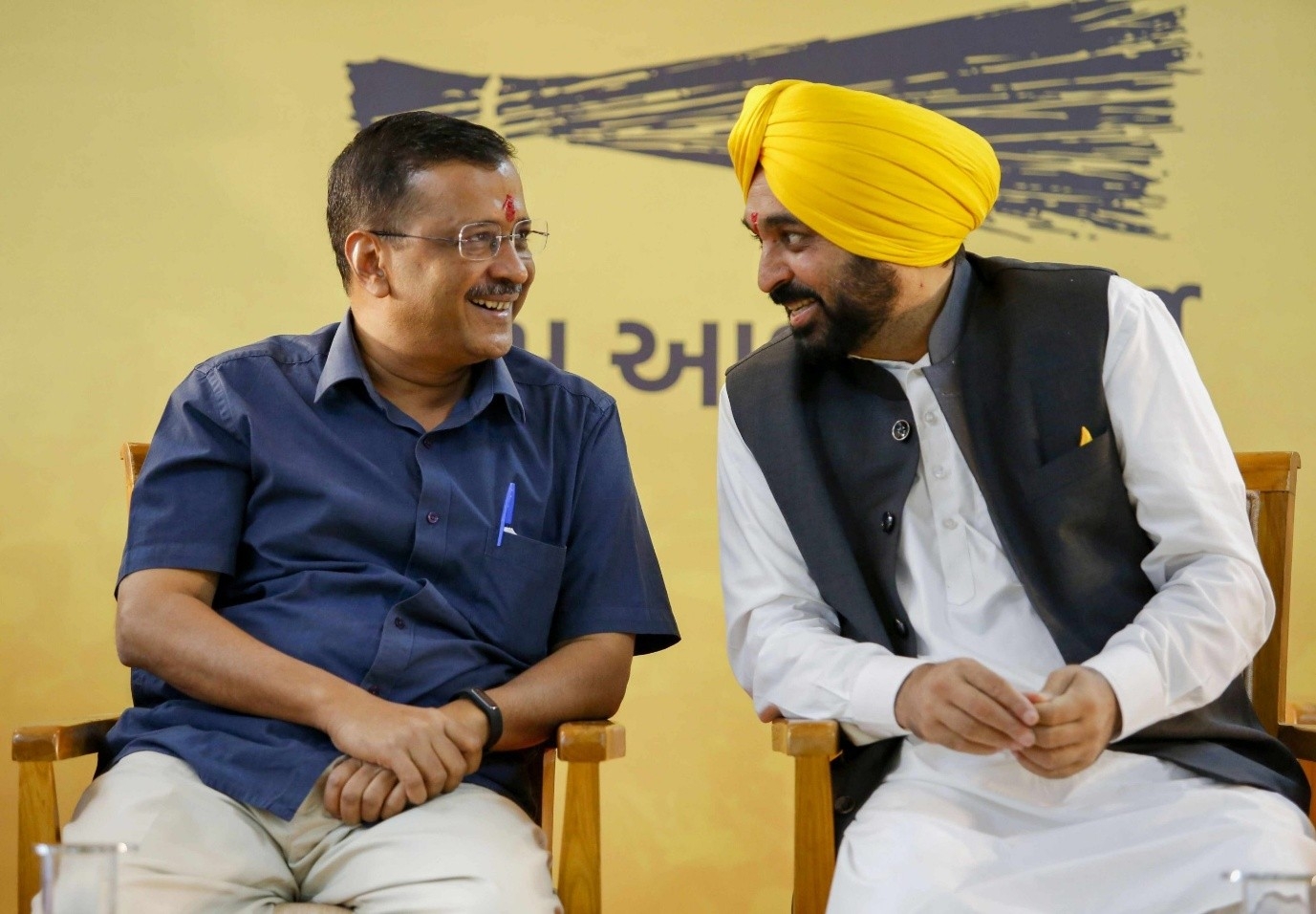
Aam Aadmi Party Chief Arvind Kejriwal and Punjab CM Bhagwant Mann, (Image Source: Millenium Post)
The court's September 28 order followed an inquiry conducted by former Punjab and Haryana High Court judge Justice Nirmaljit Kaur. The one-member commission was appointed by the Supreme Court to examine allegations that several candidates, particularly those opposed to the ruling Aam Aadmi Party (AAP), were prevented from contesting the municipal elections.
Commission finds serious irregularities
The commission examined oral statements, documentary records and video evidence related to the election process. It found that the nomination process in several wards had been seriously compromised.
According to the findings, candidates were allegedly prevented from submitting nomination papers through physical obstruction, intimidation and violence. In some instances, nomination papers were allegedly snatched, torn or destroyed.
The inquiry also recorded allegations of physical assault, detention, threats and coercion against candidates and their supporters. In certain wards, candidates were allegedly forced to withdraw from the contest, while some nominations were reportedly rejected under circumstances that were questioned before the commission.
The allegations were raised in connection with the December 2024 municipal elections. Petitioners had accused members or supporters of the ruling AAP, police personnel and unidentified individuals of interfering with the nomination process.
They alleged that opposition candidates were physically assaulted and that their nomination papers were forcibly taken away to prevent them from contesting.
The petitioners also raised concerns over the lack of audiovisual recording of the nomination process, despite directions issued by the Punjab and Haryana High Court.
28 wards in Patiala affected
The commission specifically identified 13 wards of the Patiala Municipal Corporation where opposition candidates were allegedly prevented from submitting their nomination papers.
The wards identified were 1, 12, 32, 33, 36, 41, 43, 44, 45, 48, 50, 51 and 52.
The commission concluded that the electoral process in these wards had been compromised and recommended that the elections be set aside.
The Supreme Court ultimately ordered fresh elections in 28 wards in Patiala district.
The findings have placed the conduct of the local body elections under significant scrutiny, particularly regarding whether candidates were given an equal opportunity to participate in the electoral process.
Dharamkot and Baghapurana polls also set aside
The commission found similar irregularities in parts of Moga district.
In Dharamkot Municipal Council, seven wards, 1, 2, 3, 4, 7, 9 and 13 were found to have been affected by alleged forcible prevention of nominations, coercive withdrawals or wrongful rejection of nomination papers.
In Baghapurana Municipal Council, the commission found that elections in all 15 wards had been compromised.
According to the inquiry, opposition candidates in these wards were systematically prevented from filing their nomination papers.
Based on the findings, the commission recommended setting aside elections in 28 wards in Patiala district and 22 wards in Moga district.
The Supreme Court accepted the recommendations and ordered that the electoral process in all 50 wards be conducted afresh.
Punjab government does not oppose fresh polls
During the proceedings, senior advocate Kapil Sibal, appearing for the Punjab government, informed the court that the state had no objection to accepting the commission's recommendations.
After considering the commission's report and the material placed before it, the bench concluded that there were sufficient grounds for ordering fresh elections.
The order effectively requires the State Election Commission and the Punjab administration to restart the electoral process in the affected wards.
ALSO READ : Madras HC Rejects FCRA Registration to Zen Trust
Supreme Court orders judicial monitoring
The court has introduced extensive safeguards for the fresh elections to prevent a repeat of the irregularities.
The Chief Justice of the Punjab and Haryana High Court has been directed to constitute a judicial monitoring committee within one week. The committee will comprise a retired High Court judge and will supervise the election process from the issuance of the election notification until the declaration of results.
The Supreme Court has also asked the High Court Chief Justice to nominate two or three senior members of the High Court Bar to act as observers.
The observers will oversee important stages of the electoral process, including the filing and scrutiny of nomination papers, allotment of election symbols and polling.
The court has directed that these stages be video graphed. The recordings will have to be preserved and submitted to the judicial monitoring committee.
Details of officials and police deployment sought
The Supreme Court has also directed the Punjab government to provide detailed information about the officials and police personnel deployed during the fresh elections.
The state will have to submit ward-wise details of officials assigned election duties. It must also provide the names and deployment details of police officers holding the rank of Deputy Superintendent of Police and above.
The directions are aimed at ensuring greater transparency and accountability during the fresh electoral exercise.
The judicial monitoring committee has also been empowered to examine complaints alleging interference or obstruction by any individual, including government officials. If the committee finds a complaint to have merit, it will submit its findings to the Chief Justice of the Punjab and Haryana High Court for appropriate judicial action.
Election results subject to judicial approval
The Supreme Court has imposed an additional safeguard by making the declaration of results subject to judicial satisfaction.
After polling is completed, the monitoring committee will submit a comprehensive report on the conduct of the elections.
\
The results of the fresh elections will not be declared until the Chief Justice of the Punjab and Haryana High Court is satisfied that the entire process was conducted freely and fairly.
Fresh polls to be completed within six weeks
The Supreme Court has directed that the entire re-election exercise in the 50 affected wards be completed within six weeks.
However, the election schedule will be announced only after the judicial monitoring committee has been constituted.
The court also appreciated Justice Nirmaljit Kaur for conducting the fact-finding inquiry and preparing a detailed report based on oral, documentary and video evidence.