India under ‘Regime change’ threat? Claims of Bangladesh-Nepal style operation trigger alarm
A political narrative alleging that India could face a Bangladesh or Nepal-style regime change attempt in the next three months has gained attention amid growing political tensions and controversy surrounding electoral processes. The claims also have involvement of Western forces in this regard.
Total Views |


Amid an increasingly charged political atmosphere, claims of a possible “regime change operation” in India have surfaced, with warnings that the country could witness an attempt similar to political upheavals seen in Bangladesh and Nepal.
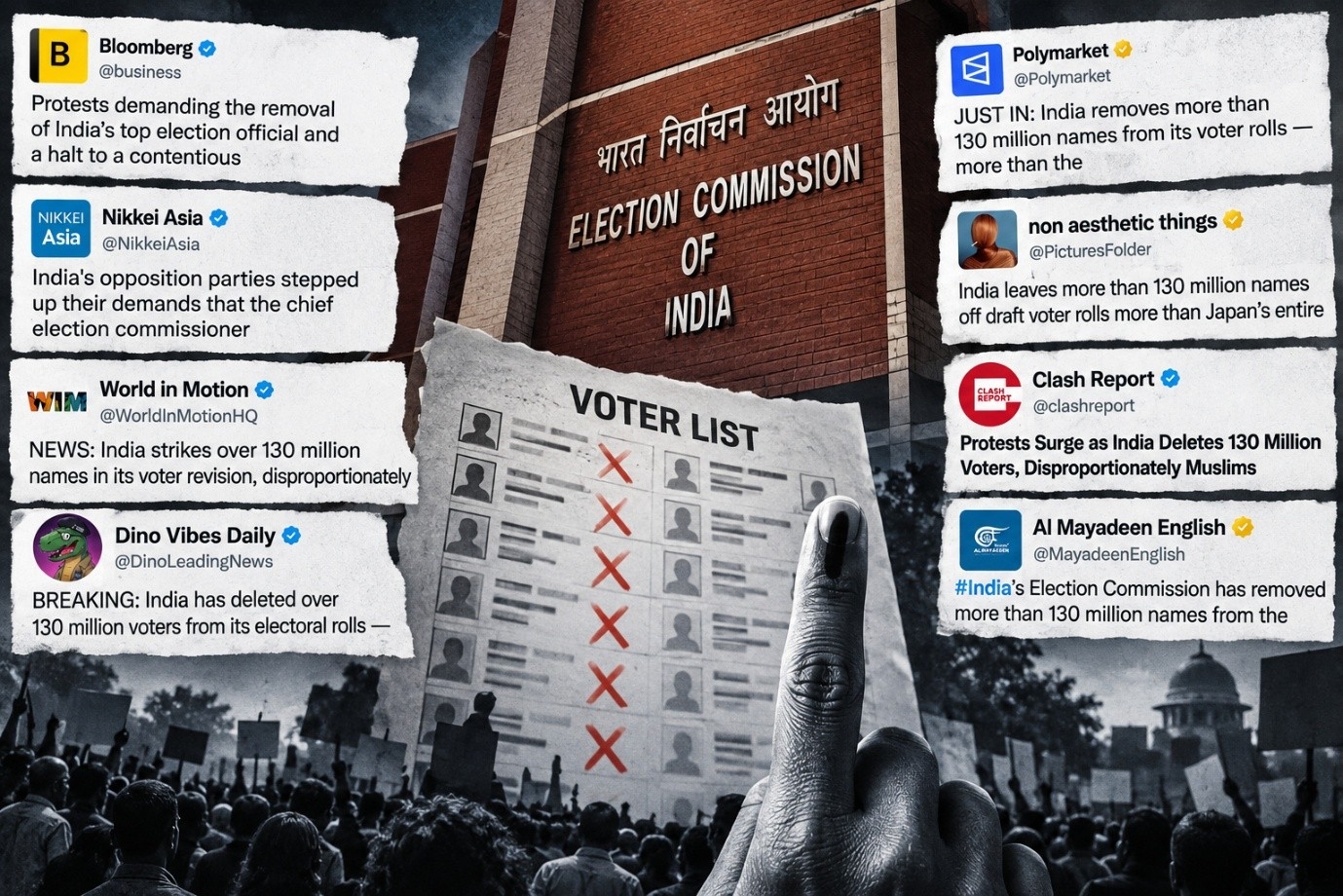
Image - AI generated
The claims, circulating through social media and political commentary, allege that an organised attempt could be made to destabilise the Indian government within the next three months. They further claim that “the same Western forces” involved in political developments elsewhere could be behind such an effort in India.
The narrative has emerged against the backdrop of intense political disagreements in India, including disputes over electoral processes, protests by opposition parties and growing debate over the functioning of democratic institutions and growing demands of resignation by the Chief Election Commissioner (CEC) Gyanesh Kumar.
Let me announce it officially
— STAR Boy TARUN (@Starboy2079) October 6, 2026
India is under regime change operation
A Bangladesh/Nepal type regime change will be attempted in India in next 3 months and the same western forces are behind it
Only people of India can stop it
Save India from going into hands of dogs pic.twitter.com/kZOYLlrIOM
Bangladesh and Nepal Cited as Examples
Those promoting the regime-change narrative have drawn comparisons with recent political developments in Bangladesh and Nepal, arguing that India could face similar attempts to destabilise its political system.
In Bangladesh and Nepal, large public protests recently led to major political changes, raising wider questions about foreign influence in South Asia. In Bangladesh, protests that began in July 2024 over government job quotas soon turned into a wider anti-government movement. The protests became violent, Sheikh Hasina resigned as Prime Minister and left the country on August 5, 2024, and an interim government led by Muhammad Yunus took charge.
In Nepal, youth-led protests in September 2025, which initially focused on a social-media ban, quickly expanded into anger over corruption, unemployment and political privilege. Prime Minister K.P. Sharma Oli resigned following the protests, and an interim government was formed under former Chief Justice Sushila Karki.
International headlines highlight 130 million voter names in India’s revision
Posts and headlines circulating on social media have focused on the Election Commission’s voter-roll revision in India, repeatedly using the figure of more than 130 million names. Several posts describe the names as “deleted”, “removed” or “struck” from the electoral rolls, while one reference specifically describes them as being left off the draft voter rolls.
Bloomberg highlighted protests demanding the removal of India’s top election official and a halt to the contentious voter revision. Nikkei Asia reported that opposition parties had stepped up demands concerning the Chief Election Commissioner.
Other posts used stronger language. World in Motion referred to India striking more than 130 million names during the voter revision, while Dino Vibes Daily described the development as India having “deleted over 130 million voters” from electoral rolls.
Polymarket similarly reported that India had removed more than 130 million names from voter rolls, while another post compared the figure with Japan’s population and said the names had been left off draft voter rolls.
Clash Report went further, linking the voter revision to protests and describing the 130 million figure as voters deleted from the rolls, while adding the claim that the impact was “disproportionately” on Muslims. Al Mayadeen English also reported that the Election Commission had removed more than 130 million names.
Electoral controversy adds to political tensions
The allegations have emerged at a time when the Election Commission is facing criticism from opposition parties over the Special Intensive Revision of electoral rolls.
The Election Commission has reported that 13.39 crore electoral records were placed in categories including absent, permanently shifted, dead and duplicate during the draft-stage revision.
Opposition parties have accused the poll panel of potentially excluding genuine voters, while the Commission has maintained that the figure does not represent the final deletion of 13.39 crore eligible voters.
The dispute has resulted in protests and demands for accountability, adding to the wider political confrontation between the government and opposition.
Warning of Bangladesh-Nepal style upheaval in India
A warning circulating amid rising political tensions says India could face a Bangladesh- or Nepal-style political upheaval in the next three months. The narrative points to growing protests, political unrest, pressure on institutions and alleged involvement of foreign forces.
Supporters of the warning argue that recent events in Bangladesh and Nepal show how quickly a local issue can turn into a nationwide political movement.
The India-focused narrative also highlights the growing role of social media, foreign-funded networks and international organisations in shaping public opinion and mobilising protests. It argues that political and electoral disputes could similarly be used to build wider public unrest in India.
The ongoing controversy over the Special Intensive Revision of electoral rolls has added to these concerns. Opposition protests, demands for the resignation of Chief Election Commissioner Gyanesh Kumar and allegations of voter exclusion have created another major political flashpoint.
The message calls on Indians to remain alert and protect the country's democratic institutions, political stability and national interests. It warns that India must not allow domestic grievances or external influence to develop into a larger campaign capable of destabilising the country.
Larger question of foreign influence
Foreign interference in domestic politics is a legitimate national-security and democratic concern. Governments across the world routinely monitor attempts by foreign actors to influence elections, public opinion, political movements and strategic decision-making.
India has also raised concerns over foreign interference and disinformation on several occasions.