SC Quashes Rape Case, Says Prosecution Cannot Be Used as Strong-Arm Tactic to Force Marriage
Total Views |


New Delhi: The Supreme Court has quashed a criminal case arising from an alleged false promise of marriage, holding that consent in a consensual relationship cannot be loosely treated as having been obtained through fear or misconception merely because the relationship subsequently failed and marriage did not materialise.
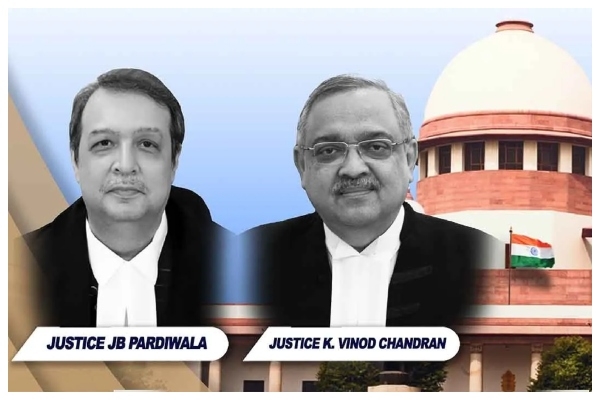 A Bench of Justice J.B. Pardiwala and Justice K. Vinod Chandran said a criminal prosecution cannot be used as a means to compel a person to marry, observing that “a criminal prosecution cannot be reduced to a strong-arm tactic.” The Bench made the observations while allowing an appeal filed by Martanda Singh against criminal proceedings initiated in Chhattisgarh.
The case arose from FIR No. 191 of 2025 registered at Sirgitti police station in Bilaspur on the complaint of a woman who alleged that Singh had sexually exploited her on the pretext of marriage and subsequently refused to marry her.
The Supreme Court noted that the relationship between the two had continued for about three years. The woman, an engineering graduate preparing for competitive examinations, had met Singh at an academy where both were enrolled. They fell in love and their families had also discussed marriage. According to the complaint, when her mother was away, Singh would visit her house and the two entered into a physical relationship, which continued for three years.
The Bench said that the complaint itself did not contain any clear assurance or promise of marriage preceding the physical relationship. Instead, the allegation was that the parties entered into the relationship after courtship, fully knowing the consequences, but that the relationship was allegedly under the “pretext of marriage”.
The Court described this allegation as “clearly an afterthought.” It stressed that the mere use of the expression “pretext of marriage” cannot by itself establish that consent was obtained through deception or misconception.
The Bench reiterated the legal principle laid down by the Supreme Court in Deepak Gulati v. State of Haryana that there is an important distinction between a false promise to marry made with no intention of fulfilling it from the very beginning and a genuine relationship in which the parties subsequently fail to marry.
It held that where two persons have maintained a consensual relationship over a substantial period, consent cannot subsequently be characterised as having been obtained through fear or misconception merely because the relationship has ended.
The Court specifically observed that “consent under fear or misconception cannot be loosely inferred to fasten criminal liability” when both parties admittedly had a consensual relationship and the woman had willingly permitted the physical relationship.
The Bench also examined the undertaking given by Singh before the Mahila Thana Counselling Centre, Bilaspur, under which he had agreed to marry the woman. The Court said the undertaking could not itself be treated as the promise of marriage forming the basis of the criminal allegation.
It observed that the undertaking would have been given under the threat of criminal prosecution and was, in any event, unenforceable. More importantly, the undertaking came after the parties had already been in a relationship for three years. It therefore could not establish that the woman's consent at the beginning of the relationship had been obtained through coercion or misrepresentation.
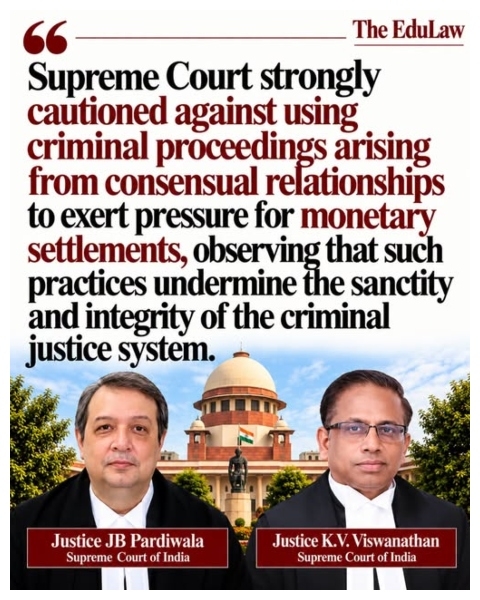 The Court also attached significance to the woman's own statement that she would drop the criminal charge if Singh married her. It was in this context that the Bench made its observation that criminal prosecution cannot be reduced to a strong-arm tactic for securing marriage.
The Bench further took note of the fact that the complainant was a well-educated woman who had entered into the relationship and continued it for three years. The Court did not regard her education alone as determinative of consent, but considered it in the overall circumstances while examining whether the relationship could be characterised as one based on coercion or misrepresentation.
The Court also pointed out a significant factual circumstance concerning the meetings between the two. The complaint stated that Singh would come to the woman's house when her mother was away. The Bench observed that the information that the mother had left would obviously have been communicated by the woman herself, since there could be no presumption that Singh was maintaining constant surveillance of her house.
Taking the circumstances together, the Bench said it was unable to find any criminal culpability on the part of Singh. The consent in the relationship, it held, could not be said to have been coerced or obtained through misrepresentation.
The Supreme Court consequently found “absolutely no reason” for allowing the criminal proceedings to continue. It quashed Charge Sheet No. 199 of 2025 dated June 17, 2025, which had been filed before the Judicial Magistrate First Class, Bilaspur. The case had subsequently become Sessions Case No. 216 of 2025 before the Additional Sessions Judge (Fast Track Court), Bilaspur, where it was posted for framing of charges.
The Bench directed that no further proceedings be taken against Singh and ordered the Sessions Case to be closed.
The case arose from FIR No. 191 of 2025 registered at Sirgitti police station in Bilaspur on the complaint of a woman who alleged that Singh had sexually exploited her on the pretext of marriage and subsequently refused to marry her.
The Supreme Court noted that the relationship between the two had continued for about three years. The woman, an engineering graduate preparing for competitive examinations, had met Singh at an academy where both were enrolled. They fell in love and their families had also discussed marriage. According to the complaint, when her mother was away, Singh would visit her house and the two entered into a physical relationship, which continued for three years.
The Bench said that the complaint itself did not contain any clear assurance or promise of marriage preceding the physical relationship. Instead, the allegation was that the parties entered into the relationship after courtship, fully knowing the consequences, but that the relationship was allegedly under the “pretext of marriage”.
The Court described this allegation as “clearly an afterthought.” It stressed that the mere use of the expression “pretext of marriage” cannot by itself establish that consent was obtained through deception or misconception.
The Bench reiterated the legal principle laid down by the Supreme Court in Deepak Gulati v. State of Haryana that there is an important distinction between a false promise to marry made with no intention of fulfilling it from the very beginning and a genuine relationship in which the parties subsequently fail to marry.
It held that where two persons have maintained a consensual relationship over a substantial period, consent cannot subsequently be characterised as having been obtained through fear or misconception merely because the relationship has ended.
The Court specifically observed that “consent under fear or misconception cannot be loosely inferred to fasten criminal liability” when both parties admittedly had a consensual relationship and the woman had willingly permitted the physical relationship.
The Bench also examined the undertaking given by Singh before the Mahila Thana Counselling Centre, Bilaspur, under which he had agreed to marry the woman. The Court said the undertaking could not itself be treated as the promise of marriage forming the basis of the criminal allegation.
It observed that the undertaking would have been given under the threat of criminal prosecution and was, in any event, unenforceable. More importantly, the undertaking came after the parties had already been in a relationship for three years. It therefore could not establish that the woman's consent at the beginning of the relationship had been obtained through coercion or misrepresentation.
The Bench further took note of the fact that the complainant was a well-educated woman who had entered into the relationship and continued it for three years. The Court did not regard her education alone as determinative of consent, but considered it in the overall circumstances while examining whether the relationship could be characterised as one based on coercion or misrepresentation.
The Court also pointed out a significant factual circumstance concerning the meetings between the two. The complaint stated that Singh would come to the woman's house when her mother was away. The Bench observed that the information that the mother had left would obviously have been communicated by the woman herself, since there could be no presumption that Singh was maintaining constant surveillance of her house.
Taking the circumstances together, the Bench said it was unable to find any criminal culpability on the part of Singh. The consent in the relationship, it held, could not be said to have been coerced or obtained through misrepresentation.
The Supreme Court consequently found “absolutely no reason” for allowing the criminal proceedings to continue. It quashed Charge Sheet No. 199 of 2025 dated June 17, 2025, which had been filed before the Judicial Magistrate First Class, Bilaspur. The case had subsequently become Sessions Case No. 216 of 2025 before the Additional Sessions Judge (Fast Track Court), Bilaspur, where it was posted for framing of charges.
The Bench directed that no further proceedings be taken against Singh and ordered the Sessions Case to be closed.