Congress: From ‘Vote Chori’ to Institutional Distrust
Total Views |


The open letter by 42 former judges is not merely another intervention in the increasingly bitter confrontation between Rahul Gandhi and the Election Commission. It raises a much larger question - is the Congress-led Opposition fighting an electoral battle, or is it attempting to create a permanent climate of distrust around the institutions through which electoral democracy functions?
The former judges have chosen unusually strong language. They say India's constitutional bodies are under “sustained attack” and describe the campaign as appearing to be a “calculated campaign driven by vested political interests.” Their warning is unmistakable: “Criticism of institutions is a democratic right. Denigration is not.”
Congress and Rahul Gandhi therefore cannot dismiss this as merely another political attack by the BJP. These are former judges of the Supreme Court and High Courts speaking as citizens who have spent their professional lives inside the constitutional system. The central issue is simple. Rahul Gandhi has repeatedly alleged “vote chori”.
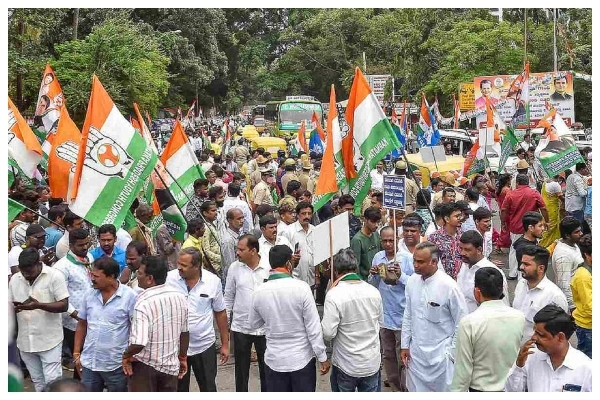
Congress has made the charge the centrepiece of its political mobilisation against Chief Election Commissioner Gyanesh Kumar and the Special Intensive Revision of electoral rolls. Opposition parties have joined the agitation, demanding the CEC's resignation and accusing the Election Commission of electoral manipulation. But where is the evidence? That is the question the former judges have asked.
They point out that allegations of vote theft have been made at press conferences rather than established before the Election Commission or courts. They note that when the Commission sought a sworn declaration, none was filed. They also question the selective attack on EVMs: the machines become suspect after defeat, while victories achieved through the same electoral mechanism apparently do not generate comparable objections. For the Congress, there is an especially uncomfortable historical irony.
This is the party that governed India for more than five decades. It won election after election through the same constitutional machinery that it now portrays as fundamentally compromised. The Election Commission that conducted elections in which Congress won was legitimate; the same institution cannot become illegitimate merely because the political fortunes of Congress have changed. Political parties lose elections. They challenge governments. They question election procedures. They demand recounts, revisions and investigations. All of that is part of democracy. But declaring the entire electoral architecture suspect without establishing the charge is something else.
The concern becomes even greater when Congress's campaign against the ECI is viewed alongside its attacks on other institutions. The former judges specifically say that the higher judiciary and statutory agencies have also been subjected to attacks. They criticise the tendency of activist organisations to approach courts repeatedly, provide inadequate evidence and then attack judgments when the outcome does not suit them. This is where Congress needs to answer a larger question. Is the objective merely to challenge SIR, or is SIR being used as another instrument to undermine confidence in the electoral system itself? Congress is already accused of having a secret plan to destabilise constitutional institutions. Therefore, the pattern identified by the former judges deserves political scrutiny.
The pattern is this - an allegation is made against the Election Commission; the allegation is amplified nationally; the institution is branded compromised; protests follow; the demand shifts from explanation to resignation; and eventually the credibility of the institution itself becomes the subject of political mobilisation. That is much bigger than a dispute over electoral rolls.
The Congress-led agitation has also produced a remarkable inversion. Instead of telling citizens that the electoral system works and that irregularities, if proved, will be corrected through constitutional mechanisms, Opposition politics increasingly tells citizens that the system itself cannot be trusted. That is not a harmless message.
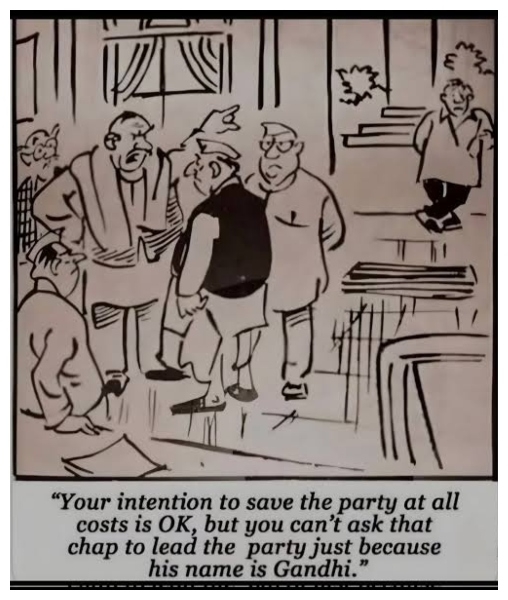
The former judges put it starkly: “Trust is the currency of democracy.” Their warning is even sharper - “When the ballot loses meaning, the street gains it.” They caution that once citizens are repeatedly told that their votes do not count, unrest and fringe or anarchic elements can occupy the resulting vacuum.
Congress should therefore ask itself what it is ultimately trying to achieve. If it wants electoral reform, there are institutions for that. If it believes SIR is unconstitutional, the Supreme Court is available. If it has evidence of manipulation, the Election Commission and courts are available. If names have been wrongly deleted, those cases can be identified and challenged. If officials have broken the law, prosecute them. But if the political objective is to make citizens believe that elections are inherently fraudulent whenever Congress loses, the consequences will extend far beyond Congress and the BJP.India cannot afford an American-style politics in which every electoral defeat becomes evidence of a stolen election and every constitutional institution is judged according to whether it produces the desired political outcome. The Congress should remember something else. It is not merely another political party. It is the party that governed independent India for decades and played a central role in creating many of its constitutional institutions. Its responsibility, therefore, is greater.
And that is where the Congress-led agitation becomes dangerous not because a political party is challenging the Election Commission, but because the challenge risks teaching citizens that the institution which certifies their vote cannot be trusted. The BJP will not govern India forever. Congress will not remain in opposition forever. Governments change. Parties rise and fall. Leaders come and go.
The Election Commission must remain. The judiciary must remain. The ballot must remain credible. That is why the 42 former judges' warning deserves to be heard not as a defence of one government or one political party, but as a warning to those who may be tempted to turn institutional distrust into an electoral strategy. Congress has every democratic right to fight the BJP. It has no democratic right to expect citizens to abandon faith in the ballot merely because Congress disputes the result.