Concert Country: How North East Became Its Most Surprising Stage
From a 300-person gathering in Ziro to Ed Sheeran in Shillong, the Northeast is building a live-music economy that metros are starting to envy. And 2026 could be its biggest year yet.
Total Views |


December mornings at Kisama, a few kilometres outside Kohima, start quietly. Mist sits in the valley until mid-morning. Smoke rises from cooking fires, and the smell of roast pork reaches you before the gate does. People lower their voices without quite knowing why.
Then the log drums begin. Six men to a drum, warriors in feathered headgear and cane armour, all striking together. Phones come out. Mugs of rice beer travel from hand to hand. Behind the main arena a Naga rock band is checking its amplifiers, and the feedback rolls across the same ridge where war horns once called villages to fight.
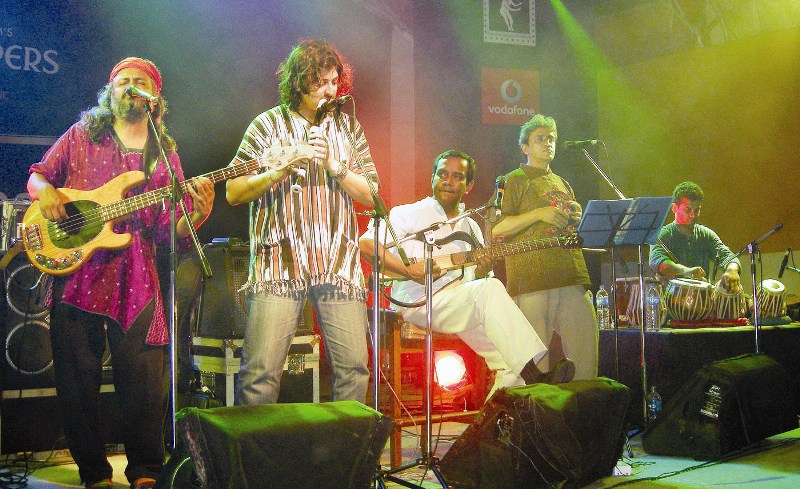
This is the Hornbill Festival, and it surprises almost everyone who walks in. Four decades ago these hills knew curfews, army convoys and gunfire, and children grew up with all three. Sixteen tribes performing side by side in a heritage village for ten days was not something anyone could have pictured then.
The region has not forgotten that past. It has simply found other things to do with its evenings.
Don’t Come to Nagaland during Hornbill Time ⏰ pic.twitter.com/g554pz15N2
— Temjen Imna Along (@AlongImna) November 11, 2026
The 26th Hornbill closed in December 2025 with 2,14,493 visitors. More than 2,500 were foreigners, and six countries, France, the UK, Ireland, Austria, Malta and Switzerland, sent delegations as country partners. The festival was worth about ₹131 crore to Nagaland in 2023 and ₹139 crore in 2024. The pre-Covid peak of 2,82,811 was set in 2019, and with the next edition opening on 1 December, plenty of people in Kohima are quietly hoping for a record.
Take Nagaland’s Hornbill Festival. The 2025 edition attracted 2.14 lakh visitors in 10 days, including 2,500+ foreign tourists. Six European countries participated as official Country Partners. A festival in the hills has become an international tourism event.🎤 pic.twitter.com/5tX6g3ULpH
— Dispatches From North East (@DispatchesNE) November 12, 2026
Nagaland is only one stage. The Northeast now has 72 music festivals, and the money is starting to show.
Meghalaya put ₹23.5 crore into the 2024 Cherry Blossom Festival in Shillong and saw ₹133.42 crore come back, along with 5,509 daily jobs across hotels, taxis, shops and flights. The 2025 edition brought The Script, Jason Derulo, Diplo, Aqua and Tyga, and Ed Sheeran had played Shillong that February. In Guwahati, one Post Malone show was worth about ₹43 crore, and more than half the crowd came from over 200 other towns. A study by EY-Parthenon and BookMyShow reckons a steady line of such shows could add over ₹700 crore to Assam in five years.
Two models, one idea
What makes this story interesting is that the region did not follow one script.
The organic model is Nagaland. Hornbill exists because two villages, Kigwema and Phesama, donated their land, and the site’s name, Kisama, merges both. No state can order that kind of buy-in. It is why the festival feels owned rather than staged.
A magical concert even as #CycloneArnab covers the North East. @SALFestival pic.twitter.com/S96s8iBNeh
— Sanjoy K Roy (@SanjoyRoyTWA) October 30, 2026
The commercial model is Meghalaya. The state pays local musicians ₹25,000 per gig at designated tourist venues, bankrolls a Cherry Blossom Festival that has featured Diplo, Jason Derulo and Tyga, and openly pitches Shillong against Bengaluru and Mumbai. The state tourism commissioner has said as much.
The grassroots model is Ziro. It began in 2012 with about 300 people on Apatani community land and grew into a gathering that draws thousands of indie music fans.Assam is writing a fourth chapter, imported and deliberate, aimed squarely at the global tour circuit.
The talent was never the problem
The common mistake is to assume the money created the music. Music has always been the primary language of the hills. Centuries of indigenous oral traditions, communal harvest chants, polyphonic folk singing, and rhythmic storytelling created an unmatched natural ear for melody and harmony. From the deep resonance of hollowed log drums and the haunting notes of bamboo flutes to the earthy twang of traditional string instruments like the Pena and Tati, tribal instruments have long been woven into every heartbeat of life here. That deep, ancestral love for sound meant rhythm was already in their blood. When modern instruments like acoustic and electric guitars arrived in the region, young musicians picked them up effortlessly, blending contemporary rock, blues, and indie sounds with their own deep-rooted folk heritage.
The region’s cab drivers will switch from Bhupen Hazarika to Maroon 5 to Arijit Singh without comment.
That is why the Shillong Chamber Choir’s India’s Got Talent win in 2010 looked like a surprise nationally and like overdue recognition at home. And it is why school choirs in Shillong now compete abroad, sometimes with 25 voices against rivals fielding 120.Festivals did not invent this talent. They finally gave it a stage large enough to pay for itself.
The less glamorous half of the story
None of it works without access, and this is where the last decade quietly mattered. Government data shows insurgency-related incidents down 71 percent since 2014. Aizawl, a state capital that never had a rail station, got one in 2025. The 9.15-km Bhupen Hazarika Setu cut a river crossing in Arunachal from most of a day to about an hour. The Bogibeel bridge trimmed 705 km off the rail route to the mainland. The Development of North Eastern Region ministry’s budget has risen from ₹2,333 crore in 2014-15 to ₹6,812 crore in 2026-27.
Kisama itself got a ₹100 crore upgrade, taking capacity to 7,500 people at a time. Nobody posts a broad-gauge conversion on Instagram, but a crowd that arrives safely and on schedule is what turns a festival into a market.
Private money has noticed. The 2025 Cherry Blossom Festival drew sponsors from spirits, cement, automobiles and a local fashion label, all without a subsidy. When companies pay to stand in front of a crowd, the crowd is no longer a curiosity.
The one thing still missing: a calendar
The region has roughly 72 music festivals, and most of them stand alone. Ziro and Tripura’s Neermahal fall in the monsoon months. Cherry Blossom comes in mid-November, Sangai in Manipur runs November 21 to 30, and Hornbill follows on December 1. Kaziranga and Manas close during the rains, while Cherrapunjee’s waterfalls peak in them. A tourist must pick one festival, one state and one weekend.
The fix is borrowed from Formula 1: sell a season, not a single race. Publish one calendar a year ahead, link a Guwahati headline show to Shillong, Kohima, Imphal and Ziro, and fold in the rhinos, root bridges and floating islands along the way. A visitor who now stays two days could stay two weeks. Arunachal has already begun, tying Ziro to Parshuram Kund and its tribal museums.
In the end when you sit around a bonfire in Kisama or Ziro, you are not just an anonymous face in a mosh pit. You are sharing pork cooked in bamboo tubes with local artisans, listening to elders recount oral histories that stretch back centuries, and then singing along to indie lyrics written by twenty-somethings from Imphal or Shillong. It is ancient heritage meeting contemporary youth culture in a seamless, joyful dialogue.
The economic ripple effect is profound. Homestays booked months in advance, local weavers selling traditional stoles to global tourists, and young sound engineers, lighting technicians, and event managers from the region running world-class productions. The festival economy is putting fuel straight into the hands of local entrepreneurs.
The mist still rolls down the hills at dawn. The wood smoke still curls lazily into the cold morning air. But the soundtrack has changed forever. The Northeast is not waiting to be discovered anymore. It is standing center stage, holding the mic, and inviting the world to listen.