Congress's New Bible!
Has Sonia Gandhi"s memoir become the latest test of loyalty in the Congress?
Total Views |


A curious literary revolution has suddenly swept through the Congress party. Leaders who have spent years struggling to find the right words to defend their party's political fortunes have discovered an extraordinary new talent - writing tributes to Sonia Gandhi. The occasion is the release of her memoir, Belonging: A Journey of Love. And the enthusiasm is nothing short of devotional.
Congress leaders and political sycophants are displaying their loyalty to Sonia Gandhi in an obnoxious and almost servile manner. This unseemly competition to praise her memoir once again exposes the party's dynastic character, where personal allegiance to the Gandhi family matters more than political merit. Some opinions being offered are nothing but bootlicking masquerading as literary appreciation. One wonders whether the next organisational promotion will require a reading certificate!
Is this a literary celebration or a political loyalty test? Has Sonia Gandhi's memoir become the new Bible of the Congress? And are party leaders competing to establish who is the most devoted disciple of the Gandhi family?
The Loyalty Olympics
The spectacle in Kerala is particularly entertaining. Chief Minister V D Satheesan displayed his copy and recalled his association with Sonia Gandhi. Shashi Tharoor announced that he had secured one of the first copies in Thiruvananthapuram. K C Venugopal offered an elaborate tribute to her warmth, wisdom and leadership. Home Minister Ramesh Chennithala made time to purchase a copy, naturally accompanied by a photograph. Hibi Eden went a step further, announcing that he had received Kerala's first copy and organising a reading session in Kochi.
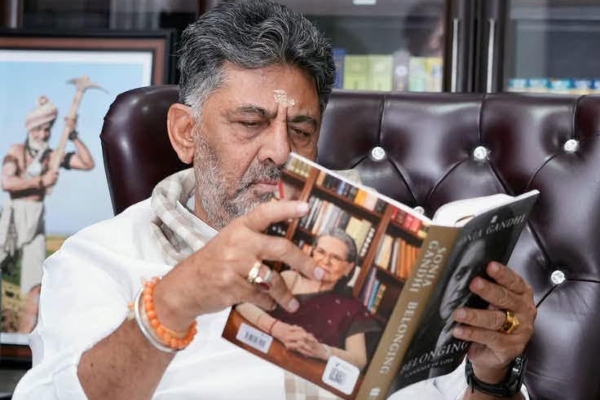
The most amusing observation in the reporting is that several leaders were showering praise on a book they were still looking forward to reading! Karnataka was not to be left behind. Chief Minister D K Shivakumar posted a photograph of himself reading the book. KPCC president B K Hariprasad described it as much more than an autobiography, portraying it as a chronicle of sacrifice, patience and struggle. Other ministers and party functionaries joined the chorus.
One can almost imagine the competition: Who purchased it first? Who received it first? Who finished the first chapter? Who posted the most emotional tribute? And, most importantly, whose photograph with the book attracted the maximum likes?
The Congress has apparently discovered a new form of political activism: literary devotion.
A Memoir or a Political Scripture?
There is nothing unusual about a political leader writing a memoir. Sonia Gandhi has every right to narrate her personal experiences, recollections, tragedies and political journey. Nor is there anything objectionable about people reading or appreciating her work.
The question is about the extraordinary political theatre surrounding its release. In a democratic political party, leaders are expected to demonstrate their political convictions through ideas, policies, organisational work and public performance. In the Congress, however, proximity to the Gandhi family has historically carried enormous political currency. The latest book-reading spectacle offers another illustration of this culture.
A memoir should invite readers to examine, question, agree or disagree with its contents. It should not become an examination of personal loyalty. Yet the speed with which party leaders have rushed to pronounce their verdicts raises an obvious question: Are they celebrating a literary work or reassuring the family that their allegiance remains intact?
The Dynasty's Permanent Audience
This enthusiasm also exposes a deeper contradiction within the Congress. The party speaks incessantly about democracy, institutional accountability and the need to strengthen internal democratic processes. Yet its political culture continues to revolve around one family.
The Congress has presidents, general secretaries, chief ministers, state unit chiefs, parliamentary leaders and an impressive hierarchy of office-bearers. But when the Gandhi family speaks, the entire organisational structure seems to turn into an audience.
The phenomenon is not new. Sonia Gandhi's elevation to the party presidency, her long years at the helm, the transfer of political authority within the family and Rahul Gandhi's subsequent leadership have all demonstrated how central the dynasty remains to the Congress's political identity. The party may change its slogans, strategies and leadership arrangements, but the gravitational centre remains remarkably unchanged.
Now comes the memoir, providing another occasion for this political congregation. One can almost imagine a new chapter in Congress organisational culture: the obligatory photograph with the book, the obligatory tribute to the author and the obligatory declaration of inspiration. Perhaps the Congress should consider establishing a literary wing to certify the enthusiasm of its members!
The Uncomfortable Questions Between the Covers
There is also a serious political dimension to the memoir that should not be lost amid the social-media celebrations. The book deals with events and personalities that shaped India's political history. Its treatment of the 1984 anti-Sikh violence, the Emergency and the political legacy of the Nehru-Gandhi family has already generated controversy.
Sonia Gandhi describes the 1984 violence as a tragic and shameful chapter and acknowledges failures of governance and delayed justice, while defending Rajiv Gandhi against allegations of complicity. In the Emergency, she portrays Indira Gandhi as isolated and politically cornered.
The BJP has accused the memoir of attempting to soften or obscure historical wrongs. Congress leaders have rejected that criticism, arguing that it is a personal memoir.
These are legitimate subjects for public scrutiny and political debate. A memoir by someone who occupied such an influential position in Indian politics cannot be insulated from questions simply because it is presented as a personal account.
And that is precisely why a book should be read before it is worshipped. A political memoir is not a sacred text. Its recollections must be examined against the historical record, its interpretations debated and its omissions questioned.
But the Congress's enthusiastic chorus risks replacing critical reading with unquestioning admiration.
A New Gospel for an Old Political Faith?
There is something particularly ironic about a party that claims to represent a vast and diverse democratic tradition displaying such extraordinary unanimity over the memoir of one individual.
Where are the independent voices? Where is the intellectual disagreement? Where is the healthy distance between a political organisation and its leadership? Must every personal recollection of a member of the Gandhi family become an occasion for collective celebration?
The Congress does not suffer from a shortage of leaders. It suffers from an inability to move beyond the politics of dynastic dependence. Its leaders appear more comfortable demonstrating their loyalty to the family than articulating an independent political vision.
Perhaps Belonging has inadvertently exposed this predicament more effectively than any political opponent could have done. The title speaks of finding a place to belong. But the scramble surrounding its release raises a different question: In today's Congress, does one truly belong only by belonging to the Gandhi family?
The memoir may run into hundreds of pages, but the Congress's political lesson appears to be remarkably short: praise the author, display the book and demonstrate devotion.
India's oldest political party desperately needs a political renaissance, not another round of dynastic adulation. It needs ideas, internal democracy, accountability and leaders who can stand on their own political convictions.
Until then, the Congress can certainly organise book-reading sessions, distribute certificates of literary appreciation and conduct competitions in social-media praise.
The only thing missing is a formal declaration that reading Sonia Gandhi's memoir is compulsory for every aspiring Congress leader. The party may have abandoned its search for a new political philosophy, but it seems to have found a new scripture. The Gandhi dynasty has a new book, and the Congress has a new congregation!
The book has barely hit the stands, but the race to display it, photograph it, praise it and publicly celebrate its author has already gathered momentum. Congress leaders, ministers, MPs and prominent personalities appear to be competing with one another on social media. Holding a copy of Sonia Gandhi's memoir has become almost as important as holding a party post.
Congress leaders and political sycophants are displaying their loyalty to Sonia Gandhi in an obnoxious and almost servile manner. This unseemly competition to praise her memoir once again exposes the party's dynastic character, where personal allegiance to the Gandhi family matters more than political merit. Some opinions being offered are nothing but bootlicking masquerading as literary appreciation. One wonders whether the next organisational promotion will require a reading certificate!
Is this a literary celebration or a political loyalty test? Has Sonia Gandhi's memoir become the new Bible of the Congress? And are party leaders competing to establish who is the most devoted disciple of the Gandhi family?
The Loyalty Olympics
The spectacle in Kerala is particularly entertaining. Chief Minister V D Satheesan displayed his copy and recalled his association with Sonia Gandhi. Shashi Tharoor announced that he had secured one of the first copies in Thiruvananthapuram. K C Venugopal offered an elaborate tribute to her warmth, wisdom and leadership. Home Minister Ramesh Chennithala made time to purchase a copy, naturally accompanied by a photograph. Hibi Eden went a step further, announcing that he had received Kerala's first copy and organising a reading session in Kochi.
The most amusing observation in the reporting is that several leaders were showering praise on a book they were still looking forward to reading! Karnataka was not to be left behind. Chief Minister D K Shivakumar posted a photograph of himself reading the book. KPCC president B K Hariprasad described it as much more than an autobiography, portraying it as a chronicle of sacrifice, patience and struggle. Other ministers and party functionaries joined the chorus.
One can almost imagine the competition: Who purchased it first? Who received it first? Who finished the first chapter? Who posted the most emotional tribute? And, most importantly, whose photograph with the book attracted the maximum likes?
The Congress has apparently discovered a new form of political activism: literary devotion.
A Memoir or a Political Scripture?
There is nothing unusual about a political leader writing a memoir. Sonia Gandhi has every right to narrate her personal experiences, recollections, tragedies and political journey. Nor is there anything objectionable about people reading or appreciating her work.
The question is about the extraordinary political theatre surrounding its release. In a democratic political party, leaders are expected to demonstrate their political convictions through ideas, policies, organisational work and public performance. In the Congress, however, proximity to the Gandhi family has historically carried enormous political currency. The latest book-reading spectacle offers another illustration of this culture.
A memoir should invite readers to examine, question, agree or disagree with its contents. It should not become an examination of personal loyalty. Yet the speed with which party leaders have rushed to pronounce their verdicts raises an obvious question: Are they celebrating a literary work or reassuring the family that their allegiance remains intact?
Apparently, the book need not be read cover to cover to understand its greatness. The author's identity seems to be a sufficient qualification!
The Dynasty's Permanent Audience
This enthusiasm also exposes a deeper contradiction within the Congress. The party speaks incessantly about democracy, institutional accountability and the need to strengthen internal democratic processes. Yet its political culture continues to revolve around one family.
The Congress has presidents, general secretaries, chief ministers, state unit chiefs, parliamentary leaders and an impressive hierarchy of office-bearers. But when the Gandhi family speaks, the entire organisational structure seems to turn into an audience.
The phenomenon is not new. Sonia Gandhi's elevation to the party presidency, her long years at the helm, the transfer of political authority within the family and Rahul Gandhi's subsequent leadership have all demonstrated how central the dynasty remains to the Congress's political identity. The party may change its slogans, strategies and leadership arrangements, but the gravitational centre remains remarkably unchanged.
Now comes the memoir, providing another occasion for this political congregation. One can almost imagine a new chapter in Congress organisational culture: the obligatory photograph with the book, the obligatory tribute to the author and the obligatory declaration of inspiration. Perhaps the Congress should consider establishing a literary wing to certify the enthusiasm of its members!
The Uncomfortable Questions Between the Covers
There is also a serious political dimension to the memoir that should not be lost amid the social-media celebrations. The book deals with events and personalities that shaped India's political history. Its treatment of the 1984 anti-Sikh violence, the Emergency and the political legacy of the Nehru-Gandhi family has already generated controversy.
Sonia Gandhi describes the 1984 violence as a tragic and shameful chapter and acknowledges failures of governance and delayed justice, while defending Rajiv Gandhi against allegations of complicity. In the Emergency, she portrays Indira Gandhi as isolated and politically cornered.
The BJP has accused the memoir of attempting to soften or obscure historical wrongs. Congress leaders have rejected that criticism, arguing that it is a personal memoir.
These are legitimate subjects for public scrutiny and political debate. A memoir by someone who occupied such an influential position in Indian politics cannot be insulated from questions simply because it is presented as a personal account.
And that is precisely why a book should be read before it is worshipped. A political memoir is not a sacred text. Its recollections must be examined against the historical record, its interpretations debated and its omissions questioned.
But the Congress's enthusiastic chorus risks replacing critical reading with unquestioning admiration.
A New Gospel for an Old Political Faith?
There is something particularly ironic about a party that claims to represent a vast and diverse democratic tradition displaying such extraordinary unanimity over the memoir of one individual.
Where are the independent voices? Where is the intellectual disagreement? Where is the healthy distance between a political organisation and its leadership? Must every personal recollection of a member of the Gandhi family become an occasion for collective celebration?
The Congress does not suffer from a shortage of leaders. It suffers from an inability to move beyond the politics of dynastic dependence. Its leaders appear more comfortable demonstrating their loyalty to the family than articulating an independent political vision.
Perhaps Belonging has inadvertently exposed this predicament more effectively than any political opponent could have done. The title speaks of finding a place to belong. But the scramble surrounding its release raises a different question: In today's Congress, does one truly belong only by belonging to the Gandhi family?
The memoir may run into hundreds of pages, but the Congress's political lesson appears to be remarkably short: praise the author, display the book and demonstrate devotion.
India's oldest political party desperately needs a political renaissance, not another round of dynastic adulation. It needs ideas, internal democracy, accountability and leaders who can stand on their own political convictions.
Until then, the Congress can certainly organise book-reading sessions, distribute certificates of literary appreciation and conduct competitions in social-media praise.
The only thing missing is a formal declaration that reading Sonia Gandhi's memoir is compulsory for every aspiring Congress leader. The party may have abandoned its search for a new political philosophy, but it seems to have found a new scripture. The Gandhi dynasty has a new book, and the Congress has a new congregation!