Yuge Yugeen Bharat Museum: India’s ₹3,230-Crore Project to Showcase Its Civilisational Journey to the World
Total Views |


From ancient mathematical discoveries and astronomical knowledge to diverse languages, architectural traditions, spiritual practices and centuries-old trade connections, India's civilisational journey is set to find a new home in the national capital. The Union Cabinet's approval of the ₹3,230-crore Yuge Yugeen Bharat Museum marks a major step towards creating one of the world's largest museum spaces dedicated to showcasing the country's rich cultural and historical heritage.
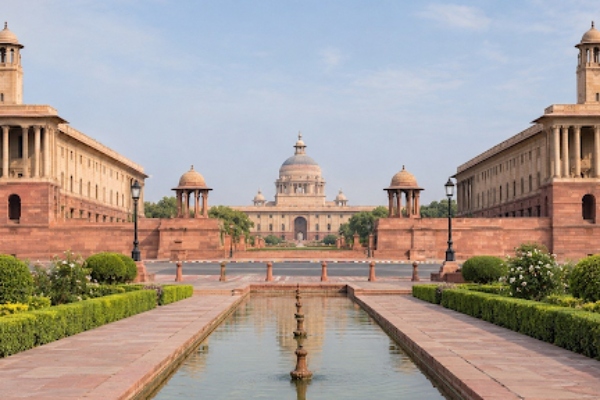
The Cabinet Committee on Economic Affairs (CCEA), chaired by Prime Minister Narendra Modi, has approved the development of the museum at the historic North and South Block Complex in New Delhi. The project aims to transform these iconic government buildings into a major public cultural institution while preserving their architectural character and heritage significance.
A Museum Reflecting India's Civilisational Continuity
Envisaged as a landmark cultural institution, the Yuge Yugeen Bharat Museum will present India's civilisational evolution through an integrated narrative of its tangible and intangible heritage. Spread across a proposed built-up area of approximately 1,78,509 square metres, the museum will combine contemporary exhibition practices, immersive technologies and visitor-centric experiences.
With a display area benchmarked against major international museums, the institution is expected to become the world's largest museum in terms of display space.
The museum will feature curated thematic galleries showcasing India's cultural traditions, knowledge systems, artistic practices and historical developments. Its objective is to present the continuity and diversity of Indian civilization through an engaging experience for domestic and international visitors.
From North and South Blocks to Cultural Landmarks
The project will give a new public purpose to the historic North and South Block buildings following the relocation of government offices. Rather than replacing these structures, the initiative will adopt an adaptive reuse approach, retaining their architectural and heritage character while transforming their interiors into modern museum spaces.
The project will include exhibition galleries, collection storage and conservation facilities, visitor amenities, landscaping, intelligent building systems and modern technological infrastructure.
What Will Visitors See?
The museum is being developed through a modular approach, allowing galleries to be introduced in phases. The first inaugural gallery, based on the theme of 'Adornment', is expected to open to the public in the North Block during the latter part of 2027.
Several other galleries are being planned around themes such as:
- Architecture and Cityscapes: India's architectural evolution and historic urban settlements.
- Mathematics and Astronomy: The country's contributions to mathematical and astronomical knowledge.
- Languages and Scripts: India's linguistic diversity and literary traditions.
- Faith and Spirituality: The development of religious and spiritual traditions.
- Bharat Connects – Trade and Ideas: India's historical connections with the world through commerce and knowledge exchange.
The collection identification process has already identified approximately 1.8 million objects from the National Museum, other Ministry of Culture museums, 52 Archaeological Survey of India (ASI) site museums, state museums and private collections for potential display.
Employment, Tourism and Global Cultural Outreach
Beyond preserving heritage, the project is expected to generate cultural, educational and economic opportunities. During construction and operational phases, it will create direct and indirect employment for artisans, craftspeople, researchers, museologists, designers, performers, conservation professionals and technology providers.
Imagine New Delhi becoming home to the world’s largest museum display area?
— Narendra Modi (@narendramodi) November 11, 2026
Think scale. Think culture.
That is the vision behind the Yuge Yugeen Bharat Museum!
Today’s Cabinet decision will give impetus to transform historic North and South Block buildings into a magnificent… pic.twitter.com/JR09zE8rU1
The museum will also promote domestic manufacturing through structured vendor development initiatives under the Make in India framework, encouraging Indian manufacturers and artisans to produce world-class museum materials and products.
With facilities designed to accommodate approximately one crore visitors annually, the institution is expected to strengthen India's cultural tourism sector and international engagement. Revenue is also expected through ticket sales, guided tours, retail outlets, food and beverage facilities, events, venue rentals and digital experiences.
A National Institution for Future Generations
With an estimated investment of ₹3,230 crore, the project will be implemented in phases from FY 2026-27 to FY 2030-31. Although located in New Delhi, the museum is envisaged as a national institution serving students, researchers, scholars, cultural practitioners and visitors from all States and Union Territories, alongside international tourists.