Janjatiya Diwas: How grassroots enterprise and Van Dhan Kendras are transforming India’s heartland
Janjatiya Gaurav Diwas The Ministry of Tribal Affairs is observing Janjatiya Gaurav Pakhwada across the country from 1 to 15 November 2026, culminating in Janjatiya Gaurav Diwas on 15 November, the birth anniversary of Dharti Aaba Bhagwan Birsa Munda.
NewsBharati 14-Nov-2026 16:03:11 PM
Total Views |


As the nation prepares to observe Janjatiya Gaurav Diwas, a profound economic restructuring is taking root across India’s remote forest regions. For decades, the immense wealth generated from dense forest tracts—sustaining over 10.4 crore Scheduled Tribes was routinely siphoned away by a nexus of exploitative middlemen. Today, targeted structural interventions are dismantling these archaic chains, bringing the true philosophy of Antyodaya to the very last person at the end of the line.
Dismantling the Cycle of Distress Sales
Historically, indigenous communities depended on Minor Forest Produce (MFP) such as honey, tamarind, gum, and medicinal herbs for 20 to 40 percent of their annual income. Despite the backbreaking labor involved in gathering these resources from deep within the forests, tribals had little bargaining power. Isolated from formal markets, they were forced into distress sales, handing over produce to intermediaries at fractions of its actual market value—often earning less than the cost of their own toil.
The Pradhan Mantri Janjatiya Vikas Mission (PMJVM) has systematically altered this dynamic. By shifting focus from raw material extraction to local processing, value addition, and direct branding, the initiative ensures that economic margins remain within the tribal ecosystem.
Also read |
Manipur becomes model state in Van Dhan Yojana
The Van Dhan Model: From Gatherers to Entrepreneurs
While MSP protects the gatherer from market crashes, real Antyodaya lies in moving the Janjatiya producer up the value chain. This is the core mandate of the Van Dhan Yojana, integrated into PMJVM.
Under this grassroots architecture, forest gatherers are mobilised into Self-Help Groups (SHGs). Fifteen such SHGs comprising roughly 300 members, with at least 60 per cent belonging to Scheduled Tribe communities are clustered together to form a Van Dhan Vikas Kendra (VDVK).
As of March 2026, 4,172 VDVKs have been sanctioned across the country with an outlay of ₹619.17 crore, linking 12.48 lakh Janjatiya beneficiaries. By July 31, 2026, 2,911 of these centres had become fully functional, clocking collective sales of approximately ₹168 crore.
Each Kendra receives financial backing up to ₹15 lakh for setting up a VDVK, and up to ₹64 lakh over three years for larger Van Dhan Producer Enterprises alongside equipment for primary processing, cutting, drying, sieving, and packaging. Training in scientific and sustainable harvesting ensures that the ecological balance of the forest remains intact even as commercial output rises.
Modernising the Local Haat and Digital Reach
Recognising that over 5,000 traditional Haat Bazaars serve as the economic lifelines of Janjatiya regions, the mission anchors VDVKs directly around these local marketplaces. Funds are being channelled to upgrade these haats with permanent structures, godowns, cold storage units, drinking water, shade, and proper weighing equipment cutting post-harvest wastage and strengthening collective bargaining power.
Beyond local haats, the mission connects forest enterprises to national and digital buyers through:
- Market Intelligence and E-Commerce: Daily price tracking, geo-tagging of assets, and dedicated IT and e-commerce platforms that allow remote clusters to sell directly to urban consumers.
- Branding and GI Support: Assistance in securing Geographical Indication (GI) tags for unique regional produce, alongside national visibility through tribal festivals, artisan melas, and exhibitions.
- Institutional Credit: Working-capital linkages with banks and the National Scheduled Tribes Finance and Development Corporation (NSTFDC), complemented by rental support for storage and transport.
Women at the Helm: The Leparada Example
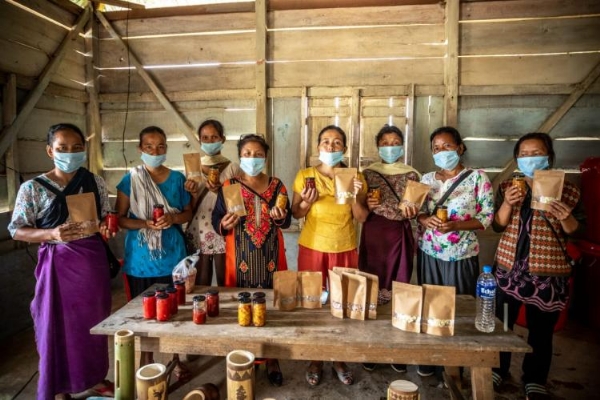
The clearest measure of Antyodaya is visible when Janjatiya women transition from seasonal labourers to joint stakeholders in a profitable brand. In Arunachal Pradesh’s Leparada district, the Nyigamane, Ho Yorbe, Medumhagdum VDVK formed in October 2021 with 300 women SHG members and farmers offers a concrete template.
Instead of selling raw forest and farm harvests, the women process local produce into marketable goods, including pickles made from indigenous King Chilli (Bhut Jolokia) and bamboo shoots. Generating ₹11 lakh in sales since 2022–23, the enterprise has freed its members from total reliance on seasonal farming. More importantly, the women are not wage workers on someone else’s floor; they are co-owners holding a direct stake in their brand and revenue.
Cultural Pride Meets Economic Dignity
As the nation marks Janjatiya Gaurav Diwas alongside nationwide Janjatiya Gaurav Pakhwada celebrations—featuring over 160 cultural and developmental activities led by Tribal Research Institutes across 19 states and Union Territories the message is unmistakable. Honouring Bhagwan Birsa Munda’s legacy of Jal, Jungle, Jameen is no longer limited to ceremonial tributes. By placing capital, technology, and market ownership directly into the hands of forest-dwelling communities, India is building a self-reliant rural economy where the last person in the forest stands first in prosperity.

Shivani Shinde
Shivani Shinde has completed her graduation in Journalism and Mass Communication and is pursuing her Masters further. She keeps interest in writing on Science and Technology and Entertainment.