Kashmiri BJP voters face discrimination by NC MLA, claim development benefits denied over political choice
Muslim residents in Kashmir who voted for the BJP have alleged that they are being sidelined in local development works by their National Conference representative. They also claim that some have been branded ‘kafirs’ for supporting the BJP.
Total Views |


Muslim voters in Kashmir who supported the Bharatiya Janata Party (BJP) have alleged that their electoral choices have made them targets of discrimination by their local National Conference (NC) MLA.
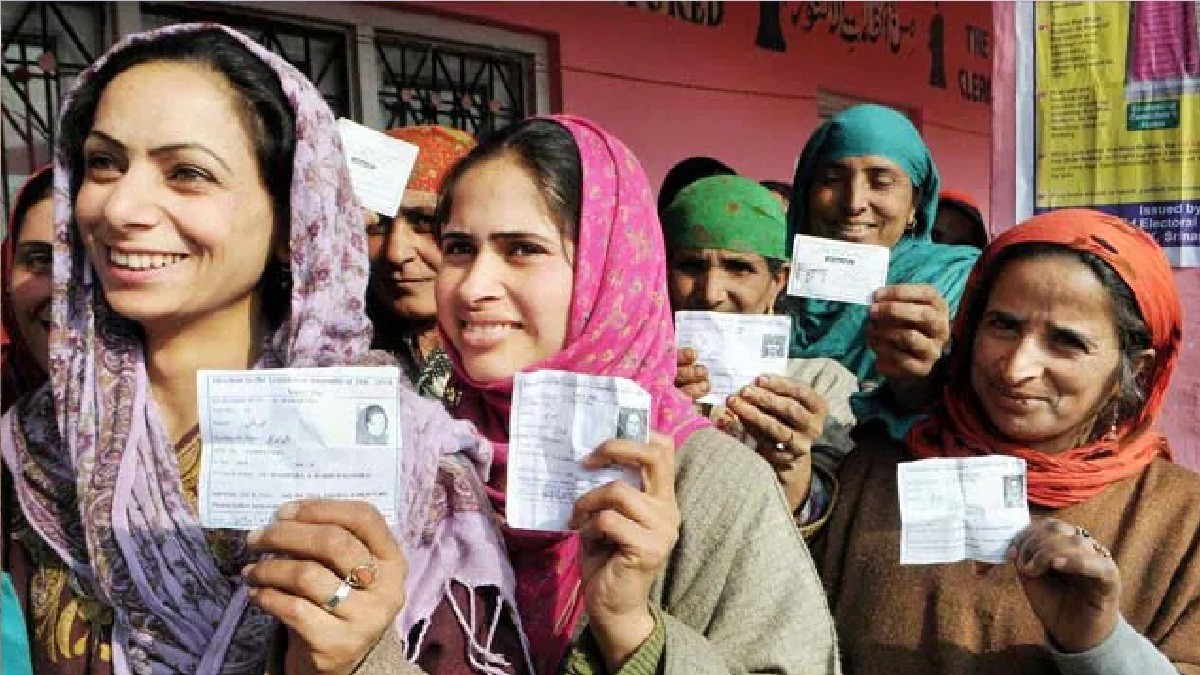
(A representative image, source: India TV News)
According to claims circulating on social media, residents have accused the legislator of selectively supporting development works and denying BJP voters access to local projects. Some have also alleged that they are being treated as social outcasts and called ‘kafirs’ for voting for the BJP.
The allegations have raised questions over the use of public development funds and whether political differences are being allowed to influence access to government projects. If established, such discrimination would amount to a serious misuse of public office, as an elected representative is accountable to every resident of the constituency, irrespective of how they voted.
Muslims in Kashmir who voted for the BJP allege that they are being discriminated against by their local National Conference MLA, accusing him of selectively allocating development funds and denying BJP voters access to local development projects because of their electoral… pic.twitter.com/h4ZcFtTjgR
— Sonam Mahajan (@AsYouNotWish) November 15, 2026
Development funds are public money, not a political favour
The issue assumes greater significance in light of the way development funds are allocated in Jammu and Kashmir. Under the Constituency Development Fund (CDF) scheme, each MLA is entitled to recommend works worth up to Rs 4 crore annually from the financial year 2025-26.
The Jammu and Kashmir Government enhanced the annual allocation from Rs 3 crore to Rs 4 crore through Government Order No. 185-FD of 2025, issued on July 4, 2025. The scheme is intended to support the creation of durable community assets based on local needs. Proposed works are submitted to the district administration for approval and execution.
This means that the funds cannot be treated as the personal property of an MLA or as a reward for political supporters. Their purpose is public development. Roads, drainage systems, drinking water facilities and other community assets must serve residents on the basis of need and eligibility, not party preference.
If residents are being denied development benefits because they voted for the BJP, the matter warrants scrutiny by the district administration and the relevant authorities. No elected representative should be permitted to turn public development into an instrument of political retaliation.
Centre provides 60 per cent of J&K's financial resources
According to the J&K Government's Economic Survey 2025-26, grants from the Government of India accounted for 60 per cent of the Union Territory's total resources in 2024-25, amounting to Rs 53,280 crore.
In comparison, the Union Territory's own tax and non-tax revenues stood at Rs 21,121 crore, accounting for 24 per cent of its resources. Borrowings and other liabilities contributed another 16 per cent.
The figures underline the scale of central financial support that sustains governance and development in Jammu and Kashmir. Public infrastructure and welfare programmes are funded through public resources, and their benefits cannot be restricted on the basis of political allegiance.
The people of Jammu and Kashmir, like citizens elsewhere in the country, are entitled to public services and development without discrimination. That entitlement also places a responsibility on elected representatives to ensure that public money is used fairly and transparently.
An MLA represents the entire constituency
The allegations are particularly serious because the right to vote includes the freedom to support a party or candidate of one's choice. Citizens cannot be expected to face social exclusion or lose access to public services because their political preferences differ from those of the winning candidate.
An MLA represents the entire constituency, including voters who opposed him, supported another party or chose not to vote. The responsibility does not end with the people who helped secure the electoral victory.
The allegations also raise a broader question about political tolerance in Kashmir. If Muslim residents who vote for the BJP are indeed being branded ‘kafirs’ or treated as outsiders by sections of their own society, it would expose the pressure that voters can face for making choices outside established political and ideological lines.
Accountability must come before political loyalty
Public money is not the private purse of the National Conference, the BJP or any other political organisation. Nor is an MLA's office a political fiefdom. Every rupee allocated for development carries a public responsibility.
The Indian taxpayer does not fund the political interests of individual representatives. The purpose of public expenditure is to serve citizens, including those who disagree with the government or voted against the ruling party.
No citizen should have to demonstrate political loyalty to receive a road, a drainage facility, drinking water or any other legitimate development benefit. The ballot is a citizen's right, not a reason to punish them.