ISI Plot Exposed: Rajasthan ATS Arrests Two in Sri Ganganagar Railway Track Blast
Both arrested persons are residents of Gurdaspur district in Punjab. The duo was arrested following a joint operation by the Rajasthan ATS, Sri Ganganagar Police, and Punjab Police.


In yet another incident exposing how Pakistan and the ISI are deliberately trying to target the Indian Railways, the Rajasthan Anti-Terrorism Squad (ATS) has arrested two individuals from Punjab. The accused, Davinder Singh (22) and Mahakdeep Kaur (21), were taken into custody in connection with the November 3 blast on a railway track in Sri Ganganagar district. Investigators are now probing the duo's links to Pakistan-based handlers and the country’s intelligence agency, the Inter-Services Intelligence (ISI).

Both arrested persons are residents of Gurdaspur district in Punjab. The duo was arrested following a joint operation by the Rajasthan ATS, Sri Ganganagar Police, and Punjab Police. Investigators from the Rajasthan Anti-Terrorism Squad (ATS) and local police recovered two foreign-made pistols, 46 live cartridges and Rs 30,000 in cash during the joint operation with Punjab Police.
आतंक के ख़िलाफ़ राजस्थान पुलिस ATS की बड़ी कार्रवाई!
— Rajasthan Police (@PoliceRajasthan) November 15, 2026
श्रीगंगानगर के रामसिंहपुर थाना क्षेत्र में रेलवे ट्रैक पर बम विस्फोट की घटना का खुलासा करते हुए ATS राजस्थान एवं श्रीगंगानगर जिला पुलिस की संयुक्त टीम ने दो आरोपियों महकदीप कौर और देवेंद्र सिंह को गुरदासपुर (पंजाब) से गिरफ्तार…
The breakthrough came after investigators reconstructed the movements of the suspects and examined technical intelligence gathered following the explosion. A Rajasthan Police team, led by the investigating officer, Nitin Chaudhary, coordinated with Punjab’s counterintelligence authorities and Gurdaspur Police before the arrests were made.
What was the Incident ?
The explosion occurred around 9:45 pm on 3 November on the Anupgarh-Suratgarh railway line near Ramsinghpur in Sri Ganganagar, close to the 50 GB village. The blast shattered two railway sleepers, damaged the track, and left a crater approximately 2.5 feet deep.
BREAKING: Blast reported at a railway track in Sri Ganganagar, Rajasthan. NIA, ATS rushed to site.
— Himanshu Jain (@HemanNamo) November 4, 2026
Terror related incident ?
pic.twitter.com/eZ9tZFXtbI
No casualties were reported. Significantly, an Anupgarh-Suratgarh passenger train had passed along the same stretch about 75 minutes before the explosion, leading investigators to examine whether the railway line was deliberately targeted to cause a major accident.
The probe says that Kaur was drawn into the network through online romantic conversations and financial inducements, a method police say has become frequent with the ISI.
Major action by ATS in #Rajasthan railway track blast case! 2 suspects arrested, including a woman, with suspected links to a Pakistani agent
— Siraj Noorani (@sirajnoorani) November 15, 2026
In a major operation in the railway track blast case in Sri Ganganagar, Rajasthan, on November 3, the Rajasthan ATS has arrested two… pic.twitter.com/1s18qvaeu0
Kaur was living separately from her husband, who is currently in jail on drug trafficking charges. Investigations have revealed that she received payment to carry out the blast.
One report indicated that Davinder Singh and Mahakdeep Kaur had received explosives dropped via a drone from Pakistan before planting them on the track. The perpetrators had also made multiple visits to Sri Ganganagar before the blast, raising suspicions that they had surveyed the railway stretch
Why is this a serious matter?
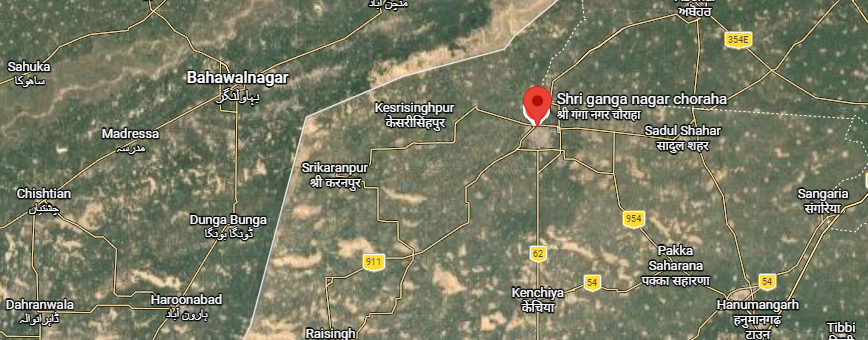
The Anupgarh–Suratgarh railway corridor runs through a strategically sensitive region close to the India–Pakistan border, where transport infrastructure supports civilian mobility and wider logistical connectivity. An attempt to damage railway tracks in this area therefore presents a security concern extending beyond the immediate disruption of train operations.
Unlike attacks directed at heavily guarded installations, railway sabotage can exploit the geographical spread of transport networks and the practical difficulties of continuously monitoring every section of track. Even a relatively small explosive device can create serious danger if it damages the track sufficiently to cause a derailment, particularly when passenger services are involved.
It should be noted that Pakistan is deliberately trying to sabotage the Indian Railways, as evidenced by several recent incidents.