USCIRF's Defence of Sharjeel Imam: An Assault on India's Sovereignty
The problem with USCIRF"s intervention is particularly evident in its description of Sharjeel Imam.
NewsBharati 16-Nov-2026 11:36:06 AM
Total Views |


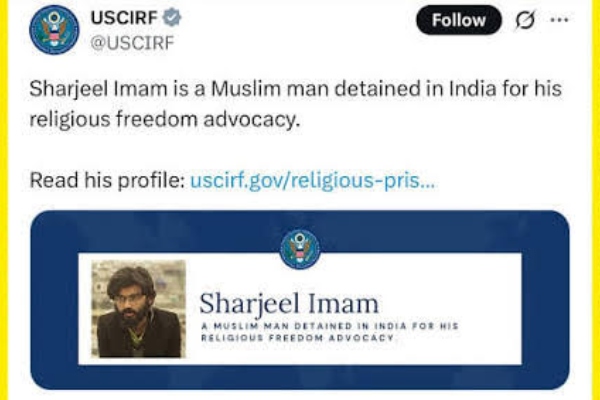
The United States Commission on International Religious Freedom (USCIRF) has once again demonstrated why its credibility as an impartial international watchdog deserves the most serious scrutiny. Its latest intervention in India's internal affairs, portraying Sharjeel Imam as a Muslim detained for his religious freedom advocacy, is not merely an ill-informed observation. It is a grossly selective presentation of a serious criminal case, an unwarranted intrusion into India's judicial affairs and an illustration of the growing tendency among certain American institutions to assume that they possess the authority to pass judgment on the internal affairs of sovereign nations.
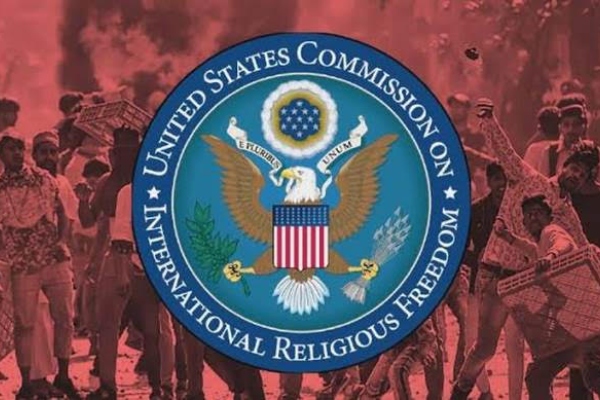
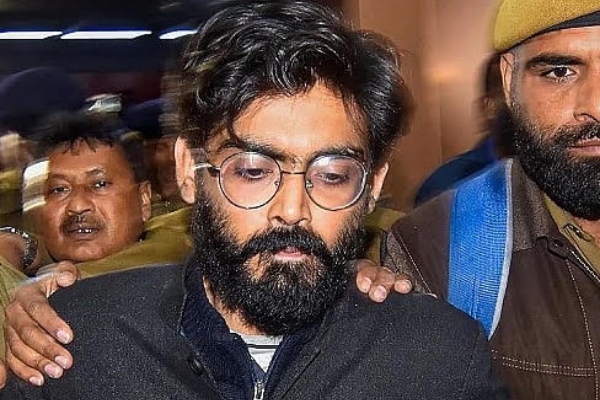
The problem with USCIRF's intervention is particularly evident in its description of Sharjeel Imam. It has reduced a complicated criminal prosecution to a question of religious identity. Imam is not in custody simply because he is Muslim or because he participated in an anti-CAA protest. He faces serious allegations in connection with the larger conspiracy case relating to the February 2020 Delhi riots, in which 53 people lost their lives and hundreds were injured.
The prosecution has attributed a central role to him in organising and mobilising protests that allegedly escalated into violence. His speeches, including the controversial remarks about cutting off Assam from the rest of India by blocking the strategically vital Siliguri corridor, have figured prominently in the proceedings. The allegations concern much more than criticism of a government or peaceful political dissent. They touch upon public order, national security and the territorial integrity of the country.
This is the fundamental distinction USCIRF has chosen to ignore. The right to religious freedom does not confer immunity from criminal law. A Muslim, Hindu, Christian or individual belonging to any other faith must enjoy equal constitutional protection. But the same individual is also accountable under the law. To suggest otherwise is to undermine the very principle of equality before law.
The Sharjeel Imam episode cannot be viewed in isolation. USCIRF has repeatedly targeted India through its annual reports and public statements. Its 2024 report recommended that the US State Department designate India a Country of Particular Concern (CPC), the category reserved for countries accused of systematic, ongoing and egregious violations of religious freedom. Its 2025 report repeated the recommendation. In November 2025, it went further, publishing an assessment titled "Systematic Religious Persecution in India" and questioning the relationship between Hindu nationalist organisations, the RSS and the BJP.
Its 2026 recommendations again called for India to be designated a Country of Particular Concern. It also advocated linking future American security assistance and bilateral trade policies to improvements in religious freedom in countries placed in these categories.
This is no longer merely the work of an organisation documenting religious freedom. It is an institution recommending that religious-freedom assessments become instruments of diplomatic and economic pressure. India has every reason to question such an approach.
Consider the assumptions underlying its reports. India's constitutional provisions, legislation, law-enforcement actions and judicial proceedings are frequently interpreted through the prism of alleged Hindu majoritarianism. Anti-conversion laws are portrayed primarily as instruments against minorities, while legitimate concerns about coercive or fraudulent conversions receive inadequate attention. The Citizenship Amendment Act is repeatedly presented as discriminatory without giving sufficient weight to its limited and specific purpose of providing a pathway to citizenship for persecuted non-Muslim minorities from three neighbouring Islamic countries. Even the Uniform Civil Code, a constitutional directive aimed at legal uniformity, becomes another indication of alleged religious intolerance.
One may debate individual laws, their implementation and their constitutional validity. That is precisely what India's democratic institutions and courts are meant to do. But USCIRF's recurring tendency to interpret almost every policy through a pre-existing narrative of Hindu majoritarianism raises serious questions about its objectivity.
Where is the same urgency for Hindus?
The question of selectivity becomes even more important when one examines the plight of Hindus outside India. Hindus have faced attacks on temples, intimidation, forced displacement, desecration of religious sites and other forms of persecution in neighbouring countries. Their security and freedom of worship deserve the same international attention that USCIRF readily demands for other communities.
The question of foreign interference
There is another dimension that India cannot afford to overlook. International institutions and advocacy networks have increasingly become part of the contest over how India is perceived globally. Reports, public campaigns, political interventions and lobbying efforts can reinforce one another, creating an international narrative that may eventually influence diplomatic relations, trade discussions and strategic partnerships.
It would be irresponsible to claim, without evidence, that USCIRF's latest post is part of a centrally coordinated foreign operation. But it would be equally naïve to ignore the political consequences of such interventions. When a foreign government-backed body publicly characterises an Indian criminal accused as a victim of religious persecution, while the judicial proceedings remain unresolved, it risks lending international legitimacy to a predetermined political narrative. India is entitled to question whose interests such interventions serve and what consequences they seek to produce.
This is especially relevant at a time when India is emerging as an increasingly consequential global power. Its independent foreign policy, strategic partnerships and refusal to align automatically with Washington's preferences are integral to its sovereignty. No country should be expected to compromise its constitutional processes or domestic priorities to satisfy the assessments of foreign advocacy institutions.
India's response was entirely appropriate. Ambassador Vinay Mohan Kwatra minced no words when he declared that USCIRF had "no locus standi to sit in judgment over the constitutional rights of Indian citizens". Describing its assessments as "habitual partisan, ill-informed, and jaundiced", he delivered a message that Washington's self-appointed guardians of global morality would do well to understand: India does not need lectures on constitutionalism, democracy or religious freedom from an institution that approaches these subjects with a predetermined political lens.
America is not the world police. Its institutions cannot claim universal jurisdiction over the domestic affairs of independent countries. Sovereignty is not a privilege granted by Washington; it is a fundamental principle of the international order. Every country has the right and responsibility to investigate offences, prosecute accused persons and allow its independent judiciary to determine guilt or innocence according to its laws. International engagement cannot mean overriding these processes or issuing political certificates of innocence to individuals facing criminal charges.
The prosecution has attributed a central role to him in organising and mobilising protests that allegedly escalated into violence. His speeches, including the controversial remarks about cutting off Assam from the rest of India by blocking the strategically vital Siliguri corridor, have figured prominently in the proceedings. The allegations concern much more than criticism of a government or peaceful political dissent. They touch upon public order, national security and the territorial integrity of the country.
The Delhi High Court's proceedings have examined these allegations, while the Supreme Court in January 2026 declined to grant bail to Imam and Umar Khalid, identifying their alleged roles in the conspiracy as distinct from those of several other accused who received bail. The case remains subject to judicial determination. No foreign commission is entitled to presume that his detention constitutes religious persecution.
This is the fundamental distinction USCIRF has chosen to ignore. The right to religious freedom does not confer immunity from criminal law. A Muslim, Hindu, Christian or individual belonging to any other faith must enjoy equal constitutional protection. But the same individual is also accountable under the law. To suggest otherwise is to undermine the very principle of equality before law.
The Sharjeel Imam episode cannot be viewed in isolation. USCIRF has repeatedly targeted India through its annual reports and public statements. Its 2024 report recommended that the US State Department designate India a Country of Particular Concern (CPC), the category reserved for countries accused of systematic, ongoing and egregious violations of religious freedom. Its 2025 report repeated the recommendation. In November 2025, it went further, publishing an assessment titled "Systematic Religious Persecution in India" and questioning the relationship between Hindu nationalist organisations, the RSS and the BJP.
Its 2026 recommendations again called for India to be designated a Country of Particular Concern. It also advocated linking future American security assistance and bilateral trade policies to improvements in religious freedom in countries placed in these categories.
This is no longer merely the work of an organisation documenting religious freedom. It is an institution recommending that religious-freedom assessments become instruments of diplomatic and economic pressure. India has every reason to question such an approach.
Consider the assumptions underlying its reports. India's constitutional provisions, legislation, law-enforcement actions and judicial proceedings are frequently interpreted through the prism of alleged Hindu majoritarianism. Anti-conversion laws are portrayed primarily as instruments against minorities, while legitimate concerns about coercive or fraudulent conversions receive inadequate attention. The Citizenship Amendment Act is repeatedly presented as discriminatory without giving sufficient weight to its limited and specific purpose of providing a pathway to citizenship for persecuted non-Muslim minorities from three neighbouring Islamic countries. Even the Uniform Civil Code, a constitutional directive aimed at legal uniformity, becomes another indication of alleged religious intolerance.
One may debate individual laws, their implementation and their constitutional validity. That is precisely what India's democratic institutions and courts are meant to do. But USCIRF's recurring tendency to interpret almost every policy through a pre-existing narrative of Hindu majoritarianism raises serious questions about its objectivity.
Where is the same urgency for Hindus?
The question of selectivity becomes even more important when one examines the plight of Hindus outside India. Hindus have faced attacks on temples, intimidation, forced displacement, desecration of religious sites and other forms of persecution in neighbouring countries. Their security and freedom of worship deserve the same international attention that USCIRF readily demands for other communities.
There is an important qualification: USCIRF has, on occasions, spoken against attacks on Hindus. In October 2021, it condemned the attacks on Durga Puja celebrations and Hindu temples in Bangladesh, expressing concern over communal violence and urging the government to protect minorities. It has also documented violations against religious minorities in Pakistan, including Hindus and other vulnerable communities.
But occasional statements are not the same as sustained, equally forceful scrutiny. Where is the comparable intensity of its India-focused campaigns when Hindu communities face systematic intimidation, religious discrimination and insecurity across the region? Why does the commission's engagement with India so frequently become a sustained indictment of the country's political and ideological foundations, while the persecution of Hindus elsewhere rarely generates a comparable campaign of international pressure?
Religious freedom cannot be a selective entitlement. A Hindu temple attacked in Bangladesh, a Hindu family forced to flee Pakistan, a Sikh facing persecution in Afghanistan and a Muslim facing discrimination in India must all matter equally. If USCIRF cannot apply the same standards consistently, its moral authority is compromised.
The question of foreign interference
There is another dimension that India cannot afford to overlook. International institutions and advocacy networks have increasingly become part of the contest over how India is perceived globally. Reports, public campaigns, political interventions and lobbying efforts can reinforce one another, creating an international narrative that may eventually influence diplomatic relations, trade discussions and strategic partnerships.
It would be irresponsible to claim, without evidence, that USCIRF's latest post is part of a centrally coordinated foreign operation. But it would be equally naïve to ignore the political consequences of such interventions. When a foreign government-backed body publicly characterises an Indian criminal accused as a victim of religious persecution, while the judicial proceedings remain unresolved, it risks lending international legitimacy to a predetermined political narrative. India is entitled to question whose interests such interventions serve and what consequences they seek to produce.
This is especially relevant at a time when India is emerging as an increasingly consequential global power. Its independent foreign policy, strategic partnerships and refusal to align automatically with Washington's preferences are integral to its sovereignty. No country should be expected to compromise its constitutional processes or domestic priorities to satisfy the assessments of foreign advocacy institutions.

Editor's Desk
Editor's Desk