Keralam Becomes a Hub for Teenage Criminals
The Kerala High Court observed that the age limit of juvenile offenders is being exploited as a loophole to escape criminal liability.
Total Views |


-G K Suresh Babu
Kerala is turning into a hub for crimes committed by teenagers. From road accidents to premeditated murders, juvenile delinquents becoming perpetrators is shocking the Kerala society.
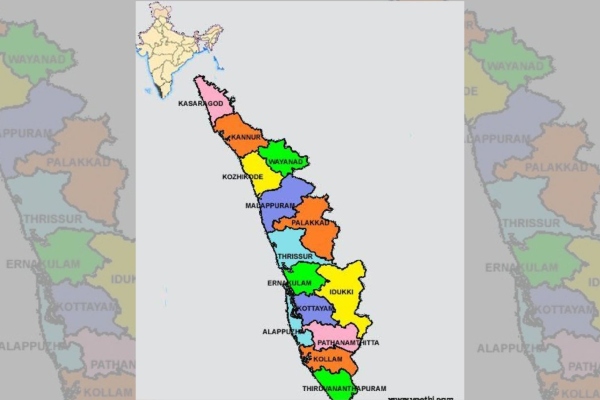
The charge sheet of a case where four teenagers, including a 13-year-old granddaughter, allegedly murdered their grandfather was recently submitted before the District Juvenile Justice Board. The murder took place on the night of August 15 in Karuvatta, Alappuzha district, where Sivankutty Chettiyar, a resident of 'Saraswathi Nivas', Kochalummood, Paravur, Kollam, who was staying on rent, was killed by four teenagers. According to the police charge sheet, the murder was committed to secure money to buy an iPhone for the 13-year-old granddaughter and a bike for her friend. The investigating officer, Haripad Police Circle Inspector B. Vinod Kumar, stated in the charge sheet that after committing the murder, they stole four and a half sovereigns of gold from the house, with the plan to sell it and buy an iPhone and a bike.
The murder, which occurred on August 15, came to light on the 17th, and the accused were apprehended on the same day. The first and third accused in the charge sheet are 17-year-olds, the second is a 16-year-old, and the fourth accused is a 13-year-old girl.
According to the police charge sheet, three of them barged into the house at night, wrapped clothes tightly around his body, suffocated him, and sat on his chest to commit the murder. The teenagers live-streamed the murder scene to the girl via a WhatsApp video call. The 740-page charge sheet explains that this is a rare-of-the-rare case meticulously planned and executed by the children themselves. Ninety-eight documents, including material evidence such as gold ornaments, phones, gloves, and pen drives, have been submitted to the court along with the charge sheet, supported by 87 witness statements. The police also collected CCTV footage of the accused travelling and visiting shops to eat on the day of the incident.
The murder was planned two months in advance, and the group communicated via Instagram, with all chats successfully recovered from their phones.
Following this murder, a 17-year-old under the influence of alcohol drove a luxury car at high speed and ran over three people, killing them. The incident occurred near the Cochin Nedumbassery Airport, where three people, including two schoolgirl scooter riders, died after being hit by the car. After the accident near the airport, the juvenile offender stepped out of the car and told the gathered crowd, 'Just tell my bappa (father), he will take care of it.' The accused in this case, Suhail Sajeev, was granted bail recently.
Immediately after that, in Cheranalloor, Ernakulam district, a luxury car driven by a 17-year-old son of a district judge struck and killed a 55-year-old roadside food vendor. The judge's son was released on bail right from the police station, while the second accused (the judge) was granted anticipatory bail by the High Court. Allegations surfaced that the judge arrived at the scene at night and tampered with evidence. Following this incident, the Kochi Police Commissioner, who adopted a favourable stance toward the judge, was transferred, and four police officers in Cheranalloor police station were suspended.
Another shocking incident occurred in Thiruvananthapuram, where a 17-year-old plus-two student named Abhiram was murdered and stuffed into a sack by his classmate out of romantic rivalry. Four people, including two girls, were arrested in connection with this incident.
The Kerala High Court observed that the age limit of juvenile offenders is being exploited as a loophole to escape criminal liability. Justice A. Badharudeen of the Kerala High Court suggested that the age limit for juvenile delinquents should be urgently lowered to 16 years. The High Court stated that the current age limit of 18 should be reduced to 16, and legislation should be enacted to that effect. Legislative bodies should consider this and enact laws accordingly, as children attain mental maturity by the age of 16 nowadays.
Therefore, the age threshold for punishing those who commit crimes should be lowered to 16. Furthermore, the court noted that bars must ensure alcohol is not served to individuals under the age of 23, and the Excise Department and officials must take strict action in this regard.
The court pointed out that the individuals responsible for the two vehicle accidents in Ernakulam escaped severe legal consequences under the guise of being juvenile offenders, with the maximum punishment available being sent to a correctional facility. The surge in juvenile delinquency has also sparked significant debate regarding the socio-cultural and political backdrop of Kerala. Psychologists and sociologists opine that the growing crime rates indicate how influential political parties in Kerala dismiss traditional Indian culture, values, and moral consciousness, while consumerist and atheistic ideologies deeply influence the younger generation.
The incident in Karuvatta where a 16-year-old boyfriend of a 13-year-old girl gave a contract to commit her grandfather's murder and watched it live on WhatsApp has deeply shaken the collective conscience of Kerala. There are also criticisms that television serials and crime series are heavily influencing the youth. A growing consensus in the broader society emphasizes that a renewed sense of direction is imperative in the daily lives of teenagers and youth.