Rahul Gandhi's Politics of Shame: Foreign Voices, Indian Targets
The irony is particularly striking because Rahul Gandhi frequently invokes constitutional values
NewsBharati 17-Nov-2026 11:46:14 AM
Total Views |


Rahul Gandhi's political campaign against Prime Minister Narendra Modi has acquired an increasingly disturbing dimension. Having failed to establish his allegations of electoral manipulation through convincing evidence, he appears determined to internationalise his political grievances. The latest spectacle at the Congress-organised Bharat Summit in Hyderabad, however, has exposed the consequences of this approach. An Italian politician was invited to an Indian platform, where he echoed the Congress's slogan, "Vote Chor, Gaddi Chhod", and accused Indian democracy of being under attack. Rahul Gandhi, seated on the stage, applauded and laughed.
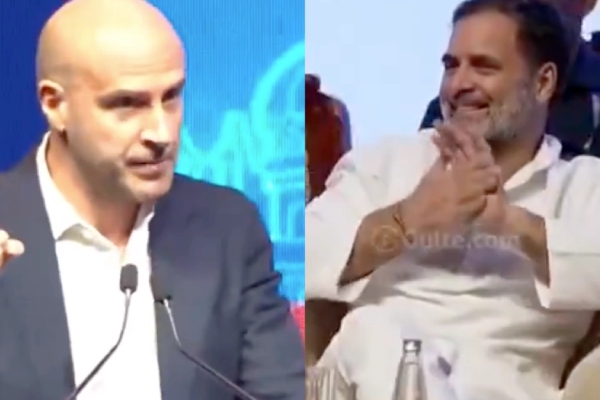
Giacomo Filibeck, Secretary General of the Party of European Socialists, did not confine himself to discussing democratic principles or exchanging political views. He openly declared that democracy was under attack in India and that the best way to defend it was to stand with Rahul Gandhi and the Congress. He then repeated the slogan targeting the BJP and the Prime Minister, translating it into English for his international audience.
This was not an incidental observation by a foreign visitor. It was an endorsement of one Indian political party's campaign against another, delivered from a platform organised by the Congress itself. The distinction matters. International dialogue is welcome; foreign political representatives are free to express views on democracy. But when they enter India's domestic political contest and pronounce judgment on the legitimacy of an elected government, the question of political propriety and national sovereignty cannot be brushed aside.
What makes the episode particularly embarrassing for Rahul Gandhi is that the strongest rebuke to Filibeck came from his own country. Deborah Bergamini, a senior leader of Forza Italia, a constituent of Prime Minister Giorgia Meloni's ruling coalition, criticised the intervention. Her response was unambiguous: "It is inappropriate to lecture on democracy in a nation that enables 970 million citizens to vote."
She went further. India, she pointed out, has its own political institutions and judiciary. Electoral and political disputes must be addressed through democratic rules and established institutions. She also emphasised that India is a major strategic partner of Italy and that its domestic political affairs deserve respect.
Bergamini's intervention is significant not merely because she belongs to Italy's ruling coalition. It demonstrates that even within European politics there is recognition that India's democratic processes cannot be casually dismissed by visiting political representatives. Her message was simple: allegations may be made, but they must be proved; democratic disagreements must be settled through democratic institutions.
Rahul Gandhi would do well to reflect on this. For years, he has attempted to portray India's democratic institutions as compromised. The Election Commission, electoral rolls, Parliament, the judiciary and constitutional authorities have all been drawn into his political rhetoric. Instead of presenting evidence through appropriate institutional channels and accepting the outcomes of democratic processes, he repeatedly seeks to delegitimize institutions whenever their decisions or outcomes do not suit his political narrative.
His 'Vote Chori' campaign is part of this pattern. The charge of electoral manipulation is serious. It cannot be established through slogans, dramatic press conferences, street demonstrations or international applause. If there is evidence, it must be presented before the competent authorities and tested through established procedures. Repeating an allegation does not convert it into a proven fact.
The Bharat Summit episode takes this politics a step further. Rahul Gandhi has now provided an international platform for a foreign political functionary to endorse his domestic political campaign. Why was this necessary? Why should an Italian politician be invited to pronounce on the legitimacy of India's elected government? And why did the Leader of the Opposition not make it clear that India's political disputes are for Indian citizens and constitutional institutions to resolve?
Gaurav Bhatia, the BJP's national spokesperson, rightly drew attention to Rahul Gandhi's conduct. He observed that the foreign national mocked India from an Indian platform and that Gandhi neither stopped him nor reminded him that India's internal matters were not his to adjudicate. Instead, Gandhi clapped and laughed. The optics were deeply damaging. A Leader of the Opposition is not expected to agree with the Prime Minister or the ruling party. But he is expected to understand the dignity of the office he occupies.
There is a difference between opposing a government and appearing to celebrate when a foreign visitor ridicules the country's democratic mandate. Political rivalry cannot become an excuse for abandoning national responsibility.
The irony is particularly striking because Rahul Gandhi frequently invokes constitutional values, democracy and the sanctity of the vote. Yet, when an elected government is criticised by a foreign political representative using his party's own slogan, he finds the occasion amusing. Does the principle of democratic sovereignty apply only when it benefits the Congress? Does respect for India's institutions become optional when the target is Narendra Modi?
India and Italy share a strategic partnership and growing cooperation. That relationship deserves mutual respect. Bergamini understood this. Rahul Gandhi apparently did not consider it necessary to uphold the same principle when his political interests were being served.
The Congress may organise international conferences, invite political representatives and discuss global challenges. There is nothing objectionable about international engagement. But a national platform should not become a staging ground for importing foreign political endorsements into India's domestic political battles. A party that claims to defend India's constitutional democracy must demonstrate respect for the country's sovereignty and institutions, not merely invoke them when convenient.
Rahul Gandhi has a larger responsibility as Leader of the Opposition. His job is to hold the government accountable, scrutinise policies and offer an alternative vision. It is not to turn every political disagreement into an international campaign against India's democratic credibility.
The most telling aspect of this episode is that Rahul Gandhi's political conduct has been questioned not only by his domestic opponents but also by a senior politician from Italy. When a leader from the country of his political guest has to remind him that India deserves respect and does not need lectures on democracy, the embarrassment is self-evident.
Rahul Gandhi must understand one elementary distinction: Modi is the Prime Minister of India, but India is not Modi. Criticism of Modi is legitimate; questioning the government is democratic. But allowing India's electoral mandate to be mocked from a foreign platform for partisan applause is something else altogether.
A politician may lose elections, political battles and public confidence. He must not allow his frustration to become a reason for diminishing the dignity of his own country. That is the minimum responsibility expected of anyone occupying the office of Leader of the Opposition.
The incident raises a fundamental question - has the Leader of the Opposition become so consumed by his hostility towards Narendra Modi that he no longer recognises the distinction between criticising a government and allowing India's democratic mandate to be ridiculed by a foreign political representative?
Giacomo Filibeck, Secretary General of the Party of European Socialists, did not confine himself to discussing democratic principles or exchanging political views. He openly declared that democracy was under attack in India and that the best way to defend it was to stand with Rahul Gandhi and the Congress. He then repeated the slogan targeting the BJP and the Prime Minister, translating it into English for his international audience.
This was not an incidental observation by a foreign visitor. It was an endorsement of one Indian political party's campaign against another, delivered from a platform organised by the Congress itself. The distinction matters. International dialogue is welcome; foreign political representatives are free to express views on democracy. But when they enter India's domestic political contest and pronounce judgment on the legitimacy of an elected government, the question of political propriety and national sovereignty cannot be brushed aside.
What makes the episode particularly embarrassing for Rahul Gandhi is that the strongest rebuke to Filibeck came from his own country. Deborah Bergamini, a senior leader of Forza Italia, a constituent of Prime Minister Giorgia Meloni's ruling coalition, criticised the intervention. Her response was unambiguous: "It is inappropriate to lecture on democracy in a nation that enables 970 million citizens to vote."
She went further. India, she pointed out, has its own political institutions and judiciary. Electoral and political disputes must be addressed through democratic rules and established institutions. She also emphasised that India is a major strategic partner of Italy and that its domestic political affairs deserve respect.
Bergamini's intervention is significant not merely because she belongs to Italy's ruling coalition. It demonstrates that even within European politics there is recognition that India's democratic processes cannot be casually dismissed by visiting political representatives. Her message was simple: allegations may be made, but they must be proved; democratic disagreements must be settled through democratic institutions.
Rahul Gandhi would do well to reflect on this. For years, he has attempted to portray India's democratic institutions as compromised. The Election Commission, electoral rolls, Parliament, the judiciary and constitutional authorities have all been drawn into his political rhetoric. Instead of presenting evidence through appropriate institutional channels and accepting the outcomes of democratic processes, he repeatedly seeks to delegitimize institutions whenever their decisions or outcomes do not suit his political narrative.
His 'Vote Chori' campaign is part of this pattern. The charge of electoral manipulation is serious. It cannot be established through slogans, dramatic press conferences, street demonstrations or international applause. If there is evidence, it must be presented before the competent authorities and tested through established procedures. Repeating an allegation does not convert it into a proven fact.
The Bharat Summit episode takes this politics a step further. Rahul Gandhi has now provided an international platform for a foreign political functionary to endorse his domestic political campaign. Why was this necessary? Why should an Italian politician be invited to pronounce on the legitimacy of India's elected government? And why did the Leader of the Opposition not make it clear that India's political disputes are for Indian citizens and constitutional institutions to resolve?
Gaurav Bhatia, the BJP's national spokesperson, rightly drew attention to Rahul Gandhi's conduct. He observed that the foreign national mocked India from an Indian platform and that Gandhi neither stopped him nor reminded him that India's internal matters were not his to adjudicate. Instead, Gandhi clapped and laughed. The optics were deeply damaging. A Leader of the Opposition is not expected to agree with the Prime Minister or the ruling party. But he is expected to understand the dignity of the office he occupies.
There is a difference between opposing a government and appearing to celebrate when a foreign visitor ridicules the country's democratic mandate. Political rivalry cannot become an excuse for abandoning national responsibility.
The irony is particularly striking because Rahul Gandhi frequently invokes constitutional values, democracy and the sanctity of the vote. Yet, when an elected government is criticised by a foreign political representative using his party's own slogan, he finds the occasion amusing. Does the principle of democratic sovereignty apply only when it benefits the Congress? Does respect for India's institutions become optional when the target is Narendra Modi?
Bergamini's statement also exposes the weakness of the Congress's international narrative. India's democracy is not an ornamental institution that requires certification from foreign political parties. It is sustained by an enormous electorate, regular elections, competing political parties, constitutional institutions and an active public sphere. With approximately 970 million eligible voters, India's electoral exercise is among the largest democratic processes in the world. Its imperfections and challenges can certainly be debated, but they do not give foreign political representatives the authority to pronounce judgment on its legitimacy.
India and Italy share a strategic partnership and growing cooperation. That relationship deserves mutual respect. Bergamini understood this. Rahul Gandhi apparently did not consider it necessary to uphold the same principle when his political interests were being served.
The Congress may organise international conferences, invite political representatives and discuss global challenges. There is nothing objectionable about international engagement. But a national platform should not become a staging ground for importing foreign political endorsements into India's domestic political battles. A party that claims to defend India's constitutional democracy must demonstrate respect for the country's sovereignty and institutions, not merely invoke them when convenient.
Rahul Gandhi has a larger responsibility as Leader of the Opposition. His job is to hold the government accountable, scrutinise policies and offer an alternative vision. It is not to turn every political disagreement into an international campaign against India's democratic credibility.
The most telling aspect of this episode is that Rahul Gandhi's political conduct has been questioned not only by his domestic opponents but also by a senior politician from Italy. When a leader from the country of his political guest has to remind him that India deserves respect and does not need lectures on democracy, the embarrassment is self-evident.
Rahul Gandhi must understand one elementary distinction: Modi is the Prime Minister of India, but India is not Modi. Criticism of Modi is legitimate; questioning the government is democratic. But allowing India's electoral mandate to be mocked from a foreign platform for partisan applause is something else altogether.
A politician may lose elections, political battles and public confidence. He must not allow his frustration to become a reason for diminishing the dignity of his own country. That is the minimum responsibility expected of anyone occupying the office of Leader of the Opposition.

Editor's Desk
Editor's Desk