The Great Healthcare Crossover: How public spending finally outpaced household medical bills in India
Fresh National Health Accounts estimates for 2023–24 reveal a structural reversal in how medical bills get paid in Bharat, with public health spending climbing to 43.5% and household out-of-pocket costs dropping to 42.7%.
Total Views |


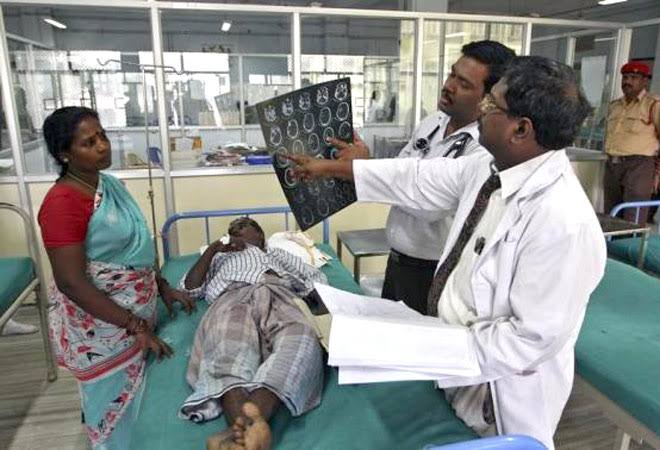
For generations in India, a sudden fever, a hospital stay, or a chronic illness meant far more than physical pain. It meant emptying savings accounts, mortgaging small plots of land, or borrowing from local moneylenders at steep interest rates. For millions of ordinary families, staying healthy was a constant financial tightrope walk, and one medical emergency was enough to push a household back into poverty.
Between 2004 and 2014, that reality barely budged. Household spending directly at hospital counters dropped by only around 5 percentage points over those ten years. Families were still paying nearly two-thirds of every rupee spent on healthcare out of their own pockets.
Then, over the next ten years, the balance began to tip.
Fresh figures from the eleventh edition of the National Health Accounts (NHA) Estimates for 2023–24, released by the Union Health Ministry, tell a story of structural change rather than overnight magic. Looking at the trend line from 2013–14 to 2023–24, two lines move steadily toward each other before finally crossing paths.
For the first time in a normal, non-pandemic year, the Indian government is spending a larger share on healthcare than its citizens are paying out of their own pockets.
How the Numbers Unfolded
In 2013–14, the gap between public support and personal burden was wide. Households shouldered 64.2% of total health spending, while the government contributed just 28.6%. Over the next few years, as public health budgets expanded, that gap began to narrow. By 2017–18, out-of-pocket expenses fell below the 50% mark for the first time.
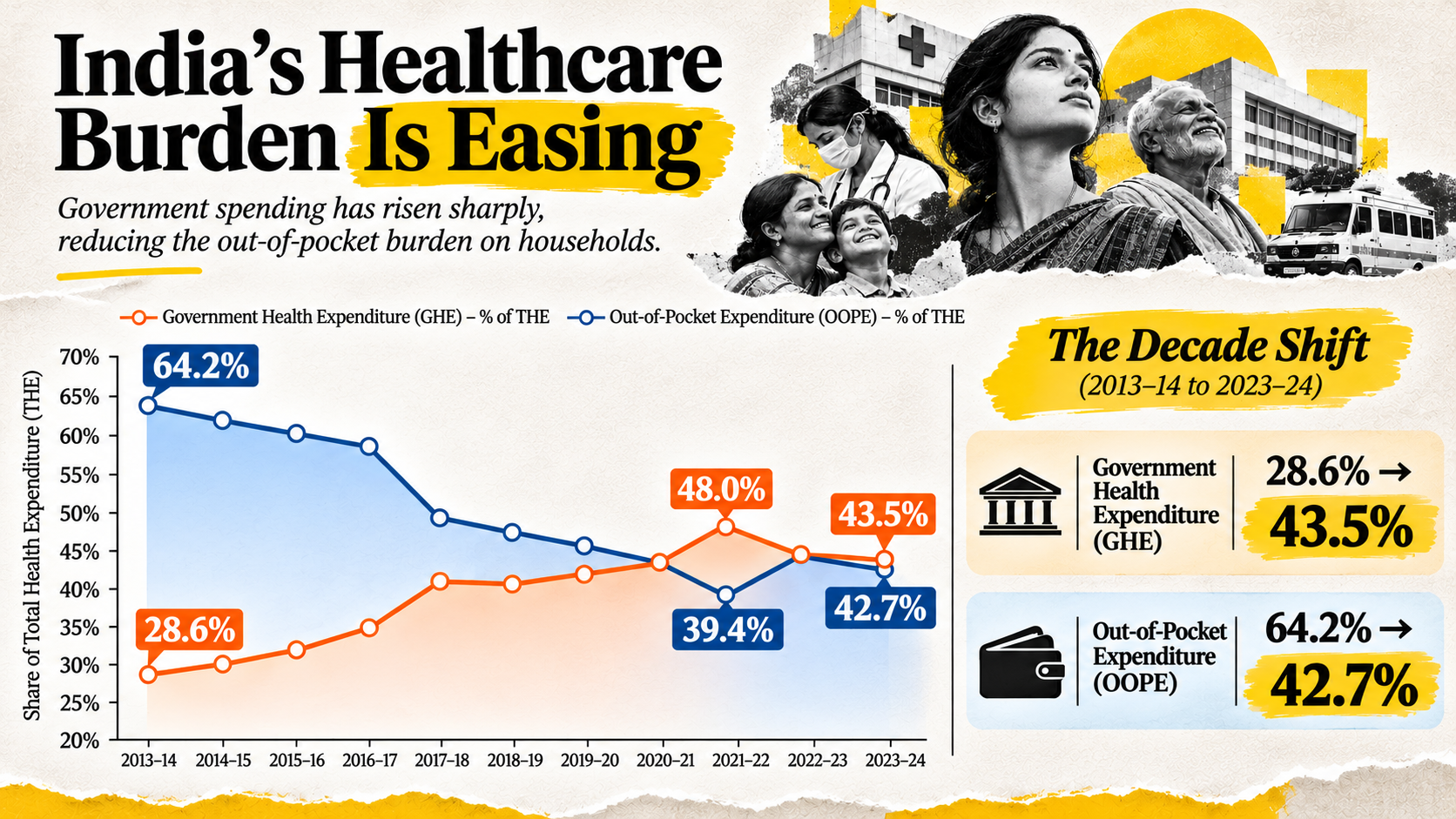
While 2021–22 saw a temporary spike in public spending driven by emergency COVID-19 measures and nationwide vaccination drives, the underlying shift held firm even after pandemic restrictions ended. By 2023–24, the government's share climbed to 43.5%, edging past household out-of-pocket spending, which dropped to 42.7%—a massive 21.5 percentage point reduction over a single decade.
The government is now contributing a much larger share of India's total healthcare expenditure, reducing the financial burden on households and expanding financial protection for every Indian.
What Changed on the Ground After 2014?
Behind these percentages lies a deliberate expansion of public health infrastructure and financial protection over the last ten years. Total government expenditure on health more than tripled, rising from ₹1.30 lakh crore in 2013–14 to ₹4.14 lakh crore in 2023–24. On an individual level, public health spending per citizen nearly tripled from ₹1,042 to ₹2,959.
Instead of leaving families to fend for themselves at private clinics, targeted post-2014 policy interventions stepped in at the exact points where medical bills hurt the most:
- Cashless Hospitalisation (Ayushman Bharat): Launched to shield vulnerable families from catastrophic medical bills, Ayushman Bharat Pradhan Mantri Jan Arogya Yojana (AB PM-JAY) absorbed the financial shock of major surgeries and hospital stays. Alongside state-level insurance schemes, this pushed the share of social security health spending from 6% to 11%.
- A total of 43.52 crore Ayushman cards have been created, including 1.14 crore Ayushman Vay Vandana cards created for senior citizens aged 70 years and above
- 36,229 hospitals have been empanelled under AB-PMJAY across the country, out of which 19,483 are public and 16,746 are private hospitals
- The latest national master of Health Benefit Package provides cashless healthcare services for 1,961 procedures across 27 medical specialties
- Affordable Medicines and Implants (Jan Aushadhi & AMRIT): For families managing lifelong conditions like diabetes or hypertension, monthly pharmacy bills used to eat directly into household budgets. The rapid nationwide rollout of Pradhan Mantri Bhartiya Janaushadhi Kendras, Affordable Medicines and Reliable Implants for Treatment (AMRIT) pharmacies, and strict price caps on stents and essential drugs by the National Pharmaceutical Pricing Authority sharply cut retail medical costs.
- Primary Care Closer to Home (Ayushman Arogya Mandirs): Government spending on primary healthcare reached ₹1.53 lakh crore in 2023–24. Through over 1.5 lakh Ayushman Arogya Mandirs, along with the Free Drugs and Diagnostics Service Initiative and the Pradhan Mantri National Dialysis Programme, early screenings and routine treatments reached villages and small towns before minor ailments could turn into costly emergencies.
- Following the 56th GST Council meeting, 36 specified life-saving medicines used for cancer, rare diseases and other severe chronic conditions were brought under the nil GST category. Of these, 33 medicines moved from 12% GST to zero, while three moved from 5% to zero. GST on other medicines was generally reduced from 12% to 5%.Together, hospitalisation cover and tax relief on medicines address two major financial risks that families face when dealing with serious illnesses.
Affordable medicines, Ayushman Bharat, stronger primary healthcare and expanded medical infrastructure are reshaping healthcare financing.
The journey toward universal health coverage is still ongoing, and households continue to spend significantly on routine care. Yet the crossing of those two lines on the chart marks a quiet milestone in Indian public policy: healthcare is steadily moving away from being a private financial crisis toward becoming a shared public responsibility.
The drop in out-of-pocket expenditure from 64.2% to 42.7% is far more than a statistical milestone on a policy chart. It marks a quiet shift in who carries the financial weight when illness strikes an Indian household.
For an ordinary family, that difference shows up in everyday choices. Money that once vanished at hospital billing counters and pharmacy windows can now stay in the household budget for education, nutrition, or small business growth. Savings no longer have to be liquidated the moment a medical emergency hits, allowing families to protect their hard-earned standard of living instead of starting over from scratch.