Dharma and Religion: A Fundamental Civilisational Difference (PART I)
The principle of Sarva Dharma Samabhava expresses this civilisational outlook, provided it is accompanied by genuine mutual respect and reciprocity.
Total Views |


-Pralhad Rathi
What distinguishes Dharma from religion is not merely terminology but an entirely different civilisational understanding of life, divinity and human responsibility. Bharatiya Dharma places spiritual evolution, inner transformation, pluralism and universal well-being at its centre. Understanding this distinction is essential to examining its philosophical foundations and contemporary relevance.
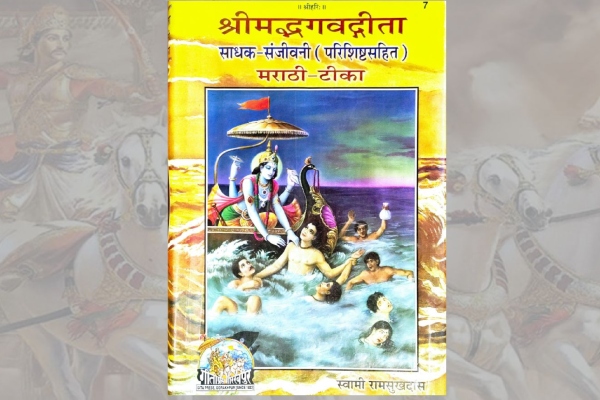
The distinction between Dharma and religion is not merely linguistic; it is civilisational, philosophical and psychological. Although Dharma is commonly translated as religion in English, the translation is inadequate and fails to convey its deeper meaning. Bharatiya civilisation and Western civilisation have evolved through different historical and spiritual experiences. Consequently, their understanding of the divine, religious duty and the purpose of human existence cannot be placed within an identical framework.
In the Bharatiya tradition, Dharma is not simply a system of beliefs or prescribed rituals. It encompasses individual conduct, psychological development, moral responsibility, spiritual inquiry and the larger well-
The Civilisational Responsibility of Dharma
Civilisation is the most comprehensive expression of human society. Its institutions include religion, education, culture, governance, democracy and the environment. Religion must contribute to the enrichment of civilization rather than become a force that dominates or destabilizes it. If religion promotes violence, hatred and conflict, it contradicts the very purpose that gives it moral legitimacy.
A religion's worth must therefore be assessed by the kind of human beings it produces. Does it promote peace, compassion, restraint and responsibility? Does it help individuals overcome anger, jealousy, fear and ego? Does it encourage respect for those who follow different paths, including non-believers?
These are universal psychological questions. Human anger, anxiety and the clouding of wisdom do not change with religious affiliation. A calm mind makes better decisions than an agitated one. The ultimate test of spiritual practice is whether it improves human consciousness and conduct.
The Bharatiya Understanding of Divinity
The Bhagavad Gita presents divinity as complete, self-sufficient and free from worldly desires. God does not need material offerings or power. What matters is devotion and the sincerity of the devotee. Krishna declares that even a leaf, flower, fruit or water offered with devotion is accepted.
The Gita's teaching extends beyond ritual worship to inner transformation. Its emphasis is on surrendering ego, cultivating devotion and experiencing divine attributes within oneself. The ultimate objective is not merely adherence to a prescribed practice but spiritual realisation.
Krishna's description of an ideal devotee in Chapter 12, Verse 15, is particularly significant:
Yasman nodvijate loko lokannodvijate cha yah.
A person who neither disturbs others nor is disturbed by them, and who is free from excessive elation, resentment, fear and anxiety, is dear to the Lord. This is a profound psychological and ethical standard. It places responsibility on the individual to become a source of peace rather than disturbance.
Dharma, Pluralism and Freedom of Inquiry
Bharatiya spiritual traditions, including Hinduism, Jainism, Buddhism and Sikhism, have developed diverse philosophical schools, practices and interpretations. Their differences have not prevented them from contributing to a shared civilisational heritage.
Freedom of inquiry is central to this tradition. Truth is ultimately an experience that cannot be completely confined to words or a single prescribed formulation. Indian saints across centuries communicated spiritual wisdom through the languages and practices of their respective societies. Their influence rested on devotion, knowledge, compassion and personal example rather than compulsion.
Adi Shankaracharya and the subsequent galaxy of saints helped renew and strengthen India's philosophical and spiritual traditions. They addressed distortions in religious practice and brought philosophical understanding closer to ordinary people. Their contribution illustrates the capacity of Dharma to reform itself while retaining its fundamental principles.
The Comparative Question
The comparison between Bharatiya Dharma and Abrahamic religious traditions, particularly Islam, must begin with their respective philosophical premises, concepts of divinity, approaches to spiritual practice and understanding of religious exclusivity.
A critical examination must ask whether particular doctrines or practices encourage peaceful coexistence, freedom of inquiry and respect for different beliefs. The same standards must apply consistently to every tradition. No religious identity should provide immunity to practices that undermine human dignity or civilisational harmony.
The distinction between voluntary religious belief and coercive propagation is particularly important. Freedom of conscience must be protected, and religious expansion cannot justify force, deception or hostility towards other communities.
Safeguarding the Values of Bharatiya Dharma
Bharat's spiritual inheritance rests on the coexistence of diverse paths, the freedom to question, and the possibility of approaching the divine through different forms of understanding and practice. Its greatest contribution is the recognition that spiritual pursuit need not be confined to one exclusive route.
The principle of Sarva Dharma Samabhava expresses this civilisational outlook, provided it is accompanied by genuine mutual respect and reciprocity.
The responsibility today is to preserve this inheritance, address distortions within our own traditions and ensure that Dharma continues to contribute to a peaceful and enlightened civilisation. Its strength lies not in political dominance or numerical expansion, but in its capacity to cultivate better human beings.
Dharma must remain a force for human elevation, not an instrument of conflict. That is its civilisational purpose and its enduring contribution to humanity.being of society. It is a way of living that seeks to harmonise the individual with the universal.