Observance of Karwa Chauth by a Bengali Lady: Aggression of North Indian Culture on Bengal?
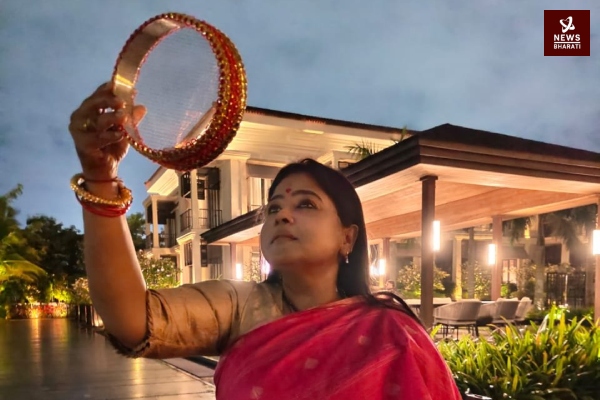
So, Keya Ghosh, instead of Savitri Vrata or Mangalchandi Vrata has chosen to observe Karwa Chauth or Karak Chaturthi. Is there any bar against this in any Shashtra anywhere? There can’t be any.
NewsBharati 18-Nov-2026 14:59:25 PM
Total Views |


Hindu religious rituals & cultural expressions are drawing flaks from social and environmental activists these days. Observance of Karwa Chauth by BJP leader Keya Ghosh poked a hornet’s nest of taunts & obloquy this year by a sect of the Bengali community who alleged BJP leader Keya Ghosh was trying to satisfy her non-Bengali, North Indian, cow-belt bosses. One may guess such a sect of the Bengalis are primarily Marxists, either classical or cultural who are poised to address Uttar Bharat as ‘cow-belt’. While cow-belt is supposed to be an economically significant zone of Bharat & ‘cow-belt’ couldn’t logically be a taunting expression, the Bengali Marxists tended to insinuate the people thereof to be ‘as dumb as cows’.
It would be comic to assert in this regard (though such assertion would be a deviation from the core issue) that recent researches in the West suggest cows are intelligent animals who are problem-solvers & are also able to use specific tools as per their own requirements. Besides, cows are also mentioned to have sharp memories, strong feeling of empathy, emotions & recognition. However, even if it gets accepted for the sake of argument that cows are dumb animals, Bengalis hurling abuses at Keya Ghosh for observance of Karak Chaturthi appeared no better.
It's true that Karwa Chauth is not observed by the Bengali women in general. However, this doesn’t mean Bengali women don’t ever observe any similar Vrata. They indeed do. Praying for longevity of their Pati’s, married women of Bengal and of various other States of Bharat & even Nepal observe SAVITRI VRATA on the Krishna Chaturdashi Tithi of Joishtho (ज्येष्ठ) Maha which is called Savitri Chaturdashi. The same format of fasting, gorgeous attire & jewellery of Vratadharini women & worship rituals are performed as mentioned in detail in the Bengali book “Purohit Darpan” by Pandit Surendranath Bhattacharyya. The book has given complete details of the VRATA VIDHAN & the MANTRAS through which Vivahit Stree worships Devi Savitri as well as Dharmaraj Yama praying for longevity of her Pati.
Not to mention such a Vrata is supposed to push the economy in the garment & jewellery sector in the month of ज्येष्ठ that comes immediately after the Bengali Naboborsho (New Year), Akshaya Tritiya & Aranya Shashthi (Joishtho Shukla Shashthi) celebrated as ‘Jamai (son-in-law) Shashthi’ in West Bengal.
Sharing my karwa chauth pics. pic.twitter.com/8zTS067YiS
— Keya Ghosh (@keyakahe) October 29, 2026
In the Bengali translation of Mahabharata by Shri Kashiram Das (known as ‘Kashidasi Mahabharat’) contains Bengali translation of the complete life story of Devi Savitri as depicted in Mahabharata by Vedvyas in Panchali (पांचाली) form which is a typical rhythmic style of rhyming a story in lucid expressions comprehensible for all.
Original of Bengal, the पांचाली style is highly popular in the State & the Savitri Panchali lucidly depicts how Devi Savitri, with her magnetic persona, divine aura, erudite wisdom & all-round meritocratic super brilliance, could derive wealth, economic prowess & manpower in terms of having 100 children for both her in-laws’ house as well as her own father’s.
Such a Vrata by married women signifies pursuit to enhance the power of femininity having Devi Savitri as the icon. The perspective of considering married women to be capable of maintaining her Pati & family members bonny, happy and long-lived reflects the societal perspective of viewing married women as empowered selves capable of bringing in prosperity to their families.
Since Bharatiya history & Shashtra looked at various aspects of life & living from various perspectives, none of the incidents could be portrayed in shades of binaries. They rather deserve observation in various layers of intellectual depths.
The other Vrata the Bengali women observe for longevity, prosperity & comprehensive well-being of their Patis, the families & the other beloved ones is Mangalchandi Vrata which is observed every Tuesday of the months of Boishakh and Joishtho.
So is the spirit of Karwa Chauth. The Vrata seems to have been viewed from various perspectives in various depictions. Women have the liberty to choose whichever appear suitable and appealing to them. Karwa Chauth Vrata by the Vivahit Stree praying for longevity of her Pati appears to be an attempt to live up to the oath the Stree takes during the Vedic Hindu Vivah rituals. Such a Vrata simultaneously reflects the position of both empowerment & responsibility of the Stree in her family.
So, Keya Ghosh, instead of Savitri Vrata or Mangalchandi Vrata has chosen to observe Karwa Chauth or Karak Chaturthi. Is there any bar against this in any Shashtra anywhere? There can’t be any. However, very long Communist rule of West Bengal has tried utmost to drag people away from their religio-cultural root & also, to cultivate a kind of secessionist mindset in the people of Bengal by strategically inculcating a sense of superiority. Hence, Dharmik practices such as observance of Savitri Chaturdashi etc. has reduced while Karwa Chauth gets observed with a bang in the rest of Bharat & also in West Bengal. No wrong in catching up with it, however, it would also be nice if West Bengal revives the past glory of Savitri Chaturdashi along with Mangalchandi Vrata. Against the backdrop of steady attempts of religious conversion by Christian Missionaries, observance of our very own gorgeous religio-cultural rituals would bring people back to roots.
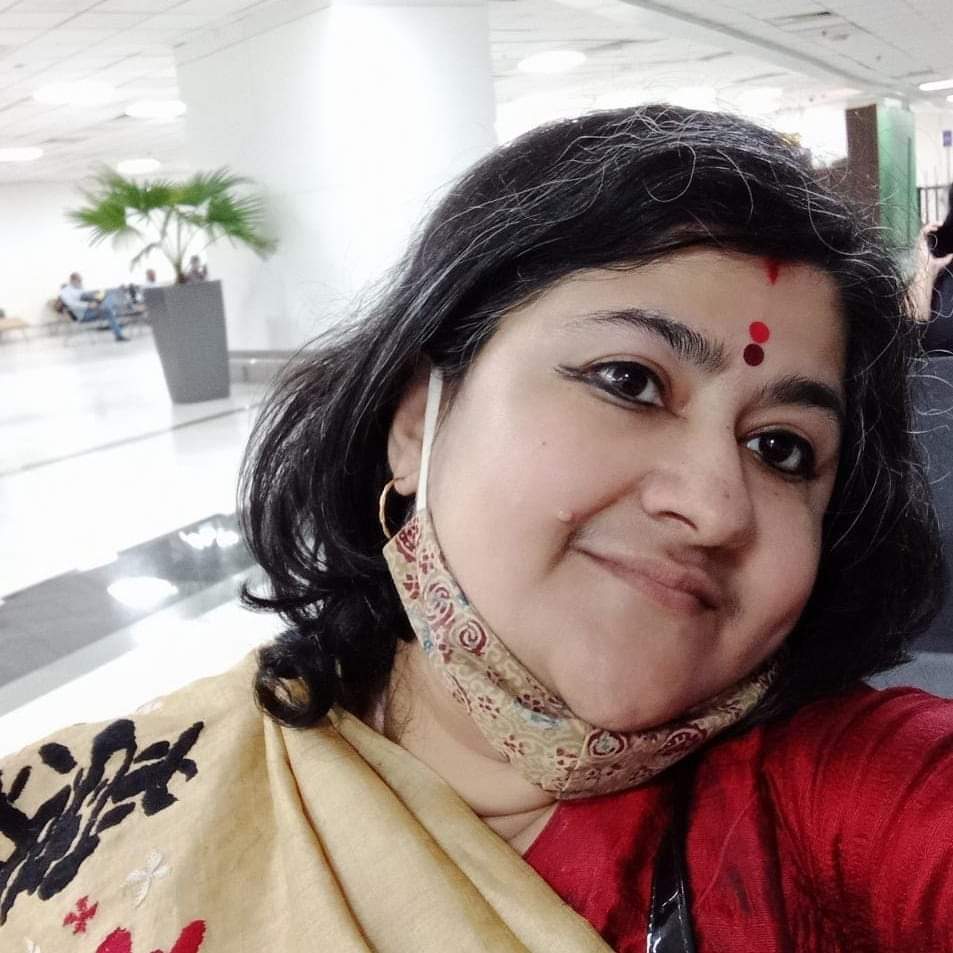
Debjani Bhattacharyya
Columnist and Political Analyst based at Kolkata