Is Islam a Religion or a Political Ideology? Test of Bharat’s Civilisational Philosophy (Part II)
This question becomes particularly important when examining the relationship between religion and political power.
Total Views |


-Pralhad Rathi
Can a faith be examined beyond its rituals and scriptures? From Bharat’s civilisational perspective, the distinction between Dharma, religion and political ideology raises fundamental questions about faith, freedom and diversity.
The world recognises Islam as a religion, and the Indian Constitution accords it that status along with the rights and protections available to religious minorities. Yet, from the perspective of Bharat's ancient civilisation, a larger philosophical question deserves examination: how does Islam relate to the civilisational understanding of Dharma that has evolved in India over thousands of years? Is the concept of religion, as understood in the Indian philosophical tradition, identical to the idea of faith and religious obligation elsewhere?
The distinction begins with the understanding of Dharma. Indian philosophy does not confine Dharma to a prescribed set of rituals, commandments or institutional practices. It encompasses duty, conduct, wisdom, self-realisation and the relationship between the individual and the larger universe. Adi Shankaracharya's observation, "भावाद्वैतं सदा कुर्यात् क्रियाद्वैतं न कुत्रचित्", emphasises unity at the level of feeling, without demanding uniformity in conduct. This is a profound civilisational principle: one may recognise the underlying unity of existence while allowing diversity in practices and expressions.
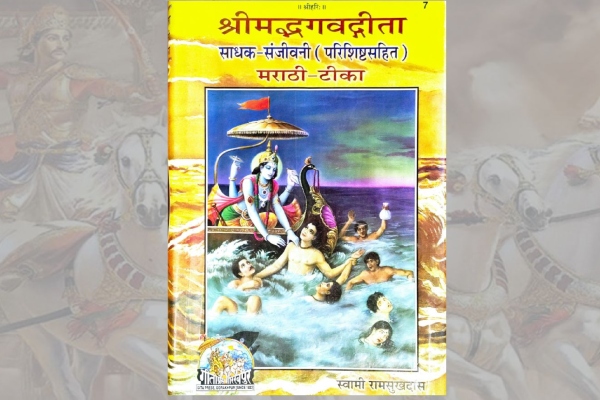
The Bhagavad Gita takes this philosophical understanding further. Its declaration, "वासुदेवः सर्वम्" (7.19), presents the Divine as the ultimate reality encompassing existence. Spiritual progress is not merely a matter of performing prescribed rituals. The emphasis is on inner transformation, wisdom, devotion and Nishkama Karma action without attachment to its fruits. The possibility of spiritual realisation is not restricted to one geographical location, one institutional authority or one prescribed route.
Consider the five cardinal practices of Islam. Shahada establishes the declaration of faith; Salah prescribes five daily prayers; Zakat mandates charitable giving; Sawm requires fasting during Ramadan; and Hajj involves pilgrimage to Mecca. These practices provide a structured framework for Islamic religious life. Indian philosophy, however, offers a different and often more expansive framework for examining the relationship between the individual and the Divine. Charity, for instance, is not merely an obligation to give a prescribed share of one's wealth. It can become Nishkama Seva, performed without ego or expectation. Similarly, spiritual discipline is not confined to periodic fasting but encompasses moderation in food, sleep and conduct throughout life. Pilgrimage is valued, but the ultimate objective remains spiritual realisation rather than the sanctity of one exclusive destination.
The comparison is not intended to deny the spiritual significance of Islamic practices. It raises a more fundamental question about the philosophical foundations of different traditions: does religious observance lead towards inner transformation, compassion, wisdom and freedom of inquiry, or does it become an instrument of rigid conformity?
This question becomes particularly important when examining the relationship between religion and political power. History offers examples of religious identities being mobilised for territorial expansion, political domination and the displacement of existing civilisations. The Partition of India in 1947 remains a tragic reminder of the consequences when religious identity becomes the basis of competing political nationhood. The subsequent experiences of Pakistan and Bangladesh also raise important questions about minority rights, religious freedom and the protection of civilisational diversity.
However, it is essential to distinguish a religious community from political movements that use religion to justify domination. The problem is not faith itself but the transformation of faith into an instrument of coercion. Where religious authority is invoked to suppress dissent, restrict individual freedom, promote intolerance or legitimise violence, the principles of civilisational coexistence come under strain. Such tendencies must be examined critically, irrespective of the religion in whose name they operate.
Bharat's civilisational tradition places considerable emphasis on plurality. Its philosophical schools have debated, disagreed, challenged established propositions and developed alternative interpretations. Inquiry and intellectual disagreement are not necessarily threats to spiritual life; they are integral to its evolution. The freedom to question, accept, reject and pursue personal conviction is an important measure of a mature philosophical tradition.
Rigidity, on the other hand, can become an obstacle to intellectual development when it discourages questioning and treats disagreement as disloyalty. No civilisation can flourish by eliminating diversity or denying individuals the freedom of conscience. Equally, the rejection of violence and coercion must apply universally.
The distinction between Dharma and political ideology therefore deserves serious consideration. Dharma, in the Indian understanding, is fundamentally duty-centred. It demands responsibility towards society, fellow human beings and the larger order of existence. Political ideology, by contrast, may seek power, institutional control and the establishment of a particular order. When religious identity becomes inseparable from such ambitions, the distinction between spiritual pursuit and political mobilisation becomes blurred.
The essential test is not the number of followers a faith commands, the antiquity of its scriptures or the extent of its geographical influence. It is whether its interpretation and practice encourage compassion, wisdom, freedom of conscience, peaceful coexistence and respect for diversity.
Bharat must therefore approach this debate with intellectual confidence rather than prejudice. Its civilisational inheritance is sufficiently deep to examine every religious and political tradition critically, without compromising the constitutional rights of any community. The objective must be to defend Dharma, preserve diversity and resist every attempt to convert faith into an instrument of domination. That is not merely a religious question; it is a question of civilization.
(To be concluded)