How ‘Indian Express’ Journalist Ritika Chopra’s anti-establishment scoops paved her way to the ‘TIME100 Next India’ list
Ritika Chopra had already collected the standard badges of honor conferred by the legacy media establishment the UNFPA-Laadli Media Award (2018), the Vienna-based International Press Institute (IPI) India Award (2020), the Ramnath Goenka Award (2021), and the Chameli Devi Jain Award (2024).
Total Views |


Two months ago, keen observers of India’s media ecosystem predicted that 'The Indian Express' Resident Editor (Mumbai) Ritika Chopra would soon be showered with international recognition following her sensationalist September 2026 investigative series targeting the Election Commission of India (ECI). On Thursday ( Nov 19), that prediction materialized right on cue, as global publication TIME named Ritika Chopra to its inaugural TIME100 Next India 2026 list, specifically citing her ECI expose.
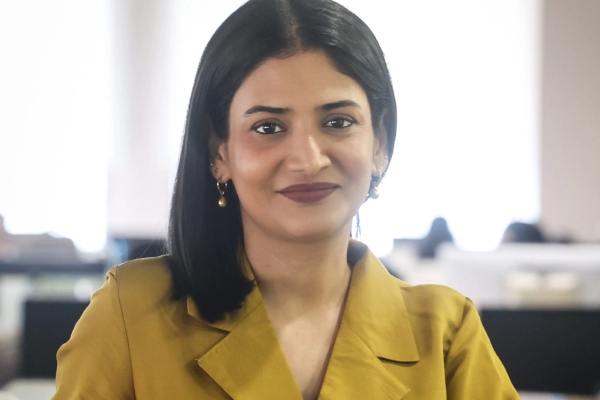
This rapid progression, from publishing a politically explosive story against a premier Indian constitutional body to receiving Western media validation within eight weeks, highlights a familiar, self-reinforcing loop within the Lutyens’ and global liberal media ecosystem.
Trajectory of an establishment critic
Born in Kolkata and educated at St. Xavier’s College, Ritika Chopra began her career in 2006 at Hindustan Times before stints at Mail Today and The Economic Times. Since joining The Indian Express in 2015, she has steadily risen through the ranks, serving as National Education Editor and Chief of the National Bureau (Government) before taking charge as Resident Editor in Mumbai.
Over the past decade, Ritika Chopra’s journalism has consistently zeroed in on sensitive Union Government ministries, cultural policies, and constitutional institutions. While she is hailed for her "shoe-leather reporting", it cannot be sidelined that her most celebrated "scoops" almost exclusively align with narratives favored by the political opposition and frequently, Western commentators. Let's have a look at these;
1. Targeting NCERT Reforms: In 2023, Chopra led aggressive coverage of the NCERT’s rationalisation of school textbooks. While the government and nationalist historians viewed the updates as a long-overdue correction of Left-leaning distortions, Ritika Chopra’s reporting framed the revisions around allegations of "political motivations" and "rewriting history".
2. The Education & NEET Narratives: From scrutinising India’s engineering colleges in her 2017 Devalued Degree series to relentless coverage of the 2024 NEET paper leak controversy, her beat has frequently amplified systemic governance lapses under the current administration, which definitely is a good job but at the same time the pattern leaves room for accessing the 'agenda'.
3. Undermining the Election Commission: Ritika Chopra’s primary niche, however, has been casting doubt on the internal functioning of the Election Commission of India. In 2019, she reported extensively on alleged internal divides within the poll panel regarding Model Code of Conduct violations. She escalated this line of attack in September 2026 with a multi-part series claiming that two Election Commissioners had repeatedly objected on record against Chief Election Commissioner Gyanesh Kumar over electoral roll revisions, a narrative immediately weaponised by opposition parties and street protesters to question the credibility of India's electoral machinery.
Two months ago, I predicted that Indian Express reporter Ritika Chopra would win an International award.
— Office Of Vijay Patel (@VijayGajeraO) November 19, 2026
And it happened! This won't be the last international award for her. pic.twitter.com/N1HmAMOXLo
What stands out to media analysts is how seamlessly this brand of journalism translates into prestigious awards. Long before her TIME100 Next selection, Ritika Chopra had already collected the standard badges of honor conferred by the legacy media establishment the UNFPA-Laadli Media Award (2018), the Vienna-based International Press Institute (IPI) India Award (2020), the Ramnath Goenka Award (2021), and the Chameli Devi Jain Award (2024).
Noticeably, nearly every major accolade in her cabinet, from the IPI award for her 2019 poll panel stories to TIME’s 2026 recognition, has been tied to narratives alleging institutional decline in India.
In today’s global information ecosystem, domestic journalists who supply ammunition to Western tropes about "democratic backsliding" in India are rarely left unrewarded. Whether it is challenging textbook decolonisation or questioning the sanctity of India’s electoral rolls, such reporting reliably earns applause from opposition politicians at home and prestigious honours from New York to Vienna abroad. As social media users wryly noted following the TIMES announcement, Ritika Chopra’s inclusion in the list is unlikely to be her last international trophy, so long as her journalism continues to tell the global establishment exactly what it wants to hear about India.