Balloon Burst: Flop Show at Ramlila Maidan!
Parliament is not a street-corner forum where political parties can assemble, conduct mock trials and pronounce their own verdicts.
NewsBharati 02-Nov-2026 12:32:13 PM
Total Views |


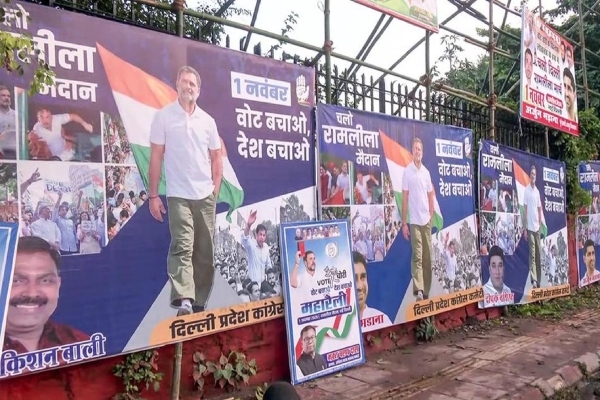
The Congress-led INDIA bloc had invested considerable political capital in its rally at Delhi's Ramlila Maidan. The event was projected as a historic mobilisation against alleged electoral manipulation, with Rahul Gandhi and other opposition leaders expected to turn the 'vote chori' campaign into a nationwide movement. The ambitious target of ten lakh participants, repeated by Congress leaders, raised expectations considerably. But the gathering did not match that projection. The gap between the publicity campaign and the actual mobilisation became the most striking feature of the exercise.
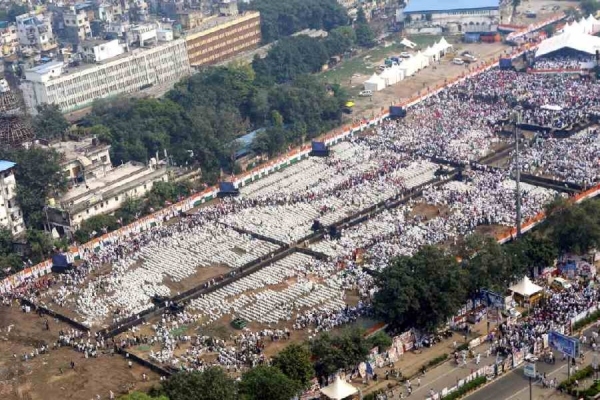
The Congress had made elaborate preparations for the rally. Leaders were assigned mobilisation targets, workers were expected from neighbouring states, and the INDIA bloc partners were called upon to demonstrate collective strength. The figure of ten lakh participants was repeatedly projected. But the actual gathering fell considerably short of that ambitious claim. The BJP subsequently cited venue visuals, including vacant seating, to challenge the Congress's projections. While estimates of attendance differed, the ten-lakh target was plainly not established by the available reporting.
The presence of prominent opposition leaders gave the gathering considerable political visibility. But the presence of leaders is not the same as the mobilisation of people. A crowded stage cannot compensate for the absence of a compelling political narrative capable of drawing citizens beyond party organisations.
The INDIA bloc's fundamental weakness remains its internal contradictions. Its constituents have different ideological positions, regional interests and electoral ambitions. Several of these parties are direct competitors in their respective states. They can assemble on one platform to oppose Narendra Modi, but can they agree on a common national programme? Their political unity has repeatedly been tested by competing ambitions.
The 'vote chori' campaign has become the alliance's principal political instrument. But slogans cannot substitute for evidence. Allegations concerning electoral rolls, voter deletions and the Special Intensive Revision must be examined through facts, transparent procedures and appropriate constitutional channels. The Election Commission must answer legitimate questions, but allegations cannot be treated as established findings merely because they are repeated from political platforms.
Ramlila Maidan was supposed to demonstrate the opposition's capacity to create a national movement. Instead, it exposed the distance between political projection and ground-level mobilisation. The question is no longer how many leaders can share a platform, but how many ordinary citizens are persuaded by the political message being delivered.
That does a political alliance seek to achieve by organising a mock Parliament and conducting a symbolic impeachment proceeding against the Chief Election Commissioner? This is not an ordinary question of political protest. The INDIA bloc's October 31 exercise, conducted at Congress president Mallikarjun Kharge's residence under the chairmanship of former Lok Sabha Speaker Meira Kumar, followed a mock parliamentary format. Kharge moved a symbolic motion against CEC Gyanesh Kumar, listing six allegations and demanding his removal.
Parliament is not a street-corner forum where political parties can assemble, conduct mock trials and pronounce their own verdicts. It is a constitutional institution representing the sovereign will of the people. Its authority cannot be replicated through political theatre. The opposition has every right to question the Election Commission, demand accountability and pursue the prescribed constitutional procedure for the removal of a CEC. But a symbolic proceeding cannot acquire the authority of Parliament or substitute for the constitutional process.
The disturbing question is whether this was merely political theatre or part of a larger campaign to delegitimise a constitutional institution. Why create a parallel parliamentary spectacle when constitutional procedures already exist? Why conduct a symbolic trial of a constitutional functionary before taking the political campaign to the streets?
This brings us to a much larger concern. Delegitimization is the first step towards anarchy. A political party may lose elections, disagree with an electoral decision or challenge the conduct of a constitutional authority. These are legitimate features of democracy. But when every electoral setback is attributed to institutional manipulation, every unfavourable verdict is questioned and every constitutional authority is portrayed as compromised, the attack goes beyond the government. It begins to undermine the democratic system itself.
The opposition's approach increasingly raises questions about its commitment to constitutional democracy. It invokes the Constitution, but does it respect the discipline of constitutional procedures when political circumstances are unfavourable? Does it believe in challenging the government through democratic competition, or in creating street pressure to achieve what it cannot secure through established institutions?
Street politics is not inherently undemocratic. Protest is a constitutional democratic right. But street mobilisation cannot become an alternative source of constitutional authority. When political accusations are converted into public trials, symbolic institutions are created and crowds are projected as the final arbiters of constitutional disputes, the danger is a drift towards mobocracy. Numbers cannot replace law, slogans cannot replace evidence, and political anger cannot replace due process.
There is another dimension that cannot be ignored - national sovereignty and foreign influence. India's internal political disagreements must remain India's democratic business. Foreign governments, organisations and funding networks may have their own interests in influencing political narratives across countries. Their activities deserve scrutiny wherever credible evidence of interference, covert funding or coordination emerges. No political formation should allow external interests to exploit domestic institutional distrust to weaken India's democratic credibility. Political accountability demands transparency, not insinuation.
The ultimate responsibility of a national political opposition is to offer an alternative vision for the country. It must compete on governance, development, national security, economic opportunity and social cohesion. Reducing politics to the continuous delegitimization of institutions and mobilisation against electoral outcomes cannot replace that responsibility.
Ramlila Maidan was intended to demonstrate the opposition's strength. Instead, the gap between its grand projections and actual mobilisation exposed the limitations of its campaign. More importantly, the mock Parliament raised a larger question about the methods through which the opposition seeks to challenge constitutional authority.
India's democracy is robust because it rests on constitutional institutions, established procedures and the sovereign mandate of its people. Governments can be challenged and replaced through elections. Institutions can be questioned through lawful processes. But no political alliance can claim the right to construct parallel constitutional authorities or substitute street verdicts for institutional decisions.
The real test of an opposition is not how loudly it protests, but whether it can persuade the people, respect constitutional democracy and present a credible alternative. Ramlila Maidan has put both its political strategy and its institutional approach under scrutiny.
The rally needs to be examined on two fronts: the opposition's inability to translate its political rhetoric into public mobilisation and the increasingly confrontational ideological approach it is adopting towards India's constitutional institutions.
The Congress had made elaborate preparations for the rally. Leaders were assigned mobilisation targets, workers were expected from neighbouring states, and the INDIA bloc partners were called upon to demonstrate collective strength. The figure of ten lakh participants was repeatedly projected. But the actual gathering fell considerably short of that ambitious claim. The BJP subsequently cited venue visuals, including vacant seating, to challenge the Congress's projections. While estimates of attendance differed, the ten-lakh target was plainly not established by the available reporting.
The presence of prominent opposition leaders gave the gathering considerable political visibility. But the presence of leaders is not the same as the mobilisation of people. A crowded stage cannot compensate for the absence of a compelling political narrative capable of drawing citizens beyond party organisations.
The INDIA bloc's fundamental weakness remains its internal contradictions. Its constituents have different ideological positions, regional interests and electoral ambitions. Several of these parties are direct competitors in their respective states. They can assemble on one platform to oppose Narendra Modi, but can they agree on a common national programme? Their political unity has repeatedly been tested by competing ambitions.
The 'vote chori' campaign has become the alliance's principal political instrument. But slogans cannot substitute for evidence. Allegations concerning electoral rolls, voter deletions and the Special Intensive Revision must be examined through facts, transparent procedures and appropriate constitutional channels. The Election Commission must answer legitimate questions, but allegations cannot be treated as established findings merely because they are repeated from political platforms.
Ramlila Maidan was supposed to demonstrate the opposition's capacity to create a national movement. Instead, it exposed the distance between political projection and ground-level mobilisation. The question is no longer how many leaders can share a platform, but how many ordinary citizens are persuaded by the political message being delivered.
That does a political alliance seek to achieve by organising a mock Parliament and conducting a symbolic impeachment proceeding against the Chief Election Commissioner? This is not an ordinary question of political protest. The INDIA bloc's October 31 exercise, conducted at Congress president Mallikarjun Kharge's residence under the chairmanship of former Lok Sabha Speaker Meira Kumar, followed a mock parliamentary format. Kharge moved a symbolic motion against CEC Gyanesh Kumar, listing six allegations and demanding his removal.
Parliament is not a street-corner forum where political parties can assemble, conduct mock trials and pronounce their own verdicts. It is a constitutional institution representing the sovereign will of the people. Its authority cannot be replicated through political theatre. The opposition has every right to question the Election Commission, demand accountability and pursue the prescribed constitutional procedure for the removal of a CEC. But a symbolic proceeding cannot acquire the authority of Parliament or substitute for the constitutional process.
The disturbing question is whether this was merely political theatre or part of a larger campaign to delegitimise a constitutional institution. Why create a parallel parliamentary spectacle when constitutional procedures already exist? Why conduct a symbolic trial of a constitutional functionary before taking the political campaign to the streets?
This brings us to a much larger concern. Delegitimization is the first step towards anarchy. A political party may lose elections, disagree with an electoral decision or challenge the conduct of a constitutional authority. These are legitimate features of democracy. But when every electoral setback is attributed to institutional manipulation, every unfavourable verdict is questioned and every constitutional authority is portrayed as compromised, the attack goes beyond the government. It begins to undermine the democratic system itself.
The opposition's approach increasingly raises questions about its commitment to constitutional democracy. It invokes the Constitution, but does it respect the discipline of constitutional procedures when political circumstances are unfavourable? Does it believe in challenging the government through democratic competition, or in creating street pressure to achieve what it cannot secure through established institutions?
Street politics is not inherently undemocratic. Protest is a constitutional democratic right. But street mobilisation cannot become an alternative source of constitutional authority. When political accusations are converted into public trials, symbolic institutions are created and crowds are projected as the final arbiters of constitutional disputes, the danger is a drift towards mobocracy. Numbers cannot replace law, slogans cannot replace evidence, and political anger cannot replace due process.
The consequences are serious. If every electoral defeat becomes proof of conspiracy, every constitutional institution becomes suspect and every disagreement becomes an occasion for mass confrontation, democratic politics risks losing its institutional foundations. The result is not stronger accountability but a weakening of the system that makes accountability possible.
There is another dimension that cannot be ignored - national sovereignty and foreign influence. India's internal political disagreements must remain India's democratic business. Foreign governments, organisations and funding networks may have their own interests in influencing political narratives across countries. Their activities deserve scrutiny wherever credible evidence of interference, covert funding or coordination emerges. No political formation should allow external interests to exploit domestic institutional distrust to weaken India's democratic credibility. Political accountability demands transparency, not insinuation.
The ultimate responsibility of a national political opposition is to offer an alternative vision for the country. It must compete on governance, development, national security, economic opportunity and social cohesion. Reducing politics to the continuous delegitimization of institutions and mobilisation against electoral outcomes cannot replace that responsibility.
Ramlila Maidan was intended to demonstrate the opposition's strength. Instead, the gap between its grand projections and actual mobilisation exposed the limitations of its campaign. More importantly, the mock Parliament raised a larger question about the methods through which the opposition seeks to challenge constitutional authority.
India's democracy is robust because it rests on constitutional institutions, established procedures and the sovereign mandate of its people. Governments can be challenged and replaced through elections. Institutions can be questioned through lawful processes. But no political alliance can claim the right to construct parallel constitutional authorities or substitute street verdicts for institutional decisions.
The real test of an opposition is not how loudly it protests, but whether it can persuade the people, respect constitutional democracy and present a credible alternative. Ramlila Maidan has put both its political strategy and its institutional approach under scrutiny.

Editor's Desk
Editor's Desk