KGMU Love Jihad Nexus: UP STF report found 13 doctors harassing women for conversion; Gave professional threats
The report records complaints of pressure for religious conversion, sexual and mental harassment, threats to professional careers and attempts to prevent women from pursuing complaints against colleagues.
Total Views |


A seven-page investigation report prepared by the Uttar Pradesh Special Task Force (STF) has exposed a series of disturbing complaints from King George’s Medical University (KGMU), Lucknow, involving women resident doctors, nursing staff and other female employees. The report records complaints of pressure for religious conversion, sexual and mental harassment, threats to professional careers and attempts to prevent women from pursuing complaints against colleagues.
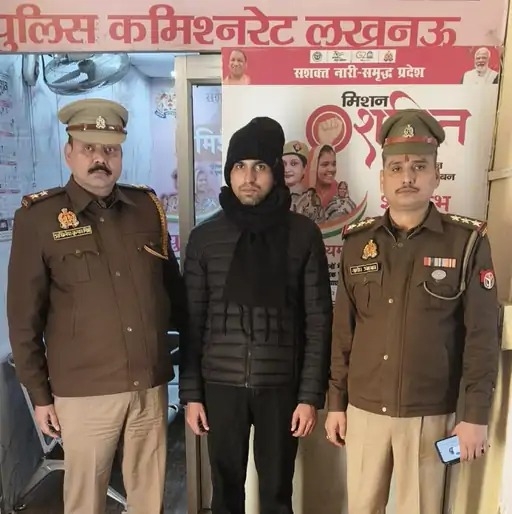
One of the accused, KGMU Doctor Ramizuddin booked in the case by the UP Police (Image: The Observer Post)
The investigation has brought several doctors and university employees under scrutiny. The names mentioned in media reports on the STF findings include resident doctor Dr Rameezuddin, nursing staff members Nafees and Furkan, resident doctor Dr Adil and contractual employee Shafaat Ali Khan. The report also examines the conduct of senior faculty members and officials whose handling of complaints has come under question.
According to reports, the STF examined around 12 cases and identified five personnel whose direct involvement in the incidents was examined, besides seven others whose conduct and role in providing protection to those facing complaints came under scrutiny. Other reports have described around 13 doctors as facing disciplinary action. The exact number and categories of personnel named vary across published accounts.
🚨 BIG REVELATION FROM LUCKNOW IN LATEST REPORT!
— Megh Updates 🚨™ (@MeghUpdates) November 1, 2026
UP STF investigation has reportedly identified 13 doctors allegedly involved in pressuring Hindu girls into religious conversion at KGMU and other institutions.
The 7-page report reportedly disclosed shocking details of coercion,…
The report was submitted to the state government on August 25. Following its examination, the Medical Education Department directed the KGMU administration to take action against the personnel named in the report under the KGMU Act, 2002, and the university's Statutes, 2011.
The university is now preparing to examine the findings through its internal disciplinary mechanism. An emergency meeting of the Executive Council has been scheduled for November 6 to discuss the matter and decide the next steps.
Dr Rameezuddin Case
One of the central cases in the STF report concerns Dr Rameezuddin, also identified in reports as Rameez Malik, a resident doctor in KGMU's Pathology Department.
The case came to light after a woman resident doctor, identified in media reports as Dr Devarti Mishra, approached the police with a complaint against him. She accused him of drawing her into a relationship, subjecting her to harassment and pressuring her to convert her religion and marry him.
A case was registered at Lucknow's Chowk police station on December 23, 2025. Dr Rameezuddin was arrested on January 9, 2026, and remains the central accused in the case.
The STF report examined the complaint as part of its wider investigation into the university. It also records concerns about the manner in which the complaint was handled within the department and whether senior faculty members took appropriate action when the woman approached the authorities.
Nafees and Furkan: Complaints from Gandhi Ward
The investigation also examined complaints involving nursing staff in KGMU's Gandhi Ward.
Nafees and Furkan, both members of the nursing staff, have been named in connection with complaints by women employees. The STF report records complaints involving relationships, physical and mental harassment, pressure for religious conversion and marriage.
Nafees faces accusations concerning a woman nursing colleague who complained of harassment and pressure to convert before marriage. Furkan also figures in the report in connection with a woman employee who faced pressure to enter a relationship and marry him.
The report further refers to resident doctor Dr Adil, whose name appears in connection with complaints involving women nursing staff. He is accused of using promises of marriage to draw women into relationships and exploiting their position.
Shafaat Ali Khan Case
Another case examined by the STF concerns Shafaat Ali Khan, a contractual employee in KGMU's Microbiology Department.
A 25-year-old woman working as a computer operator in the department, identified in media reports as Jyoti Rao, complained of harassment, inappropriate behaviour and pressure to convert and marry him.
According to the STF findings reported in the media, the woman approached the department head with her complaint, following which a committee was constituted to examine the matter. However, the report raises questions about the action taken after the complaint.
The woman subsequently lost her contractual employment. The sequence of events has brought the handling of her complaint and the circumstances surrounding the termination of her service under scrutiny.
Radiology Department Case
The STF investigation also examined complaints connected with KGMU's Radiology Department.
Resident doctor Dr Rizwan figures in the report in connection with complaints by two female resident doctors. The women reported pressure to convert and threats concerning their academic and professional futures.
According to the findings reported by the media, the women were warned that their careers could be damaged and that they could be failed in examinations if they did not comply with the demands or continued raising complaints.
Senior Faculty Members Under Scanner
The report does not restrict its examination to the individuals facing complaints of direct misconduct. It also examines the role of senior faculty members and departmental officials who were responsible for handling complaints.
According to reports detailing the STF findings, Professor Suresh Babu, associated with the Pathology Department, came under scrutiny over his handling of the complaint against Dr Rameezuddin. The report questions whether he defended the resident doctor in departmental meetings and whether the complainant's concerns were taken seriously.
Professor Sumaiya Qaiyum, an additional professor in the Pathology Department, has also been named in reports on the findings. The STF report examines complaints about the treatment of resident doctors and the manner in which grievances were handled.
Dr Wahid Ali, who was associated with the department's laboratory, also figures in the report. His conduct and the support extended to the resident doctor facing complaints have come under scrutiny.
Professor Usman Kausar, a nephrologist associated with the Medicine Department, is also mentioned in media accounts of the report. The findings examine the role of senior personnel and their links with individuals whose conduct was questioned during the investigation.
The report also refers to Dr Ahmed and Dr Kaleem, assistant professors in the Biochemistry Department. Their names appear in connection with claims concerning support and institutional links involving certain doctors and medical students.
Leave Requests and Allegations of Discrimination
According to the STF findings, a resident doctor seeking leave for Chhath Puja and to attend his grandfather's last rites faced insensitive remarks from a senior faculty member. The report also raises questions about whether leave requests were treated differently depending on the religion of the employee.
It refers to complaints that Muslim resident doctors were granted leave for religious prayers, weddings and personal commitments, while Hindu doctors faced difficulties when seeking leave for their own religious observances or family responsibilities.
'Islamic Medicos' Group and Institutional Links Examined
The STF report also refers to a group described in media reports as 'Islamic Medicos' and examines the professional and personal connections of some doctors and medical students.
Reports on the investigation have referred to the names of Dr Parvez, Dr Shaheen and Mohammed Kaif in connection with this group. The report also examines references to medical institutions outside KGMU, including Era Medical College and Integral University.
Yogi Government Directs KGMU to Take Action
After receiving the STF report, the Uttar Pradesh government moved the matter to the university administration for further action.
On October 30, Joint Secretary Anand Kumar Tripathi of the Medical Education Department wrote to the KGMU registrar, directing the university to initiate action against the personnel named in the report under the KGMU Act, 2002, and KGMU Statutes, 2011.
The government has also asked the university to submit a detailed report on the action taken. A copy of the communication was sent to the vice-chancellor for information and necessary action.
KGMU spokesperson Dr K K Singh said the university was reviewing the matter and would take necessary action as directed.
Executive Council to Meet on November 6
KGMU Vice-Chancellor Prof Soniya Nityanand has convened an emergency meeting of the university's Executive Council on November 6 to discuss the STF report.
The meeting is expected to consider the formation of committees to examine the findings and decide the disciplinary process. The university will also review the roles of faculty members and employees named in the report.
The Executive Council's decision will be important in determining how the university implements the state government's directive. The committees are expected to examine the material, hear the concerned individuals and assess the findings before recommending further action.
KGMU Faces Questions Over Safety
The STF report has raised questions that go beyond the conduct of individual doctors and employees. It has placed the university's internal complaint mechanisms, workplace environment and accountability of senior officials under scrutiny.
Women resident doctors, nursing staff and contractual employees must be able to report harassment without fearing damage to their careers, examination results or employment. The complaints recorded in the STF report point to the importance of independent investigations and safeguards against retaliation.
The university now faces the responsibility of examining every complaint fairly, establishing the role of each person named and taking action wherever misconduct is proved. It will also have to ensure that women who approached the authorities are not subjected to further pressure during the inquiry.
The November 6 Executive Council meeting is expected to set the course for the next stage of the proceedings.