RSS Seeks Balanced UGC Equity Rules, Flags Flaws in 2026 Regulations
The regulations emerged from a longer judicial and institutional process.
Total Views |


The Rashtriya Swayamsevak Sangh (RSS) has reiterated its reservations over the University Grants Commission's (UGC) Promotion of Equity in Higher Education Institutions Regulations, 2026, describing the framework as unbalanced and calling upon the government to ensure that any revised mechanism is fair, inclusive and balanced.
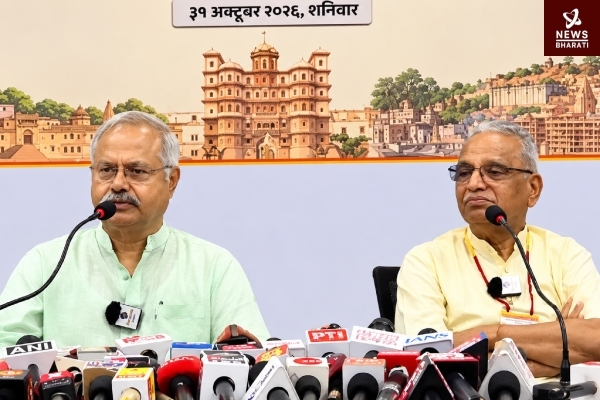
“The Sangh has made its position clear that the UGC circular was unbalanced. This concern was brought to the attention of the authorities, and both the government and the UGC took note of it. The court has also put the regulations on hold, and the matter is currently sub judice,” Ambekar said.
He added that whatever decision was taken in the future must ensure balance and that the government should pursue the same approach before the court.
The RSS position comes amid a continuing debate over the scope, definitions and implementation of the new equity regulations, which were intended to address discrimination in higher educational institutions.
The UGC notified the regulations on January 13, 2026, replacing the earlier 2012 framework. The new rules were intended to strengthen mechanisms for preventing discrimination and promoting equality in universities, colleges and other higher educational institutions across the country. They covered discrimination on grounds of religion, race, caste, gender, place of birth and disability, with particular attention to Scheduled Castes (SCs), Scheduled Tribes (STs), Other Backward Classes (OBCs), Economically Weaker Sections (EWS) and persons with disabilities.
However, the provisions triggered objections from sections of students and organisations representing the general category. The principal concern centred on the definition of caste-based discrimination under Regulation 3(1)(c), which specifically referred to discrimination against SC, ST and OBC members. Critics argued that the definition did not provide equivalent protection to students belonging to the general category. Concerns were also raised about the absence of an explicit provision addressing false or malicious complaints and the possibility of misuse of the mechanism.
On January 29, 2026, the Supreme Court, while hearing petitions challenging the regulations, ordered that their implementation be kept in abeyance. A bench comprising Chief Justice Surya Kant and Justice Joymalya Bagchi observed that certain provisions suffered from ambiguities and that the possibility of misuse could not be ruled out. The Court directed that the 2012 regulations would continue to operate until further orders. It also identified substantial legal questions requiring examination, including the definition of caste-based discrimination and safeguards against discriminatory treatment.
Ambekar's latest remarks, therefore, reiterate the RSS position that the objective of preventing discrimination must be accompanied by procedural fairness and equal protection. The emphasis, he indicated, is on ensuring that the eventual framework does not create fresh divisions while addressing existing inequalities. The matter remains before the Supreme Court, and the final shape of the regulations will depend on the judicial proceedings and the government's response.
RSS Akhil Bharatiya Prachar Pramukh Sunil Ambekar said the RSS had communicated its concerns to the authorities and that both the government and the UGC had taken note of them. He also referred to the Supreme Court's decision to keep the regulations in abeyance, observing that the matter was now sub judice.
“The Sangh has made its position clear that the UGC circular was unbalanced. This concern was brought to the attention of the authorities, and both the government and the UGC took note of it. The court has also put the regulations on hold, and the matter is currently sub judice,” Ambekar said.
He added that whatever decision was taken in the future must ensure balance and that the government should pursue the same approach before the court.
The RSS position comes amid a continuing debate over the scope, definitions and implementation of the new equity regulations, which were intended to address discrimination in higher educational institutions.
The UGC notified the regulations on January 13, 2026, replacing the earlier 2012 framework. The new rules were intended to strengthen mechanisms for preventing discrimination and promoting equality in universities, colleges and other higher educational institutions across the country. They covered discrimination on grounds of religion, race, caste, gender, place of birth and disability, with particular attention to Scheduled Castes (SCs), Scheduled Tribes (STs), Other Backward Classes (OBCs), Economically Weaker Sections (EWS) and persons with disabilities.
Under the new framework, every higher educational institution was required to establish an Equal Opportunity Centre and an Equity Committee to address complaints of discrimination. The committees were to include representation from SCs, STs, OBCs, women and persons with disabilities. The regulations also provided for Equity Squads, Equity Ambassadors and round-the-clock equity helplines. Institutions were required to act on complaints within specified timelines, with the committee expected to meet within 24 hours of receiving a complaint and submit its report within 15 working days.
RSS ने UGC के सर्कुलर को 'असंतुलित' बताया...
— Romita Tiwari (@romita_tiwari) November 2, 2026
आरएसएस के अखिल भारतीय प्रचार प्रमुख सुनील आंबेकर क्या कह रहे हैं...
सुनिए... pic.twitter.com/d5hSeIdGkJ
The regulations emerged from a longer judicial and institutional process. In 2019, a petition was filed in the Supreme Court by Radhika Vemula and Abeda Salim Tadvi, mothers of Rohith Vemula and Payal Tadvi, seeking stronger mechanisms to address caste discrimination in educational institutions. In April 2025, the Supreme Court urged the authorities to put in place a robust mechanism to deal with the issue. The subsequent UGC regulations were framed in response to the demand for more effective safeguards.
However, the provisions triggered objections from sections of students and organisations representing the general category. The principal concern centred on the definition of caste-based discrimination under Regulation 3(1)(c), which specifically referred to discrimination against SC, ST and OBC members. Critics argued that the definition did not provide equivalent protection to students belonging to the general category. Concerns were also raised about the absence of an explicit provision addressing false or malicious complaints and the possibility of misuse of the mechanism.
On January 29, 2026, the Supreme Court, while hearing petitions challenging the regulations, ordered that their implementation be kept in abeyance. A bench comprising Chief Justice Surya Kant and Justice Joymalya Bagchi observed that certain provisions suffered from ambiguities and that the possibility of misuse could not be ruled out. The Court directed that the 2012 regulations would continue to operate until further orders. It also identified substantial legal questions requiring examination, including the definition of caste-based discrimination and safeguards against discriminatory treatment.
Ambekar's latest remarks, therefore, reiterate the RSS position that the objective of preventing discrimination must be accompanied by procedural fairness and equal protection. The emphasis, he indicated, is on ensuring that the eventual framework does not create fresh divisions while addressing existing inequalities. The matter remains before the Supreme Court, and the final shape of the regulations will depend on the judicial proceedings and the government's response.