Land Jihad at Mumbai Airport
The pattern of disputes elsewhere in the country demands equal scrutiny.
NewsBharati 23-Nov-2026 13:25:04 PM
Total Views |


Land encroachment is not always an ordinary dispute over property. When religious structures emerge on government land, public spaces, roadsides or strategically sensitive premises, and their subsequent removal becomes a source of organised resistance, a much larger question arises - is religious identity being used to establish and defend territorial occupation? India cannot afford to ignore this question. The controversy over a mosque near Mumbai's international airport is not merely about an unauthorised construction. It exposes a disturbing challenge to the authority of the state, the security of critical infrastructure and the principle that no individual or institution can appropriate public property at will.
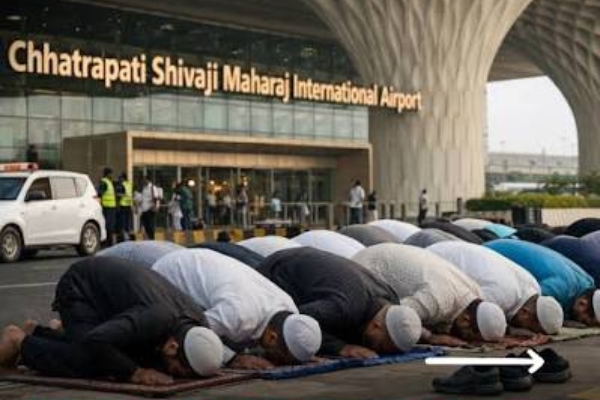
An international airport is not an ordinary public space. It is a strategic installation where security, access and land-use regulations must be enforced without exception. A religious structure cannot claim a special entitlement to occupy such premises. The argument that it serves airport workers, taxi drivers or visitors does not answer the question of legal ownership or permission. Nor can the passage of time convert an unauthorised occupation into a legitimate right. If the structure violates applicable regulations, it must be removed. National security and the integrity of public infrastructure cannot be made negotiable.
The controversy becomes more significant when viewed alongside the dispute over Bankra Masjid inside the compound of Kolkata's Netaji Subhas Chandra Bose International Airport. The Airport Authority of India informed the Calcutta High Court that the land had been acquired by the Centre in 1961 for runway expansion and that compensation had been paid. The mosque committee contests the authorities' position. The historical circumstances differ from Mumbai, since the mosque predates the present airport infrastructure. Nevertheless, the dispute raises a fundamental question: how should the state deal with religious structures situated within land required for critical national infrastructure? Airport security and operational requirements cannot be subordinated to claims that remain unresolved before the competent authorities.
The pattern of disputes elsewhere in the country demands equal scrutiny. At Turkman Gate in Delhi, the Faiz-e-Ilahi mosque and adjoining religious properties became embroiled in a dispute involving alleged encroachment on public roads, footpaths and other municipal land. In Saharanpur, a mosque inside the Collectorate campus was demolished after the administration's eviction proceedings and the dismissal of a challenge to the action. In Mehrauli, Delhi, the DDA demolished the Akhunji Masjid and adjoining madrasa, maintaining that they stood on reserved forest land. These are different cases, with different legal histories and competing claims. But collectively they raise an important question: why do disputes involving religious structures and public land repeatedly remain unresolved until they reach courts or trigger political confrontation?
The expression land jihad has entered public discourse to describe what is perceived as a pattern of religiously motivated territorial encroachment. It is a serious political characterisation and should not be treated as a proven legal finding in every individual case. Yet dismissing the concern merely because the terminology is controversial is equally irresponsible. The state must investigate whether organised encroachment, religious mobilisation and subsequent resistance to eviction are being used to establish or retain control over public property. The question is about preventing that right from being converted into a claim over land that does not belong to the claimant.
The mechanics of such an occupation deserve particular attention. An unauthorised structure may begin as a small prayer facility or a temporary religious establishment. Administrative negligence allows it to remain. Regular use gradually creates a constituency around it. Additions may follow, and the original footprint may expand. When authorities finally intervene, the dispute is no longer presented as a question of land records, permissions and statutory violations. It is transformed into a religious confrontation. The administration is accused of targeting a community, political organisations mobilise supporters, and the original encroachment recedes from public discussion. The occupant becomes the aggrieved party, while the state is forced to defend its right to reclaim its own property.
This is the political advantage of creating a fait accompli. The longer an unauthorised structure remains, the greater the pressure on the authorities to accept the situation. Religious sentiment becomes a shield against administrative action. If this method succeeds, it creates a dangerous precedent: occupy first, establish a religious claim, and then make removal politically difficult. No democratic state can permit such a strategy to become an effective instrument for acquiring public land.
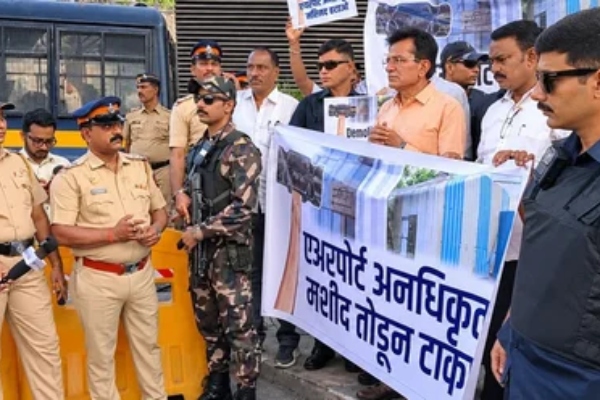
Political leaders who oppose removal must also answer a straightforward question: do they recognise the distinction between freedom of worship and the right to occupy public property? If a religious institution has valid ownership documents or construction permissions, it must establish its claim through lawful means. But invoking religious sentiments cannot substitute for documentary evidence. Nor can protests, threats or political pressure become instruments for obstructing lawful enforcement. The same standard must apply to every religion and every religious institution.
The government must now move beyond isolated demolition drives. A comprehensive survey of unauthorised religious structures on government land, railway property, roads, footpaths, forest land and sensitive installations is essential. Every case must be examined through land records, original permissions, construction dates and subsequent extensions. Illegal occupation must be removed through due process, without discrimination or political exemptions. Equally important, officials responsible for prolonged inaction must be investigated.
The Mumbai airport controversy should not end with another notice, another protest and another round of administrative explanations. It must become a test of the state's resolve. If an unauthorised structure can survive for years within an international airport complex, what does that say about the government's ability to protect other public and strategic properties?
A mosque cannot become a title deed, a mazar cannot become a land grant, and religious sentiment cannot become a licence for territorial occupation. Public land belongs to the nation and its people. The state must not surrender it to encroachment, political intimidation or manufactured religious confrontation. There can be no negotiation over this principle: the law must prevail, and the state must reclaim its authority.
The Mumbai Metropolitan Region Development Authority (MMRDA) has issued a fresh directive to Mumbai International Airport Limited (MIAL), giving it seven days to remove the disputed mosque near Terminal 2. The authority maintains that it never granted permission for the construction. BJP leader Kirit Somaiya alleges that approximately 5,000 square feet of airport land has been encroached upon. The Ashabul Janna Airport Charitable Trust disputes the allegations and claims that airport authorities knew about the prayer facility.The larger question is unavoidable: how did a disputed religious structure come to occupy land within an international airport complex, and why did the authorities allow the matter to continue for so long?
An international airport is not an ordinary public space. It is a strategic installation where security, access and land-use regulations must be enforced without exception. A religious structure cannot claim a special entitlement to occupy such premises. The argument that it serves airport workers, taxi drivers or visitors does not answer the question of legal ownership or permission. Nor can the passage of time convert an unauthorised occupation into a legitimate right. If the structure violates applicable regulations, it must be removed. National security and the integrity of public infrastructure cannot be made negotiable.
The controversy becomes more significant when viewed alongside the dispute over Bankra Masjid inside the compound of Kolkata's Netaji Subhas Chandra Bose International Airport. The Airport Authority of India informed the Calcutta High Court that the land had been acquired by the Centre in 1961 for runway expansion and that compensation had been paid. The mosque committee contests the authorities' position. The historical circumstances differ from Mumbai, since the mosque predates the present airport infrastructure. Nevertheless, the dispute raises a fundamental question: how should the state deal with religious structures situated within land required for critical national infrastructure? Airport security and operational requirements cannot be subordinated to claims that remain unresolved before the competent authorities.
The pattern of disputes elsewhere in the country demands equal scrutiny. At Turkman Gate in Delhi, the Faiz-e-Ilahi mosque and adjoining religious properties became embroiled in a dispute involving alleged encroachment on public roads, footpaths and other municipal land. In Saharanpur, a mosque inside the Collectorate campus was demolished after the administration's eviction proceedings and the dismissal of a challenge to the action. In Mehrauli, Delhi, the DDA demolished the Akhunji Masjid and adjoining madrasa, maintaining that they stood on reserved forest land. These are different cases, with different legal histories and competing claims. But collectively they raise an important question: why do disputes involving religious structures and public land repeatedly remain unresolved until they reach courts or trigger political confrontation?
The expression land jihad has entered public discourse to describe what is perceived as a pattern of religiously motivated territorial encroachment. It is a serious political characterisation and should not be treated as a proven legal finding in every individual case. Yet dismissing the concern merely because the terminology is controversial is equally irresponsible. The state must investigate whether organised encroachment, religious mobilisation and subsequent resistance to eviction are being used to establish or retain control over public property. The question is about preventing that right from being converted into a claim over land that does not belong to the claimant.
The mechanics of such an occupation deserve particular attention. An unauthorised structure may begin as a small prayer facility or a temporary religious establishment. Administrative negligence allows it to remain. Regular use gradually creates a constituency around it. Additions may follow, and the original footprint may expand. When authorities finally intervene, the dispute is no longer presented as a question of land records, permissions and statutory violations. It is transformed into a religious confrontation. The administration is accused of targeting a community, political organisations mobilise supporters, and the original encroachment recedes from public discussion. The occupant becomes the aggrieved party, while the state is forced to defend its right to reclaim its own property.
This is the political advantage of creating a fait accompli. The longer an unauthorised structure remains, the greater the pressure on the authorities to accept the situation. Religious sentiment becomes a shield against administrative action. If this method succeeds, it creates a dangerous precedent: occupy first, establish a religious claim, and then make removal politically difficult. No democratic state can permit such a strategy to become an effective instrument for acquiring public land.
There is also a question of administrative complicity. A mosque or mazar does not appear overnight on government property without anyone noticing. Local authorities, revenue officials, municipal bodies and police administrations have responsibilities. If construction takes place over several years, who permits it? If the land is government-owned, why are records not examined immediately? If the structure is unauthorised, why are notices and eviction proceedings delayed? Officials who knowingly tolerate illegal occupation must face accountability. The state cannot blame political mobilisation alone for a failure that begins within its own administrative machinery.
Political leaders who oppose removal must also answer a straightforward question: do they recognise the distinction between freedom of worship and the right to occupy public property? If a religious institution has valid ownership documents or construction permissions, it must establish its claim through lawful means. But invoking religious sentiments cannot substitute for documentary evidence. Nor can protests, threats or political pressure become instruments for obstructing lawful enforcement. The same standard must apply to every religion and every religious institution.
The government must now move beyond isolated demolition drives. A comprehensive survey of unauthorised religious structures on government land, railway property, roads, footpaths, forest land and sensitive installations is essential. Every case must be examined through land records, original permissions, construction dates and subsequent extensions. Illegal occupation must be removed through due process, without discrimination or political exemptions. Equally important, officials responsible for prolonged inaction must be investigated.
The Mumbai airport controversy should not end with another notice, another protest and another round of administrative explanations. It must become a test of the state's resolve. If an unauthorised structure can survive for years within an international airport complex, what does that say about the government's ability to protect other public and strategic properties?
A mosque cannot become a title deed, a mazar cannot become a land grant, and religious sentiment cannot become a licence for territorial occupation. Public land belongs to the nation and its people. The state must not surrender it to encroachment, political intimidation or manufactured religious confrontation. There can be no negotiation over this principle: the law must prevail, and the state must reclaim its authority.

Editor's Desk
Editor's Desk