West Bengal Moves to Restore Its Original Identity Through Name Change
West Bengal has once again opened that discussion, this time seeking to retain the word that connects its name to the history of Partition.
Total Views |


West Bengal is set to restore its original name, 'Bang', a name rooted in the region's glorious past and rich cultural heritage. The proposed change aims to bring back a historical name that reflects the state's heritage and identity.
 The debate returned after the Trinamool Congress came to power under Mamata Banerjee. On September 2, 2011, the state Assembly unanimously passed a resolution to rename West Bengal as Paschim Banga in all languages.
The latest proposal reflects a different approach to the state's naming question. Rather than removing the word 'West', the BJP government has chosen to retain its historical significance through the name Paschim Banga.
With the latest proposal, West Bengal has once again opened that discussion, this time seeking to retain the word that connects its name to the history of Partition.
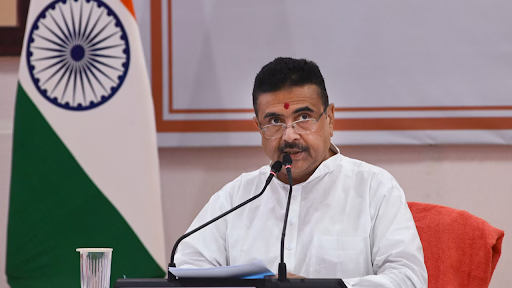
The latest development came on November 23, 2026, when the BJP-led government in West Bengal, headed by Chief Minister Suvendu Adhikari, approved a proposal to rename the state as Paschim Banga in all languages, including English. The state government is scheduled to bring a resolution in the Assembly on December 9.
Unlike earlier proposals that sought to remove the word 'West', the latest move aims to retain the historical reference while adopting the Bengali name of the state. The decision has once again brought the nearly 80-year-old debate into focus.
How did Bengal become West Bengal?
The roots of the naming debate go back to the Partition of British India in 1947. Bengal, which was then a single province under British rule, was divided along religious lines. Its western, Hindu-majority region became part of independent India and came to be known as West Bengal. The eastern region became East Bengal and joined Pakistan.
In 1955, East Bengal was renamed East Pakistan. Following the Bangladesh Liberation War, it emerged as the independent nation of Bangladesh in 1971.
With the creation of Bangladesh, the geographical distinction between East and West Bengal changed. This led to arguments that the word 'West' had become outdated, as there was no longer an East Bengal within the same political framework.
However, for others, the name West Bengal continued to represent the historical circumstances under which the state was formed and the events surrounding Partition.
A name is more than an expression of geography; it carries the memory of people, the continuity of their civilizational identity and the pride of their heritage. The proposed renaming of 'West Bengal' as 'Pashchim Banga' is a powerful reaffirmation of the region’s historical…
— Dharmendra Pradhan (@dpradhanbjp) November 23, 2026
A debate that continued across governments
The first major attempt to change the state's name came in 1999, when the Left Front government, led by Chief Minister Jyoti Basu, discussed and passed a proposal in the Assembly to rename it Paschim Banga or Bangla. However, the proposal did not receive the necessary follow-through at the Centre.
One of the major reasons behind the proposal was alphabetical positioning. West Bengal appeared towards the end of state lists and faced a similar disadvantage during national-level meetings. The government believed that a name beginning with 'P' would give the state a better position.
However, the proposal did not move forward at the Union level.
In 2016, the state government introduced another proposal, suggesting three different names depending on the language: Bengal in English, Bangla in Bengali and Bangal in Hindi. The Assembly passed the resolution on August 29, 2016, but the Union Home Ministry rejected it, maintaining that a state could not have three different official names.
The government subsequently proposed Bangla as a common name across languages. The Assembly unanimously approved the proposal on July 26, 2018. However, the Centre turned it down in 2019 over concerns that the name could create phonetic and diplomatic confusion with neighbouring Bangladesh.
Why has Paschim Banga returned to the debate?
The proposal is also linked to the events of June 20, 1947, when Syama Prasad Mookerjee, founder of the Bharatiya Jana Sangh, played a key role in the demand for the partition of Bengal and the creation of a separate province of West Bengal within India. The BJP has emphasised this historical association as an important reason for retaining the reference to 'Paschim'.
At the same time, adopting Paschim Banga as a single name across languages avoids the issue of having separate official names, which had become a major obstacle to the 2016 proposal.
What happens next?
The state Cabinet's approval is an important step, but it does not automatically change the state's official name. The proposed resolution must proceed through the constitutional process involving the Union government and Parliament.
Under Article 3 of the Constitution, Parliament has the authority to alter the name of a state. A Bill for this purpose can be introduced only with the President's recommendation, and the proposal must be referred to the concerned state legislature for its views.
From the Partition-era division of Bengal to the proposals of 1999, 2011, 2016 and 2018, the debate has repeatedly returned to one central question: should the state's name reflect its present geographical identity or preserve the historical circumstances of its creation?