Aditya Dhar’s blockbuster spy thriller Dhurandhar and its massive sequel “Dhurandhar: The Revenge” has forced a whole new generation to confront the raw, unfiltered horror of the 26/11 Mumbai terror attacks. In the film’s most haunting sequence, the screen bleeds red while actual intercepted voice recordings of the Pakistani handlers directing the terrorists play in the background, leaving theatre audiences stunned and bringing back painful memories for survivors.
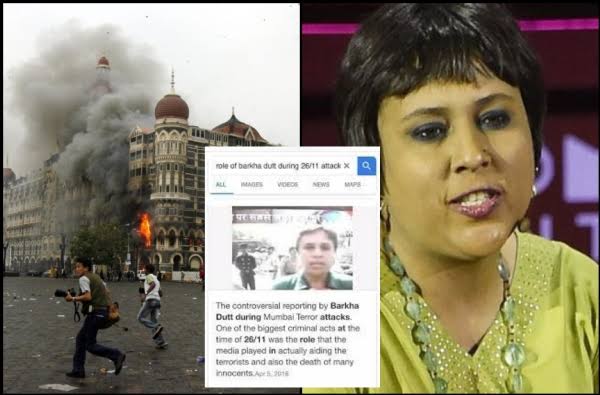
As those chilling handler-to-terrorist phone calls resurface in the public consciousness today, they serve as a grim reminder of how those handlers across the border knew every move happening inside Mumbai in real time: they were watching Indian live television. And right at the center of that reckless broadcast circus was former NDTV journalist Barkha Dutt.
Everyone knows how Barkha Dutt, the so-called journalist, had made a huge blunder during the Kargil war. Since that blunder, everyone felt that Kargil's experience would have made her mature about national security and operational secrecy, but old habits die hard. She again dug her own grave by repeating the exact same mistake during the Mumbai 26/11 terror attack endangering hundreds of lives stuck in the areas where Pakistan-based terrorists had struck.
Giving Away Live Positions on Air
In one of the infamous videos from her 26/11 coverage, Dutt can be heard reporting live on television that "her sources are on the 19th floor where the terrorists are currently in their murderous frenzy." She didn’t blink or hesitate for a second before broadcasting such a crucial, life-or-death piece of intelligence to the entire world. How can a media person stoop so low for TRPs during one of the biggest terror attacks on Indian soil?
Deflecting Blame and Remaining Unapologetic
During a subsequent interview, she accepted the media's role in endangering the lives of civilians as well as security personnel by failing to restrain themselves during the telecast. While admitting that perhaps in hindsight journalists made mistakes during the Mumbai siege, she quickly tried to cover up the issue by claiming the media wasn’t aware that the terrorists' handlers were monitoring news channels.
Yet, when interviewed later by a left-liberal journalist at Newslaundry, Dutt remained completely unapologetic for her role. Without offering a shred of remorse or admission of guilt, she stated:
“The Oberoi story, I do remember having said at some point… not the exact number but when there was confusion over the fact that the hotel has been cleared, I did say that no, we still have reasons to believe that there are people who are trapped as hostages. That I did say. I don’t believe I was the only one who said it. Journalists across the board said that.”
Silencing Critics Instead of Accepting Accountability
When blogger Chaitanya Kunte questioned her journalistic ethics over her coverage, instead of reflecting on the lives put at risk, Dutt slapped him with a legal notice and threatened him into taking down the post. Speaking about the incident later, she doubled down, stating she did not regret sending Kunte a legal notice because his blog accused her of being complicit in deaths during the terror attack.
What the Supreme Court — and the Intercepted Tapes — Proved
While Dhurandhar has reminded cinema-goers of the terrifying handler recordings, the Supreme Court of India had already officially documented how live TV acted as the eyes and ears for Lashkar-e-Taiba in Pakistan. In the landmark Md. Ajmal Md. Amir Kasab vs. The State of Maharashtra verdict on August 29, 2012, the apex court slammed the media for compounding the severity of the attacks, dedicating an entire section to its irresponsible conduct:
Handlers Watching Live TV: "From the transcripts, especially those from Taj Hotel and Nariman House, it is evident that the terrorists who were entrenched at those places and more than them, their collaborators across the border were watching the full show on TV. In the transcripts there are many references to the media reports and the visuals being shown on the TV screen."
Directing the Carnage via Broadcasts: In one transcript, the collaborators tell the terrorists inside the Taj Hotel that the dome at the top of the building had caught fire—something the terrorists holed up inside a room didn't even know—and instruct them that the stronger they make the fire, the better.
Endangering Security Forces: The Court noted that while it was impossible to quantify exact casualties caused by the live telecasts, "it is beyond doubt that the way their operations were freely shown made the task of the security forces not only exceedingly difficult, but also dangerous and risky."
The Ultimate Irony
With Dhurandhar sparking renewed outrage today over the brutality of 26/11 and the failures that surrounded it, one bitter irony stands out above all else: just a few months after her reckless 26/11 blunder compromised operations and endangered hostages, the Sonia Gandhi-led Manmohan Singh government rewarded Barkha Dutt with the Padma Shri in 2009 for her reporting.