Shades of Women in the Islamic World: Between Religious Expectations and Freedom of Expression
These incidents do not represent the experiences of all Muslim women or every Islamic society.
Total Views |


Women in Islamic societies experience diverse realities shaped by religious beliefs, cultural expectations and legal frameworks. While some raise concerns about practices within religious spaces, others challenge restrictions on personal choices, clothing and artistic expression. Recent incidents involving Turkish actress Çiğdem Batur and Iranian singer Parastoo Ahmadi have brought these questions into focus. Although the two cases are different in nature, both highlight the challenges women face when their public expressions intersect with religious sensitivities and legal restrictions.
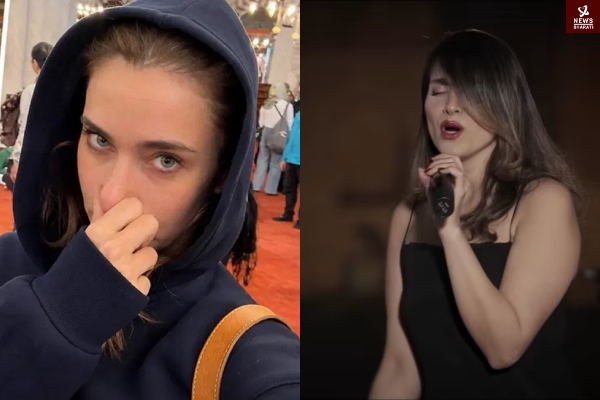 Turkish actress Çiğdem Batur is facing a criminal investigation after sharing a video from Istanbul's iconic Blue Mosque, also known as the Sultanahmet Mosque, in which she complained about foot odour inside the religious complex. Her remarks triggered a debate over hygiene, religious respect and freedom of expression in Turkey.
In a contrasting incident, Iranian singer Parastoo Ahmadi reportedly received 74 lashes for performing without the mandatory hijab, bringing renewed attention to restrictions on women's personal and artistic expression in Iran.
The cases of Çiğdem Batur and Parastoo Ahmadi reflect two different experiences of women navigating religious expectations and individual expression. While Batur's remarks raised questions about the boundaries of criticism within religious spaces, Ahmadi's punishment highlighted the consequences of challenging compulsory dress codes and restrictions on artistic freedom. These incidents do not represent the experiences of all Muslim women or every Islamic society. However, they bring forward an important discussion about women's autonomy, religious sensitivities and the space available for individual expression in societies where religion and law intersect.
Çiğdem Batur Faces Investigation Over Blue Mosque Video in Turkey
The video, filmed on November 19, 2026, showed Batur covering her nose while standing among visitors and worshippers. In the caption, she urged officials to find a solution to the foot odour, stating that it had made her feel dizzy and was creating an embarrassing impression of Turkey before international visitors.
Within two days, Istanbul prosecutors reportedly initiated an investigation under Article 216 of the Turkish Penal Code, which deals with publicly denigrating sections of society or religious values. According to the prosecutor's office, her remarks could be considered degrading towards mosque congregations and worshippers in a sacred space where visitors are required to remove their footwear.
TURKISH ACTRESS FACES PROBE OVER 'FOOT ODOUR' REMARK AT BLUE MOSQUE
— Subodh Kumar (@kumarsubodh_) November 25, 2026
Actress Çiğdem Batur is under investigation under Article 216 of Turkey's Penal Code after holding her nose over an alleged foul smell inside Istanbul's Blue Mosque.
She says her video aimed to highlight… pic.twitter.com/9khlA2y1ff
The incident divided public opinion. While some criticised Batur for making comments they considered disrespectful towards a place of worship, others supported her right to raise concerns about hygiene and ventilation. The Blue Mosque serves both as an active religious site and a major tourist attraction, where large visitor numbers and the requirement to remove shoes can contribute to noticeable odours.
Batur, known for her role in the television series Kurtlar Vadisi (Valley of the Wolves), defended her intentions in a public statement. She clarified that her comments were not directed towards any religion, worshippers or sacred space. Instead, she wanted to highlight hygiene and ventilation problems at a historical landmark visited by tourists and worshippers alike. She also described the Blue Mosque and Hagia Sophia as important representations of Turkey before the world.
As of the reported developments, prosecutors had not filed a formal indictment, leaving the outcome of the investigation uncertain.
Parastoo Ahmadi Receives 74 Lashes Over Performance Without Hijab in Iran
According to her defence attorney Mostafa Nili, the punishment was carried out at the Sentence Enforcement Unit of the Qom Prosecutor's Office. Four members of her concert team, including organiser Mohsen Lashkari and musicians Soheil Faghih-Nasiri, Amin Taheri and Amir-Ali Pirnia, also received 74 lashes each.
Iranian singer #ParastooAhmadi was lashed 74 times over a performance in which she appeared without the mandatory hijab, according to defense attorney Mostafa Nili, cited by Iran Human Rights (@IHRights ).
— Upendrra Rai (@UpendrraRai) November 24, 2026
Four members of her concert team also received 74 lashes each, #IHRNGO… pic.twitter.com/5bXz54iUoG
The case dates back to December 2024, when Ahmadi performed at the historic Deir-e Gachin Caravanserai near Qom. The performance, released online as the 'Caravanserai Concert', featured her singing alongside male musicians without a live audience. She appeared in a long black sleeveless dress with her hair uncovered, defying Iran's compulsory hijab regulations.
Following the video's release, authorities initiated legal proceedings against Ahmadi and her team. Iran's judiciary-affiliated Mizan News Agency described the performance as an 'illegal concert' that did not comply with the country's legal and religious standards.
A court convicted the five individuals of offending public decency through the production and distribution of content it considered vulgar and immoral. Alongside flogging, they received two-year bans on artistic and musical activities and foreign travel. An appeals court upheld the ruling in September.
Mahmood Amiry-Moghaddam, director of Iran Human Rights, told CNN that Ahmadi's clothing was an important factor behind the punishment, while also highlighting her decision to sing publicly and challenge restrictions imposed by Iranian authorities. Amnesty International has described flogging as a cruel, inhuman and degrading punishment.