The Deepam Controversy: Vijay Joseph Stands Unmasked
A government may command an administrative machinery, but it does not own the Constitution.
NewsBharati 26-Nov-2026 12:22:42 PM
Total Views |


The controversy is no longer confined to where the Karthigai Deepam should be lit. It has become a question of Vijay's political intentions, his government's approach to Hindu religious traditions and its willingness to implement judicial directions. What began as a dispute over a centuries-old religious observance at Thiruparankundram has now developed into a confrontation involving constitutional authority, executive accountability, judicial supremacy and the religious rights of Hindus. The episode has also exposed the ideological contradictions confronting Tamil Nadu's political establishment.
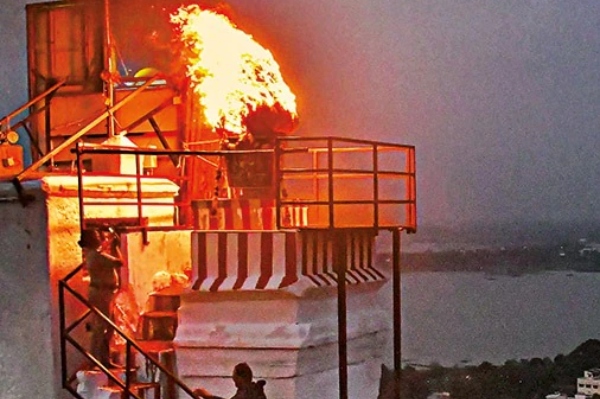
But on November 24, the lamp was lit at the customary location near the Uchipillayar Mandapam rather than at the Deepathoon. The administration cited the temple's traditional practice and concerns surrounding the situation. Police restrictions were imposed, and devotees protesting the non-compliance were removed. The Collector subsequently apologised to the Supreme Court.
This raises a fundamental constitutional question. Article 144 of the Constitution explicitly mandates that all civil and judicial authorities shall act in aid of the Supreme Court. Article 144 is not an optional provision that governments can invoke selectively. Nor can administrative convenience become an excuse for non-compliance with judicial directions.
The Madras High Court had already reminded the Collector of his constitutional obligations. The Collector was not an independent political authority. He was functioning within the state administration, under the executive machinery headed by the Chief Minister. It is therefore difficult to examine his conduct without examining the government's role, the instructions he received and the administrative decisions taken at different levels.
Can a District Collector be expected to take responsibility for a decision involving the government's political and administrative interests without the executive leadership being accountable? If the Collector was unable to implement the Supreme Court's direction, who prevented him? Was it an administrative failure, a political decision or a deliberate attempt to avoid compliance? These questions demand answers.
The confrontation is not simply between two institutions. It concerns the constitutional relationship between the judiciary and the executive. A government cannot claim constitutional authority while treating judicial directions as negotiable.
To understand the political sensitivity of this episode, one must understand Tamil Nadu's Dravidian political tradition.
The DMK emerged from the Dravidian movement, particularly the Self-Respect Movement initiated by E V Ramasamy Periyar. Its ideological foundations included rationalism, anti-caste politics, social reform and a strong critique of religious orthodoxy. Periyar's position was explicitly atheistic. The movement's hostility towards Brahminical dominance and religious practices became an important part of its political identity.
The problem arises when rationalism becomes a political justification for treating religious traditions with suspicion or when the state appears more accommodating towards some religious interests than others.
Vijay's political positioning must also be examined in this context. He has invoked Periyar and spoken of social justice and secular politics. But political inheritance cannot substitute for constitutional responsibility. A Chief Minister's first obligation is to uphold the Constitution, protect citizens' rights and ensure that judicial orders are implemented.
The location of this controversy makes it particularly sensitive. Tamil Nadu is among India's most important centres of Hindu temple culture. According to the state's Hindu Religious and Charitable Endowments Department, 43,648 temples are listed under its administrative framework. The department's wider institutional count is 46,338, including Jain temples, mutts and endowments.
These temples are not merely places of worship. They are repositories of Tamil civilisation, architecture, literature, music, sculpture and community traditions. Their religious significance is inseparable from the cultural identity of the state.
Thiruparankundram occupies a particularly important position in this heritage. It is the first of the six sacred abodes of Lord Murugan, known as Arupadai Veedu. Murugan, also worshipped as Skanda, Subramanya and Kartikeya, occupies an extraordinary place in Tamil religious consciousness.
He is not simply another deity in the Hindu pantheon. He represents valour, wisdom, youth, knowledge and the triumph of righteousness. His association with Tamil identity is deeply embedded in the region's literature, devotional traditions and festivals. The marriage of Murugan and Deivanai is traditionally associated with Thiruparankundram. The shrine is therefore central to the religious imagination of Tamil Hindus.
Against this background, the Deepam controversy cannot be dismissed as an ordinary dispute over a lamp or its location. For devotees, the Deepam represents faith, continuity and the right to observe religious traditions. Any administrative intervention must be sensitive to these sentiments and, above all, consistent with the law.
Vijay entered politics with an enormous public profile built over decades in cinema. His popularity, particularly among younger audiences, created expectations of a different political leadership. But the transition from cinema to governance demands a fundamental change in approach.
In reel life, a protagonist can resolve a conflict through a dramatic intervention. In real life, a Chief Minister is bound by constitutional provisions, judicial orders and administrative accountability. Popularity cannot replace responsibility. Nor can political calculations take precedence over the rule of law.
The Deepam controversy has brought this distinction into sharp focus. Vijay must explain why his administration failed to implement a specific Supreme Court direction. It is not sufficient to place responsibility on subordinate officials or defend the decision through references to customary practice. The government must account for the administrative chain of decisions.
The incident has also raised questions about his political positioning. If Vijay wishes to invoke Periyar's rationalist legacy, he must equally recognise the constitutional protection available to religious communities. Rationalism does not confer a licence upon the state to disregard religious rights. Social justice cannot be selective.
Why should ordinary devotees repeatedly approach courts to secure the observance of religious traditions? Why should the implementation of a judicial direction become an occasion for confrontation between the administration and worshippers? Why should the burden of protecting religious rights fall upon citizens when the Constitution itself guarantees freedom of religion?
Article 25 protects freedom of conscience and the right freely to profess, practise and propagate religion, subject to constitutional limitations. This protection is not a political favour extended by any government. It is a constitutional guarantee.
Hindu organisations and devotees are entitled to pursue their rights through constitutional and peaceful means. Equally, governments must ensure that religious disputes are handled without discrimination and that judicial directions are respected.
The episode could also have consequences beyond this particular controversy. It may give fresh impetus to a broader debate on Hindu religious rights, temple administration and the relationship between the state and religious institutions. Whether this develops into a wider political mobilisation remains to be seen.
The Thiruparankundram controversy has exposed an uncomfortable question for Tamil Nadu's political leadership - can a government claim to represent social justice while failing to demonstrate equal constitutional sensitivity towards the religious concerns of its Hindu citizens?
Vijay has an opportunity to answer that question through constitutional accountability rather than political rhetoric. He must explain the decisions of his administration, establish who was responsible for the non-compliance and ensure that such a situation does not recur.
The Supreme Court is not an institution whose directions can be accepted when convenient and resisted when politically inconvenient. The executive derives its authority from the Constitution; it cannot place itself above the constitutional framework.
For Hindu devotees, the Deepam is an expression of faith and civilisational continuity. For the government, it should have been an occasion to demonstrate impartiality, administrative responsibility and respect for the judiciary. Instead, it has become a test of constitutional governance.
A government may command an administrative machinery, but it does not own the Constitution. A Chief Minister may enjoy popular support, but that support does not place him above judicial authority. And Hindu devotees are not supplicants seeking political permission to practise their faith. Their constitutional rights are not conditional upon the ideological preferences of the government of the day.
The Supreme Court's November 20 order was unambiguous in its operative direction. It permitted the lighting of the Karthigai Deepam at the Deepathoon on November 24 as a one-time arrangement, with the District Collector responsible for coordinating the arrangements. The Court also made clear that this temporary permission would not determine the question of customary rights in future years.
But on November 24, the lamp was lit at the customary location near the Uchipillayar Mandapam rather than at the Deepathoon. The administration cited the temple's traditional practice and concerns surrounding the situation. Police restrictions were imposed, and devotees protesting the non-compliance were removed. The Collector subsequently apologised to the Supreme Court.
This raises a fundamental constitutional question. Article 144 of the Constitution explicitly mandates that all civil and judicial authorities shall act in aid of the Supreme Court. Article 144 is not an optional provision that governments can invoke selectively. Nor can administrative convenience become an excuse for non-compliance with judicial directions.
The Madras High Court had already reminded the Collector of his constitutional obligations. The Collector was not an independent political authority. He was functioning within the state administration, under the executive machinery headed by the Chief Minister. It is therefore difficult to examine his conduct without examining the government's role, the instructions he received and the administrative decisions taken at different levels.
Can a District Collector be expected to take responsibility for a decision involving the government's political and administrative interests without the executive leadership being accountable? If the Collector was unable to implement the Supreme Court's direction, who prevented him? Was it an administrative failure, a political decision or a deliberate attempt to avoid compliance? These questions demand answers.
The confrontation is not simply between two institutions. It concerns the constitutional relationship between the judiciary and the executive. A government cannot claim constitutional authority while treating judicial directions as negotiable.
To understand the political sensitivity of this episode, one must understand Tamil Nadu's Dravidian political tradition.
The DMK emerged from the Dravidian movement, particularly the Self-Respect Movement initiated by E V Ramasamy Periyar. Its ideological foundations included rationalism, anti-caste politics, social reform and a strong critique of religious orthodoxy. Periyar's position was explicitly atheistic. The movement's hostility towards Brahminical dominance and religious practices became an important part of its political identity.
Over the decades, the DMK's political approach evolved. C N Annadurai adopted a more pragmatic position, moving away from Periyar's uncompromising atheism towards the formulation of one community and one God. Nevertheless, rationalism and the critique of religious orthodoxy remained important strands of Dravidian political discourse.
The problem arises when rationalism becomes a political justification for treating religious traditions with suspicion or when the state appears more accommodating towards some religious interests than others.
Vijay's political positioning must also be examined in this context. He has invoked Periyar and spoken of social justice and secular politics. But political inheritance cannot substitute for constitutional responsibility. A Chief Minister's first obligation is to uphold the Constitution, protect citizens' rights and ensure that judicial orders are implemented.
The location of this controversy makes it particularly sensitive. Tamil Nadu is among India's most important centres of Hindu temple culture. According to the state's Hindu Religious and Charitable Endowments Department, 43,648 temples are listed under its administrative framework. The department's wider institutional count is 46,338, including Jain temples, mutts and endowments.
These temples are not merely places of worship. They are repositories of Tamil civilisation, architecture, literature, music, sculpture and community traditions. Their religious significance is inseparable from the cultural identity of the state.
Thiruparankundram occupies a particularly important position in this heritage. It is the first of the six sacred abodes of Lord Murugan, known as Arupadai Veedu. Murugan, also worshipped as Skanda, Subramanya and Kartikeya, occupies an extraordinary place in Tamil religious consciousness.
He is not simply another deity in the Hindu pantheon. He represents valour, wisdom, youth, knowledge and the triumph of righteousness. His association with Tamil identity is deeply embedded in the region's literature, devotional traditions and festivals. The marriage of Murugan and Deivanai is traditionally associated with Thiruparankundram. The shrine is therefore central to the religious imagination of Tamil Hindus.
Against this background, the Deepam controversy cannot be dismissed as an ordinary dispute over a lamp or its location. For devotees, the Deepam represents faith, continuity and the right to observe religious traditions. Any administrative intervention must be sensitive to these sentiments and, above all, consistent with the law.
Vijay entered politics with an enormous public profile built over decades in cinema. His popularity, particularly among younger audiences, created expectations of a different political leadership. But the transition from cinema to governance demands a fundamental change in approach.
In reel life, a protagonist can resolve a conflict through a dramatic intervention. In real life, a Chief Minister is bound by constitutional provisions, judicial orders and administrative accountability. Popularity cannot replace responsibility. Nor can political calculations take precedence over the rule of law.
The Deepam controversy has brought this distinction into sharp focus. Vijay must explain why his administration failed to implement a specific Supreme Court direction. It is not sufficient to place responsibility on subordinate officials or defend the decision through references to customary practice. The government must account for the administrative chain of decisions.
The incident has also raised questions about his political positioning. If Vijay wishes to invoke Periyar's rationalist legacy, he must equally recognise the constitutional protection available to religious communities. Rationalism does not confer a licence upon the state to disregard religious rights. Social justice cannot be selective.
Perhaps the most disturbing aspect of the controversy is the sense of helplessness among devotees who believe that their religious practices are not receiving equal consideration from the administration.
Why should ordinary devotees repeatedly approach courts to secure the observance of religious traditions? Why should the implementation of a judicial direction become an occasion for confrontation between the administration and worshippers? Why should the burden of protecting religious rights fall upon citizens when the Constitution itself guarantees freedom of religion?
Article 25 protects freedom of conscience and the right freely to profess, practise and propagate religion, subject to constitutional limitations. This protection is not a political favour extended by any government. It is a constitutional guarantee.
Hindu organisations and devotees are entitled to pursue their rights through constitutional and peaceful means. Equally, governments must ensure that religious disputes are handled without discrimination and that judicial directions are respected.
The episode could also have consequences beyond this particular controversy. It may give fresh impetus to a broader debate on Hindu religious rights, temple administration and the relationship between the state and religious institutions. Whether this develops into a wider political mobilisation remains to be seen.
The Thiruparankundram controversy has exposed an uncomfortable question for Tamil Nadu's political leadership - can a government claim to represent social justice while failing to demonstrate equal constitutional sensitivity towards the religious concerns of its Hindu citizens?
Vijay has an opportunity to answer that question through constitutional accountability rather than political rhetoric. He must explain the decisions of his administration, establish who was responsible for the non-compliance and ensure that such a situation does not recur.
The Supreme Court is not an institution whose directions can be accepted when convenient and resisted when politically inconvenient. The executive derives its authority from the Constitution; it cannot place itself above the constitutional framework.
For Hindu devotees, the Deepam is an expression of faith and civilisational continuity. For the government, it should have been an occasion to demonstrate impartiality, administrative responsibility and respect for the judiciary. Instead, it has become a test of constitutional governance.
A government may command an administrative machinery, but it does not own the Constitution. A Chief Minister may enjoy popular support, but that support does not place him above judicial authority. And Hindu devotees are not supplicants seeking political permission to practise their faith. Their constitutional rights are not conditional upon the ideological preferences of the government of the day.

Editor's Desk
Editor's Desk