Title: Congress's anti-national claims about 26/11 that deserve nation's attention
As the country marks another anniversary of the Mumbai attacks
Total Views |


Political statements on terrorism and national security carry significant weight, particularly when they concern incidents that have shaped the country's security history. Over the years, certain remarks and political actions by Congress leaders have triggered debates over their approach to terrorism and the handling of sensitive national issues. Two such controversies, involving former Congress leader Digvijaya Singh and Maharashtra Congress leader Vijay Wadettiwar, have repeatedly drawn attention for their references to the 2008 Mumbai terror attacks, the role of Pakistan and the circumstances surrounding the death of senior police officer Hemant Karkare.
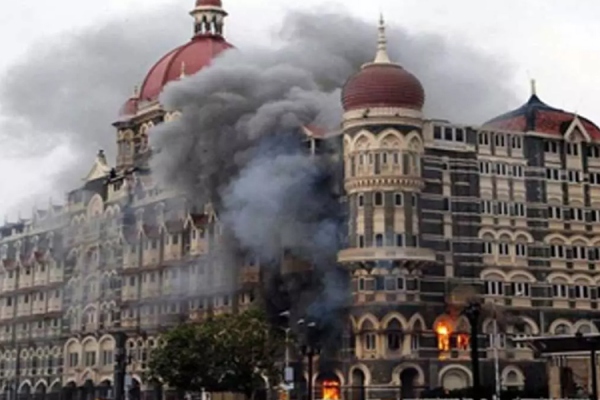 As the country marks another anniversary of the Mumbai attacks, these past episodes also bring attention to the responsibility of political leaders when addressing matters involving terrorism and national security. Remembering the victims and respecting those who fought the terrorists must remain above political considerations.
Digvijaya Singh and the 'RSS Ki Saazish' Book Controversy
In 2010, Congress leader Digvijaya Singh attended the launch of the book 26/11: RSS Ki Saazish?, written by journalist Aziz Burney. The publication questioned the established narrative surrounding the Mumbai terror attacks and suggested an RSS conspiracy behind the incident.
Singh's presence at the book launch attracted criticism, with political opponents questioning why a senior Congress leader was associated with a publication that raised doubts about the circumstances of an attack carried out by Pakistan-based Lashkar-e-Taiba (LeT) terrorists.
The controversy became a significant political issue, with the BJP accusing the Congress of diverting attention from Pakistan's role in the attacks. The book's claims were not established by the official investigation or subsequent judicial proceedings.
The episode continued to feature in political debates about the manner in which the Mumbai attacks were discussed and the political implications of questioning the established account of the incident.
Vijay Wadettiwar's Remarks on Hemant Karkare
A similar controversy emerged in May 2024 when senior Maharashtra Congress leader Vijay Wadettiwar made allegations concerning the death of former Mumbai Anti-Terrorism Squad (ATS) chief Hemant Karkare.
Wadettiwar claimed that Karkare was not killed by Pakistani terrorist Ajmal Kasab but by a police officer affiliated with the RSS. He further alleged that Ujjwal Nikam, the special public prosecutor in the 26/11 case, knew about the alleged circumstances but suppressed the information. He also called Nikam a traitor.
Nikam, who represented the government during Kasab's trial, later contested the 2024 Lok Sabha elections as a BJP candidate from Mumbai North Central.
Following widespread criticism, Wadettiwar defended his remarks by referring to the book Who Killed Karkare, written by retired police officer SM Mushrif. He maintained that the allegations he had made were mentioned in the publication.
The remarks drew strong reactions from the BJP. Party spokesperson Shehzad Poonawala accused the Congress of questioning the patriotism of individuals associated with the investigation and prosecution of the terror attack. Maharashtra's then Chief Minister Eknath Shinde also condemned the statement, while Deputy Chief Minister Devendra Fadnavis criticised the Congress over its political position.
Former Congress leader Milind Deora, who was the South Mumbai MP when the attacks took place, described Wadettiwar's remarks as shameful. He recalled witnessing the suffering caused by the attacks and criticised attempts to shift attention away from Pakistan's involvement.
Hemant Karkare, who was serving as the Mumbai ATS chief, was killed while confronting terrorists on November 26, 2008. He was posthumously awarded the Ashoka Chakra in 2009 for his bravery.
Ajmal Kasab's Trial and the Judicial Record
The legal proceedings against Ajmal Kasab established his involvement in the attacks. Kasab was the only terrorist captured alive after the ten Pakistani attackers carried out coordinated strikes across Mumbai, killing 166 people, including civilians, police personnel and foreign nationals.
After the Supreme Court upheld his death sentence on August 29, 2012, Kasab submitted a mercy petition to then President Pranab Mukherjee. The petition was rejected on November 5, 2012, and Kasab was executed at Pune's Yerawada Central Jail on November 21, 2012.
The Supreme Court upheld his conviction after examining the evidence presented during the trial, including eyewitness accounts and other material establishing his participation in the attacks.
Questions of Political Accountability
The controversies involving Digvijaya Singh and Vijay Wadettiwar highlight how the 26/11 attacks have continued to feature in India's political discourse long after the judicial proceedings concluded. While political parties are entitled to question one another, concerning national security, terrorism and the sacrifices of police personnel require factual scrutiny.