Tamil Nadu: Vijay Joseph – Sitting on a Volcano
Thiruparankundram has consequently become a test of more than religious administration.
NewsBharati 28-Nov-2026 12:22:18 PM
Total Views |


The Supreme Court's extraordinary intervention has transformed a dispute over Karthigai Deepam into a larger examination of constitutional authority, political responsibility and the limits of executive power. The Supreme Court's November 27 intervention in the Thiruparankundram Karthigai Deepam controversy marks a consequential moment in the relationship between the judiciary and the executive. Its observations were unusually stern, its directions far-reaching and its institutional intervention exceptional. When the country's highest court speaks of dealing with defiance with an "iron hand", warns against constitutional chaos and declares that its orders are not invitations to negotiate, the implications extend well beyond the immediate dispute.
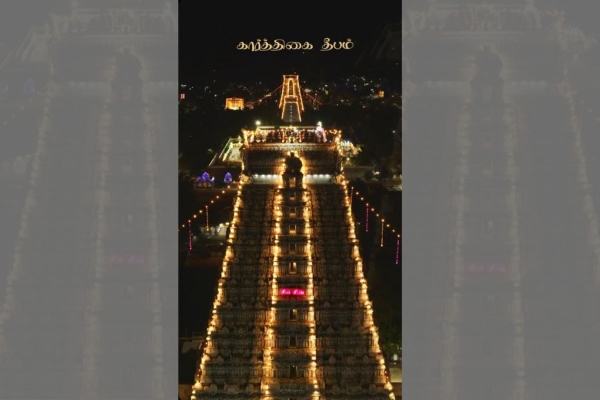
The issue is no longer confined to whether a ceremonial lamp should be lit at the Deepathoon on Thiruparankundram hill. It concerns whether a state administration can treat a binding judicial direction as negotiable, whether political considerations can override constitutional obligations and whether religious rights can be subjected to administrative convenience.
The sequence is important. On November 20, the Supreme Court permitted a one-time lighting of the Deepam at the disputed pillar on November 24, subject to safeguards. The lamp was instead lit at the customary Uchipillaiyar location. The Madras High Court had also insisted on implementation. The failure to carry out the Supreme Court's direction triggered contempt proceedings and the extraordinary orders of November 27.
The Supreme Court's response must be understood in the context of the rule of law. A judicial order derives its authority not merely from the institution that issues it but from the constitutional obligation of every authority to comply with it.
Had the Court adopted a casual approach to the alleged defiance, it would have raised a serious question about the enforceability of judicial directions. The message could have been that an administration can delay, circumvent or selectively implement a judicial order by invoking administrative difficulties, law-and-order concerns or decisions of subordinate institutions.
That would have created a dangerous institutional precedent. Other authorities and individuals could have drawn the conclusion that judicial directions are open to negotiation whenever political or administrative resistance is sufficiently strong.
The Court's declaration that it "cannot sit in silos" is therefore particularly important. The judiciary cannot remain detached when its directions are allegedly frustrated by the very authorities entrusted with their implementation. Its observation that an order is "not an invitation to negotiate" establishes the distinction between the right to challenge an order through lawful procedures and the obligation to comply with it until it is modified or set aside.
The expression "iron hand" conveys the seriousness with which the Bench views such situations. Its reference to "wilful disobedience", "administrative chaos" and "constitutional chaos" makes clear that the proceedings are not being treated as a routine disagreement between the government and petitioners.
The Court has also warned that attempts to pollute the stream of justice will not be tolerated, irrespective of the position held by the individual concerned. This is an assertion of constitutional principle: no office, political position or administrative authority places anyone above the law.
The significance is institutional. The Supreme Court has asserted its responsibility to protect the authority of judicial orders. That responsibility is indispensable to the functioning of constitutional government.
The Court's actions on November 27 deserve particular attention. It suspended the functioning of the temple's Board of Trustees, appointed two former judges as receivers to administer the temple and transferred security responsibility for the temple and hill to the CRPF.
It also issued contempt notices to the Chief Secretary, Director General of Police, senior HR&CE officials, the Madurai Collector, police officials, temple functionaries and trustees. The Chief Secretary has been directed to appear personally on December 15 and provide details of communications exchanged among officials, including emails, telephone calls and messages.
The order states that the intervention is a measure of last resort, adopted because the Court found a complete failure on the part of the Board of Trustees to administer the Devasthanam.
These are not routine administrative arrangements. The deployment of a central force and the appointment of judicial receivers indicate the exceptional nature of the Court's intervention.
It would be reasonable to read these measures as a grave expression of judicial dissatisfaction with the existing administrative arrangements. However, the Court has not pronounced a final finding of contempt against the officials or declared the Chief Minister personally responsible. Those questions remain subject to the proceedings.
Nevertheless, the political and administrative consequences cannot be ignored. When a State's own machinery is unable to implement a judicial direction and the Supreme Court finds it necessary to place a public religious institution under receivership and entrust security to a central force, the administration has a serious institutional explanation to provide.
Was the defiance politically orchestrated? This is perhaps the most consequential political question emerging from the controversy. The Supreme Court itself has raised the possibility of political interference. Its observation that executive authorities appeared to have acted at the dictates of their "political bosses" is particularly significant. The Bench has directed the Chief Secretary to disclose communications between officials so that the chain of decisions can be examined.
This is precisely where the investigation must go deeper. Was the failure to implement the order an isolated administrative decision? Did the temple trustees independently decide against compliance? Were they acting under political instructions? Who took the final decision, and who was responsible for ensuring that the judicial direction was implemented?
These questions cannot be answered through political statements or administrative explanations. They require documentary evidence and a transparent examination of the chain of command.
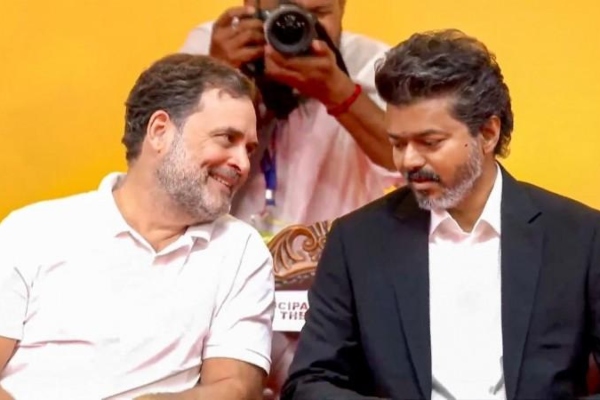
The circumstances surrounding Joseph Vijay's rise to power and the political and organisational networks supporting his movement also merit scrutiny as matters of political analysis. However, the existence of a larger political design to undermine constitutional institutions or create national instability also cannot be ruled out.
The investigation must establish whether the defiance was deliberate, who was responsible and whether political considerations influenced the administration's conduct. If evidence establishes that political authorities attempted to frustrate a judicial order, accountability must extend to those responsible, irrespective of their position.
A Chief Minister's constitutional responsibility does not end with electoral victory. It begins with the obligation to govern within the Constitution.
The TVK administration must answer a fundamental question: why did the State fail to implement an order that had been issued by the country's highest judicial authority? Blaming temple trustees or subordinate officials cannot, by itself, settle the matter.
There is another dimension that deserves equal attention. The controversy concerns the religious practices and rights of Hindu devotees.
The right to practise religion under Article 25 and the right of religious denominations to manage their affairs under Article 26 form part of the constitutional framework. These rights operate subject to constitutional limitations, but they cannot be reduced to administrative permissions granted or withheld according to political convenience.
The Supreme Court's November 20 order permitted the one-time lighting of the Deepam at Deepathoon, subject to specific safeguards. It expressly clarified that this temporary arrangement did not recognise any permanent customary, religious or proprietary right over the location. The distinction is important: the Court was enforcing a limited interim arrangement, not finally deciding every competing claim concerning the hill.
But the subsequent failure to implement that arrangement has brought the question of Hindu religious rights into sharper public focus.
The government must explain why a judicially authorised religious observance could not be facilitated within the safeguards prescribed by the Court. If law-and-order concerns were the difficulty, why could the elaborate security arrangements not be used to implement the order?
A government cannot invoke public order as a permanent justification for denying the exercise of a right that a competent court has specifically permitted under regulated conditions.
The protests following the non-lighting of the Deepam at Deepathoon deserve attention. Hindu organisations, devotees and political groups took to the streets in different parts of Tamil Nadu. Demonstrations and road blockades were reported in Ramanathapuram, Pollachi and other places. Advocates also protested outside the Madras High Court's Madurai Bench.
The protests reflected public dissatisfaction with the administration's failure to implement the judicial direction. They also demonstrated that the issue had moved beyond the confines of courtrooms and government offices.
Peaceful democratic protest is a legitimate means of expressing disagreement with governmental decisions. At the same time, demonstrations must remain within the law, without violence or obstruction of others' rights.
The important point is that the concerns of devotees cannot simply be dismissed as political mobilisation. For those who regard Thiruparankundram as a sacred religious landscape, the location and manner of observance carry religious and cultural significance.
The public response also places a responsibility on political and administrative institutions to address legitimate grievances through constitutional processes rather than allowing them to accumulate.
The Supreme Court's intervention has provided a judicial avenue for examining those grievances. Its proceedings must now establish the facts and determine individual responsibility.
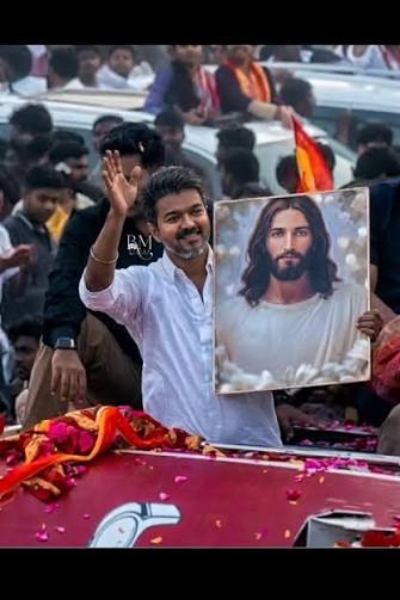
Thiruparankundram has exposed the consequences of a breakdown in coordination between constitutional institutions and the executive machinery. The judiciary has issued directions; the administration was required to implement them; the alleged failure has brought senior officials before the Supreme Court.
Articles 141 and 144 of the Constitution are relevant here. Article 141 establishes that the law declared by the Supreme Court is binding on all courts in India. Article 144 requires all civil and judicial authorities to act in aid of the Supreme Court.
These are not ornamental constitutional provisions. They are essential to the functioning of the Republic.
The Supreme Court's intervention has reinforced the principle that judicial authority cannot be undermined by administrative manoeuvring. Its directions concerning the receivership, security and personal appearance of senior officials demonstrate the institutional consequences of alleged non-compliance.
The coming proceedings will determine whether the conduct amounted to contempt and who, if anyone, bears individual responsibility. The political executive, meanwhile, cannot avoid answering questions about the functioning of its administration.
Thiruparankundram has consequently become a test of more than religious administration. It is a test of the relationship between political power and constitutional obligation.
The Deepam is a symbol of faith, but the controversy surrounding it has illuminated a much larger question: can the executive exercise power without respecting the constitutional institutions that impose limits upon it?
The answer must remain unequivocal. No government, regardless of its electoral mandate, can claim an exemption from the Constitution. No administrative authority can convert a judicial direction into a matter of political negotiation. And no citizen should have to abandon a legitimate religious or constitutional claim merely because its exercise becomes politically inconvenient.
The Supreme Court has now placed the questions of compliance, responsibility and institutional accountability squarely before the administration. The answers must come through evidence, due process and the rule of law.
The issue is no longer confined to whether a ceremonial lamp should be lit at the Deepathoon on Thiruparankundram hill. It concerns whether a state administration can treat a binding judicial direction as negotiable, whether political considerations can override constitutional obligations and whether religious rights can be subjected to administrative convenience.
The sequence is important. On November 20, the Supreme Court permitted a one-time lighting of the Deepam at the disputed pillar on November 24, subject to safeguards. The lamp was instead lit at the customary Uchipillaiyar location. The Madras High Court had also insisted on implementation. The failure to carry out the Supreme Court's direction triggered contempt proceedings and the extraordinary orders of November 27.
The Supreme Court's response must be understood in the context of the rule of law. A judicial order derives its authority not merely from the institution that issues it but from the constitutional obligation of every authority to comply with it.
Had the Court adopted a casual approach to the alleged defiance, it would have raised a serious question about the enforceability of judicial directions. The message could have been that an administration can delay, circumvent or selectively implement a judicial order by invoking administrative difficulties, law-and-order concerns or decisions of subordinate institutions.
That would have created a dangerous institutional precedent. Other authorities and individuals could have drawn the conclusion that judicial directions are open to negotiation whenever political or administrative resistance is sufficiently strong.
The Court's declaration that it "cannot sit in silos" is therefore particularly important. The judiciary cannot remain detached when its directions are allegedly frustrated by the very authorities entrusted with their implementation. Its observation that an order is "not an invitation to negotiate" establishes the distinction between the right to challenge an order through lawful procedures and the obligation to comply with it until it is modified or set aside.
The expression "iron hand" conveys the seriousness with which the Bench views such situations. Its reference to "wilful disobedience", "administrative chaos" and "constitutional chaos" makes clear that the proceedings are not being treated as a routine disagreement between the government and petitioners.
The Court has also warned that attempts to pollute the stream of justice will not be tolerated, irrespective of the position held by the individual concerned. This is an assertion of constitutional principle: no office, political position or administrative authority places anyone above the law.
The significance is institutional. The Supreme Court has asserted its responsibility to protect the authority of judicial orders. That responsibility is indispensable to the functioning of constitutional government.
The Court's actions on November 27 deserve particular attention. It suspended the functioning of the temple's Board of Trustees, appointed two former judges as receivers to administer the temple and transferred security responsibility for the temple and hill to the CRPF.
It also issued contempt notices to the Chief Secretary, Director General of Police, senior HR&CE officials, the Madurai Collector, police officials, temple functionaries and trustees. The Chief Secretary has been directed to appear personally on December 15 and provide details of communications exchanged among officials, including emails, telephone calls and messages.
The order states that the intervention is a measure of last resort, adopted because the Court found a complete failure on the part of the Board of Trustees to administer the Devasthanam.
These are not routine administrative arrangements. The deployment of a central force and the appointment of judicial receivers indicate the exceptional nature of the Court's intervention.
It would be reasonable to read these measures as a grave expression of judicial dissatisfaction with the existing administrative arrangements. However, the Court has not pronounced a final finding of contempt against the officials or declared the Chief Minister personally responsible. Those questions remain subject to the proceedings.
Nevertheless, the political and administrative consequences cannot be ignored. When a State's own machinery is unable to implement a judicial direction and the Supreme Court finds it necessary to place a public religious institution under receivership and entrust security to a central force, the administration has a serious institutional explanation to provide.
Was the defiance politically orchestrated? This is perhaps the most consequential political question emerging from the controversy. The Supreme Court itself has raised the possibility of political interference. Its observation that executive authorities appeared to have acted at the dictates of their "political bosses" is particularly significant. The Bench has directed the Chief Secretary to disclose communications between officials so that the chain of decisions can be examined.
This is precisely where the investigation must go deeper. Was the failure to implement the order an isolated administrative decision? Did the temple trustees independently decide against compliance? Were they acting under political instructions? Who took the final decision, and who was responsible for ensuring that the judicial direction was implemented?
These questions cannot be answered through political statements or administrative explanations. They require documentary evidence and a transparent examination of the chain of command.
The circumstances surrounding Joseph Vijay's rise to power and the political and organisational networks supporting his movement also merit scrutiny as matters of political analysis. However, the existence of a larger political design to undermine constitutional institutions or create national instability also cannot be ruled out.
The investigation must establish whether the defiance was deliberate, who was responsible and whether political considerations influenced the administration's conduct. If evidence establishes that political authorities attempted to frustrate a judicial order, accountability must extend to those responsible, irrespective of their position.
A Chief Minister's constitutional responsibility does not end with electoral victory. It begins with the obligation to govern within the Constitution.
The TVK administration must answer a fundamental question: why did the State fail to implement an order that had been issued by the country's highest judicial authority? Blaming temple trustees or subordinate officials cannot, by itself, settle the matter.
There is another dimension that deserves equal attention. The controversy concerns the religious practices and rights of Hindu devotees.
The right to practise religion under Article 25 and the right of religious denominations to manage their affairs under Article 26 form part of the constitutional framework. These rights operate subject to constitutional limitations, but they cannot be reduced to administrative permissions granted or withheld according to political convenience.
The Supreme Court's November 20 order permitted the one-time lighting of the Deepam at Deepathoon, subject to specific safeguards. It expressly clarified that this temporary arrangement did not recognise any permanent customary, religious or proprietary right over the location. The distinction is important: the Court was enforcing a limited interim arrangement, not finally deciding every competing claim concerning the hill.
But the subsequent failure to implement that arrangement has brought the question of Hindu religious rights into sharper public focus.
The government must explain why a judicially authorised religious observance could not be facilitated within the safeguards prescribed by the Court. If law-and-order concerns were the difficulty, why could the elaborate security arrangements not be used to implement the order?
A government cannot invoke public order as a permanent justification for denying the exercise of a right that a competent court has specifically permitted under regulated conditions.
The protests following the non-lighting of the Deepam at Deepathoon deserve attention. Hindu organisations, devotees and political groups took to the streets in different parts of Tamil Nadu. Demonstrations and road blockades were reported in Ramanathapuram, Pollachi and other places. Advocates also protested outside the Madras High Court's Madurai Bench.
The protests reflected public dissatisfaction with the administration's failure to implement the judicial direction. They also demonstrated that the issue had moved beyond the confines of courtrooms and government offices.
Peaceful democratic protest is a legitimate means of expressing disagreement with governmental decisions. At the same time, demonstrations must remain within the law, without violence or obstruction of others' rights.
The important point is that the concerns of devotees cannot simply be dismissed as political mobilisation. For those who regard Thiruparankundram as a sacred religious landscape, the location and manner of observance carry religious and cultural significance.
The public response also places a responsibility on political and administrative institutions to address legitimate grievances through constitutional processes rather than allowing them to accumulate.
The Supreme Court's intervention has provided a judicial avenue for examining those grievances. Its proceedings must now establish the facts and determine individual responsibility.
Thiruparankundram has exposed the consequences of a breakdown in coordination between constitutional institutions and the executive machinery. The judiciary has issued directions; the administration was required to implement them; the alleged failure has brought senior officials before the Supreme Court.
Articles 141 and 144 of the Constitution are relevant here. Article 141 establishes that the law declared by the Supreme Court is binding on all courts in India. Article 144 requires all civil and judicial authorities to act in aid of the Supreme Court.
These are not ornamental constitutional provisions. They are essential to the functioning of the Republic.
The Supreme Court's intervention has reinforced the principle that judicial authority cannot be undermined by administrative manoeuvring. Its directions concerning the receivership, security and personal appearance of senior officials demonstrate the institutional consequences of alleged non-compliance.
The coming proceedings will determine whether the conduct amounted to contempt and who, if anyone, bears individual responsibility. The political executive, meanwhile, cannot avoid answering questions about the functioning of its administration.
Thiruparankundram has consequently become a test of more than religious administration. It is a test of the relationship between political power and constitutional obligation.
The Deepam is a symbol of faith, but the controversy surrounding it has illuminated a much larger question: can the executive exercise power without respecting the constitutional institutions that impose limits upon it?
The answer must remain unequivocal. No government, regardless of its electoral mandate, can claim an exemption from the Constitution. No administrative authority can convert a judicial direction into a matter of political negotiation. And no citizen should have to abandon a legitimate religious or constitutional claim merely because its exercise becomes politically inconvenient.
The Supreme Court has now placed the questions of compliance, responsibility and institutional accountability squarely before the administration. The answers must come through evidence, due process and the rule of law.

Editor's Desk
Editor's Desk