Where Diwali Begins with a Roar: The Ancient Rituals of Wagh Baras
Before Diwali lights up the plains, Sahyadri’s tribal communities honor Vaghoba (the tiger)turning fear into a sacred pact of mutual survival and ecological harmony.
Total Views |


In the vast tapestry of Indian traditions, festivals are rarely just static rituals; they are living testaments to how human beings interact with the environment around them. As the autumn chill settles over the Western Ghats and the moon wanes into the dark fortnight of Ashvin, the grand festival of Diwali begins to awaken. While urban centers light up with vibrant lamps and commercial bustle, a deeply spiritual and ancient tradition unfolds across the rural and tribal heartlands of Western India: the observance of Wagh Baras.
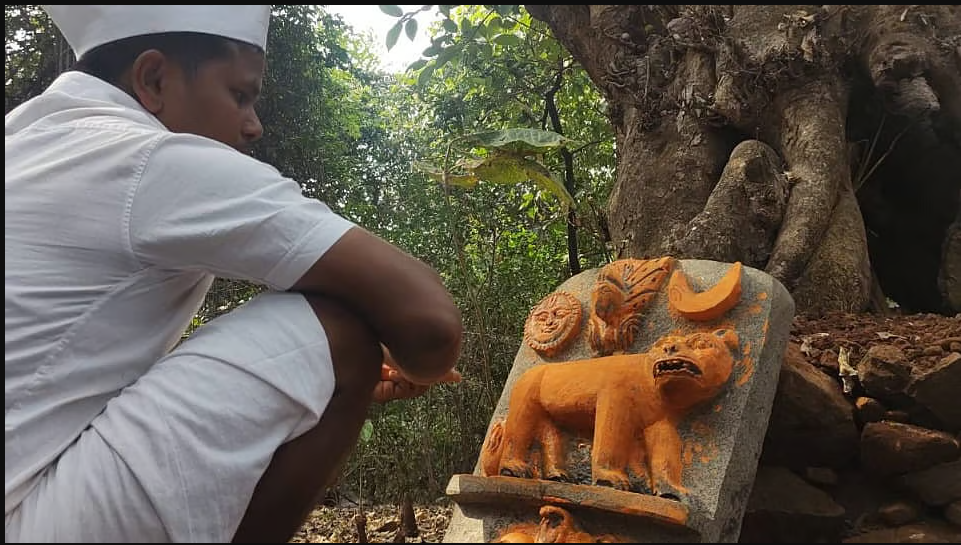
Observed on the twelfth day of the waning moon (Dwadashi), this day carries a dual significance. In mainstream agrarian traditions, it is celebrated as Vasubaras or Govatsa Dwadashi, honoring the cow and her calf as symbols of maternal love, nourishment, and material prosperity. Yet, in the rugged tribal belts of Maharashtra and Gujarat inhabited by communities such as the Warli, Kokana, Bhil, and Mahadeo Koli this day takes on a raw, profound dimension centered on the apex predator of the wild: the tiger, known revered as Vaghoba.
To understand the spiritual foundation of Wagh Baras, one must look at the seasonal rhythms of rural life. During the heavy monsoon months, cattle are kept close to home in village shelters to protect both the animals and the growing crops. However, once the post-monsoon harvest wraps up around Dussehra, cattle are driven out into the forest clearings and mountain pastures to graze.
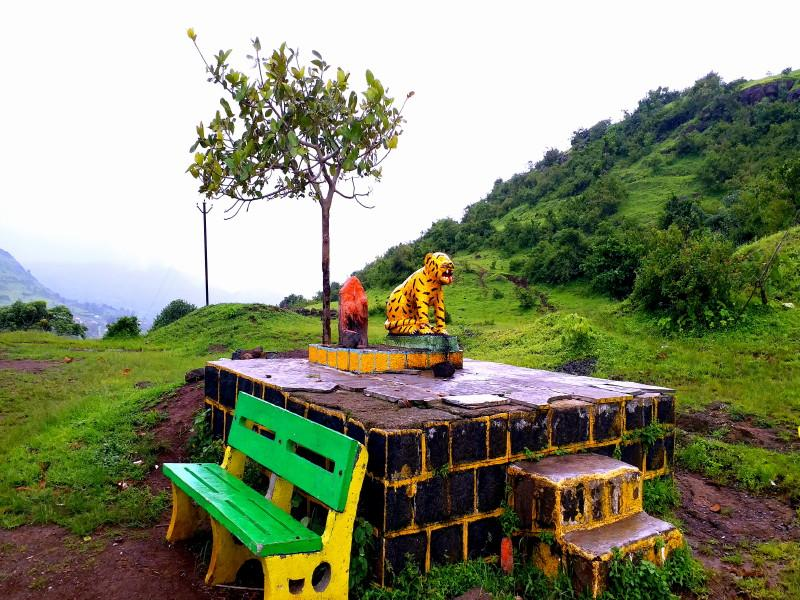
This seasonal shift exposes the herds to the natural habitat of the tiger. The forest edges and human settlements seamlessly overlap, bringing domestic cattle into close proximity with the wilderness. For agrarian families, livestock represents their primary livelihood and wealth. Rather than viewing the top predator as a destructive enemy to be eradicated or hunted, indigenous wisdom chose a path of reverence and spiritual diplomacy: acknowledging the tiger as the supreme guardian and ruler of the forest ecosystem.
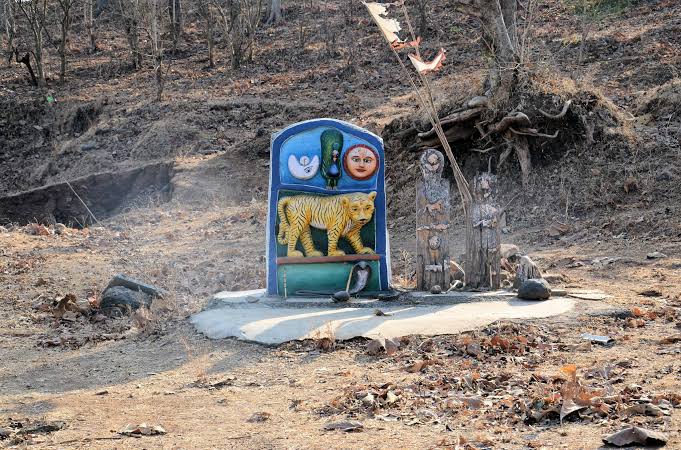
On the day of Wagh Baras, villagers gather at small shrines situated at the boundary where human settlements meet the dense woods (vesh). These shrines are rarely grand structures; often, they consist of sacred stone slabs or wooden panels carved with tiger motifs, coated in bright red sindoor (vermilion) and adorned with garlands.
The community comes together to offer prayers, expressing deep gratitude and seeking protection. The core prayer offered to Vaghoba reflects an ancient treaty of coexistence:
वाघदेवाचे गाणे
व्हाघुबा देवा, व्हाघुबा देवा
घोर लावू नको रं जीवा
रानीवानी आमी भटकतो
कड्या कपारी वं ऱ्हातो
रूसू रागू नको आम्हावरी
आमची माया तुझ्यावरी
तुला व्हाघ बारसीला पुजता
पुरणाचा निवद दावतो
वाघ राजा तू घे गोड मानून
रानातून जा निघून
नको वाट बाबा धरू
नको गुरं ढोरं मारू
तुज्या नाय लागत नादाला
मिळू दे भाकर वाट्याला.
Offerings made during the worship vary across regions. Women bring baskets woven from local bamboo filled with unhusked grain, rice porridge (dangracha naivedya), and traditional flower garlands. In some hamlets, symbolic offerings of poultry or local preparations are made to appease the forest deity.
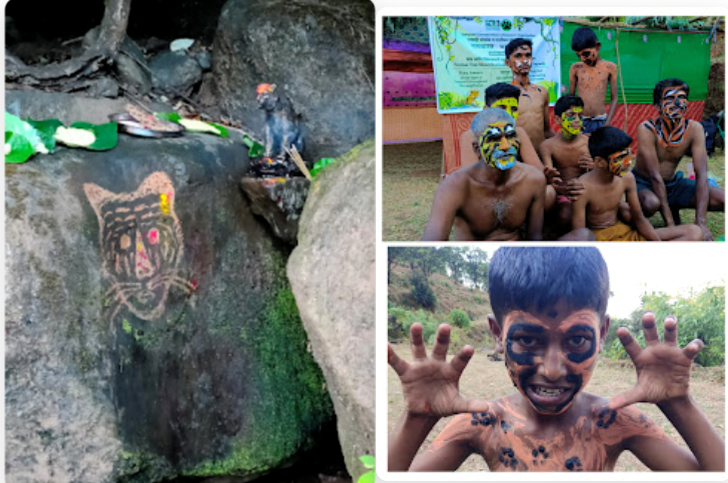
The rituals are infused with community participation and folk arts. In many villages, young boys paint their faces with soot and yellow ochre, mimicking wild animals like bears, foxes, and tigers. Around a central bonfire, they perform traditional folk plays where one child plays the tiger and is playfully chased through the field. The villagers ask the "tiger" if he will enter their cattle sheds, to which he roars and runs back toward the woods, symbolically reassuring the community.
When night falls, groups of young men carry traditional lanterns decorated with peacock feathers and marigold flowers from home to home. Singing ancient oral ballads called Dhindwali without any artificial instruments, they offer praises to the cow, the tiger, and the forest spirits. Women welcome them at their doorways, sprinkling sanctified water and offering unhusked rice, finger millet, and oil to keep the festival flames burning. For five unbroken days, cattle are treated as sacred guests within the household, embodying grace and nourishment.

Following Wagh Baras, many tribal families set out on pilgrimages to regional nature deities, such as Devmogra (Yamamogi Devi) on the border of Maharashtra and Gujarat, seamlessly connecting tiger worship with the broader cycle of indigenous nature devotion.
Wagh Baras offers a profound lesson in ecological harmony. Modern conservation models often rely on artificial fences, legal barriers, and rigid boundaries that separate human lives from wildlife. In contrast, the indigenous tradition of Wagh Baras demonstrates that sustainable coexistence comes from sacred understanding, mutual boundary respect, and genuine humility toward the ecosystem. It stands as an enduring reflection of Sanatan nature worship, showing that when humanity treats the wilderness with honor, the fiercest predator in the forest becomes an eternal guardian of the soil.