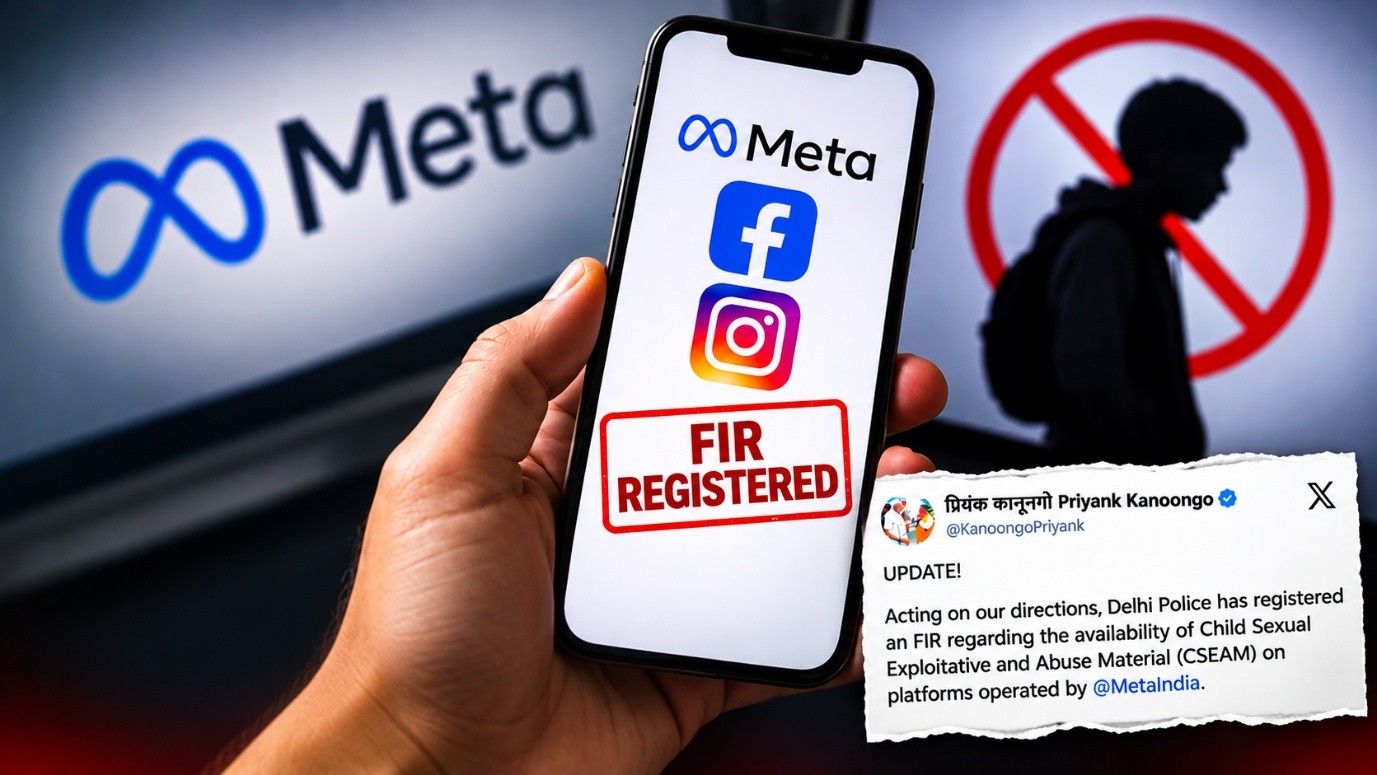
The issue had already come under the scrutiny of the National Commission for Protection of Child Rights (NCPCR).
On July 3, 2026, the child rights body issued a notice to Meta seeking an explanation over advertisements allegedly linked to child sexual exploitation and abuse material. Meta submitted its response about a week later.
The NCPCR subsequently decided to initiate a formal inquiry to examine the allegations. As part of the proceedings, it summoned Meta India's Managing Director and Head for a hearing scheduled for September 16.
The Union government had also taken up the issue. In July, MeitY directed Meta to disable advertisements and content promoting or facilitating access to child sexual abuse material and sought an explanation from the company.
What Meta says about the allegations
Meta has maintained that it does not permit child sexual exploitation content on its platforms and has a zero-tolerance policy towards such material.
In a statement published on July 7, the company acknowledged reports about Instagram advertisements that violated its policies. It said its enforcement systems had already identified and disabled several advertisements and the accounts behind them before the cases were brought to its attention. Meta added that its subsequent investigation led to the removal of additional advertisements, the disabling of accounts and the blocking of links connected to policy-violating content.
On October 7, Meta announced additional measures to strengthen its detection systems. These included artificial intelligence tools to identify advertisements that either feature child sexual exploitation material or use seemingly harmless content to direct users towards illegal activity outside its platforms.
The company also said it had expanded its investigations to identify connected accounts and block links leading to violating material.
According to Meta, between January and June 2026, it took action against 5.3 million pieces of child sexual exploitation content on Facebook and Instagram in India. The company said more than 98 per cent of this material was detected and addressed proactively, before users reported it.
Globally, Meta reported action against 33.2 million pieces of such content across Facebook and Instagram during the same period, with more than 97 per cent detected proactively.
The company has also said it would report child-safety cases directly to India's National Cyber Crime Reporting Portal, operated by the Indian Cybercrime Coordination Centre (I4C).
Legal responsibility and child safety
The POCSO Act places reporting obligations on individuals who have knowledge of, or apprehend, the commission of an offence under the law. Section 19 requires such information to be reported to the Special Juvenile Police Unit or local police.
The circulation and transmission of material depicting the sexual exploitation of children can also attract provisions of the POCSO Act and the Information Technology Act, depending on the facts of the case.
The Supreme Court has separately emphasised the need for stronger systems to detect and remove child sexual exploitation material online. In its October 2026 proceedings in the Just Rights for Children Alliance matter, the court addressed the use of technology for detection, reporting mechanisms, verification of material and the responsibilities of intermediaries.
The FIR against Meta India brings the matter into the criminal investigation stage. The police investigation will be important in establishing the nature of the material involved, how it was made available or promoted, and whether there were lapses in the platform's systems or statutory compliance.