Confederation of all India traders writes to Rahul Gandhi, say Congress-backed protests are hurting traders livelihood
The Confederation of All India Traders (CAIT) has written to Leader of the Opposition Rahul Gandhi, expressing concern over the disruption of commercial activities in Delhi due to political rallies, protests and demonstrations over the past month. The traders’ body has questioned the Congress rally held on November 1 and the party’s support for demonstrations, saying repeated road blockades and disruptions have affected traders, shopkeepers, street vendors and daily-wage earners.
Total Views |


The Confederation of All India Traders (CAIT) has written to Rahul Gandhi, Leader of the Opposition in the Lok Sabha, raising concerns over the impact of repeated political rallies, protests and demonstrations on commercial activities in Delhi.
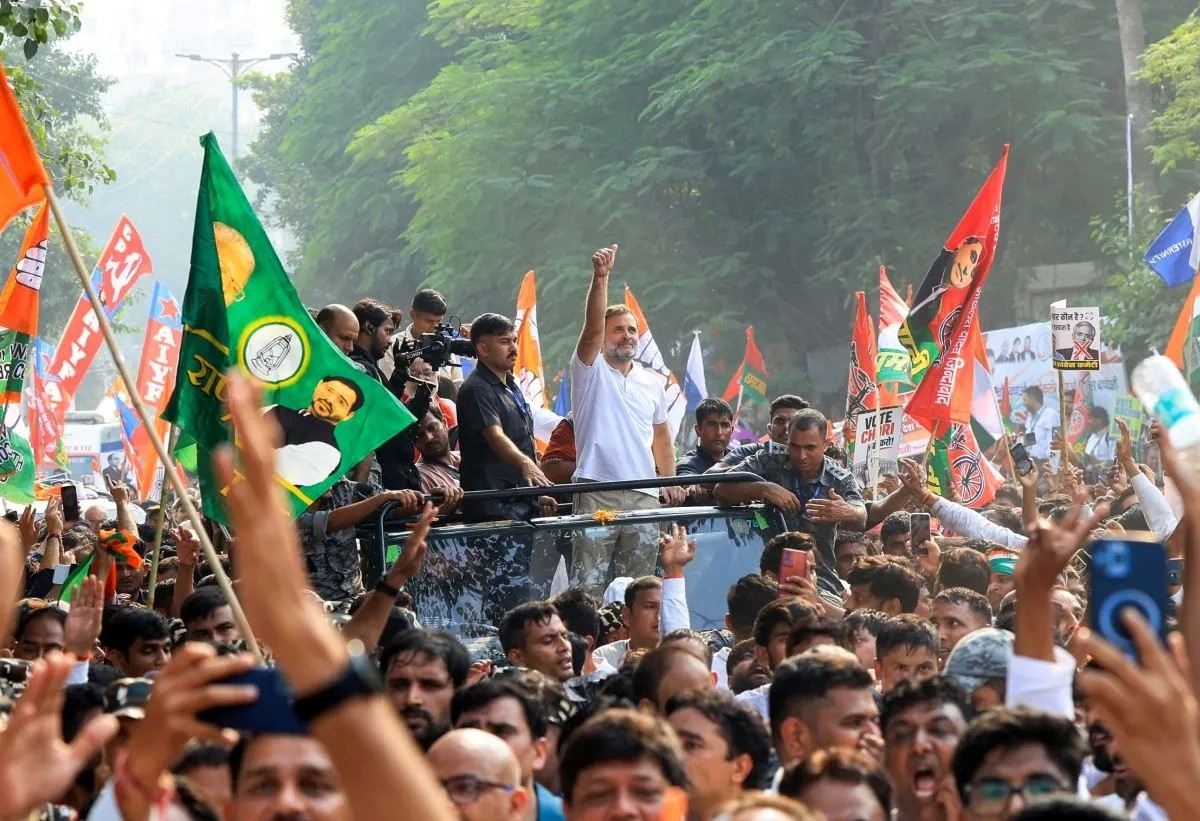
(Rahul Gandhi during a protest march in Delhi, Image: Rediff)
In a letter dated November 5, 2026, CAIT said the trading community across the country was deeply anguished by the disruption of business activities, particularly in the national capital. The organisation specifically questioned the Congress rally held in Delhi on November 1 and the continued support extended by the Congress and other political parties to demonstrations organised by various groups over the past month.
The letter, issued under reference number CAIT/26/183, was addressed to Rahul Gandhi at the Lok Sabha. It was signed by B. C. Bhartia, National President of CAIT.
The Confederation of All India Traders (CAIT) has written a letter to Rahul Gandhi, Leader of the Opposition in the Lok Sabha, expressing the deep anguish and resentment of the trading community across the country alleging the repeated disruption of commercial activities in Delhi… pic.twitter.com/jj4pKJlHYY
— ANI (@ANI) November 5, 2026
Traders flag losses during festive season
CAIT said repeated protests, rallies, demonstrations and road blockades over the past month had caused considerable losses to Delhi’s trading community. It particularly highlighted the impact during the crucial festive season, when markets traditionally witness increased commercial activity.
According to the organisation, thousands of traders, shopkeepers, street vendors, transporters and daily-wage earners, along with their families, have been affected. Customers and business visitors travelling to Delhi from different parts of the country have also faced inconvenience, the letter stated.
The traders’ body argued that disruptions to commercial areas affect not only business owners but also workers and families whose daily earnings depend on uninterrupted economic activity.
CAIT invokes constitutional right to trade
While acknowledging the constitutional right to freedom of speech, expression and peaceful protest, CAIT said the right to protest should not become an unrestricted licence to disrupt commercial activity, obstruct public movement or deprive citizens of their livelihood.
The organisation referred to Article 19(1)(g) of the Constitution, which guarantees citizens the right to practise any profession or carry on any occupation, trade or business.
It questioned whether political parties supporting demonstrations had adequately considered the economic consequences for ordinary citizens who were not directly involved in the political disputes.
“India’s traders are not collateral damage in political confrontations,” CAIT said in its letter, adding that the trading community contributes to national economic growth, employment and prosperity.
Five questions put to Rahul Gandhi
The letter also posed five direct questions to the Congress leader, seeking clarity on the party’s position on the economic consequences of repeated protests.
CAIT asked whether the right to protest should take precedence over the right to trade and earn a livelihood, and why traders and working families should bear the cost of political disagreements in which they have no involvement.
It also questioned whether disrupting the commercial life of the national capital was politically and morally justified. The organisation asked who would compensate traders and small businesses for the losses allegedly caused by repeated demonstrations.
Another question concerned the apparent contradiction between encouraging rallies and demonstrations that prevent customers from reaching local markets while appealing to people to support local businesses.
CAIT further asked whether Rahul Gandhi and the Congress would accept responsibility for the economic hardship caused by protests supported by the party and its political allies. It also questioned whether the Congress leader would support similar prolonged disruptions if his own business or daily earnings were affected.
Urges political parties to ensure designated protest locations
Beyond raising questions, CAIT urged Rahul Gandhi and other political leaders to ensure that demonstrations were conducted at designated locations without obstructing commercial areas, public movement or the livelihoods of ordinary citizens.
The organisation said political parties had every democratic right to oppose the government, organise rallies and raise public issues. However, it maintained that political leadership also required accountability and sensitivity towards the common citizen.
It urged political parties to refrain from encouraging activities that impose avoidable economic burdens on traders and working families.
Concluding the letter, CAIT said the right to protest should not be exercised by taking away another person's right to earn a livelihood. It called for a balance between protecting the voice of protesters and safeguarding the economic interests of traders.
The organisation said it expected Rahul Gandhi to respond to the concerns raised in the letter and, more importantly, take responsible action to prevent further disruption of commercial activity.