South India suffered the most from Tipu Sultan’s religious bigotry
Tipu Sultan is often portrayed as an anti-British ‘freedom fighter’, but historical records portray him as a radical Islamist tyrant who committed brutal atrocities against Hindus, Christians, and other non-Muslim communities in South India, particularly in Karnataka, Kerala, and Tamil Nadu.
Total Views |


- Kartik Lokhande
Once again, the debate over Tipu Sultan rages on, thanks to those trying to glorify a tyrant. Congress has gone a step further in its appeasement politics with its Maharashtra chief Harshwardhan Sapkal equating anti-Hindu bigot Tipu Sultan with founder of ‘Hindavi Swarajya’ Chhatrapati Shivaji Maharaj. Though Congress party and its allies have been trying to project Tipu Sultan, they cannot whitewash the tyranny unleashed on the South Indians by him.
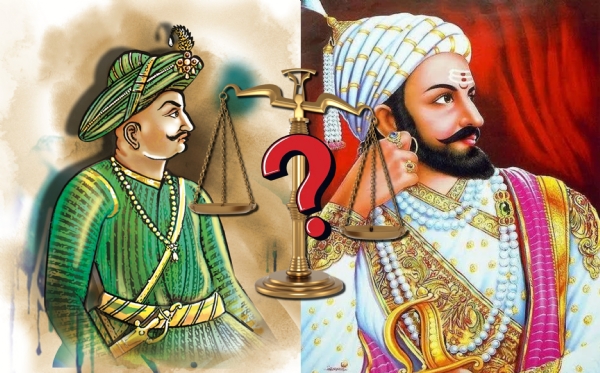
Tipu Sultan is often portrayed as an anti-British ‘freedom fighter’, but historical records portray him as a radical Islamist tyrant who committed brutal atrocities against Hindus, Christians, and other non-Muslim communities in South India, particularly in Karnataka, Kerala, and Tamil Nadu. His father, Hyder Ali, usurped the Hindu Wodeyar throne in Mysore, and Tipu (1751-1799), ruling from 1782, continued this legacy with campaigns marked by temple destruction, forced religious conversions to Islam, mass killings, and plunder. His actions were driven by religious zeal rather than Indian nationalism.
Tipu’s actions were not associated with nationalism, and this is reflected in his attempts to strike friendship with French, Turkish, Afghan, and Egyptian forces rather than Indian kingdoms. His war cry, as noted by V.M. Korath, gave only two choices to the South Indians he wanted to subjugate – ‘Sword’ (death) or ‘Cap’ (forced conversion to Islam), revealing religious zeal and not the objective of national unity as projected by Congress and its allies and staunch Islamists. Scholars and researchers have cited a plethora of contemporary accounts to refute secular portrayals by Congress-linked historians, and to highlight Tipu’s bigotry. By no means was Tipu a South India icon. He was a tyrant and religious fanatic who unleashed cruelty upon South Indians.
Tipu followed his father Hyder Ali who had expanded his Islamist footprint into Tamil Nadu areas like Dindigul, Trichy, and Coimbatore. He extorted ransoms from temple trustees to not destroy the structures. For example, he demanded 1 lakh varaha from Srirangam trustees to avoid destruction of the temple. Sitaram Goel’s book ‘Hindu Temples of India: What Happened to Them’ notes that Tipu repaired the Annamalai Fort using materials from temples he destroyed, built a large mosque at a temple site in Coimbatore using remains from temples destroyed. This is typical of Islamist religious bigotry, and proves beyond doubt that Tipu was not a ‘secular’ as lamely projected by so-called intellectuals.
Tipu led most deceptive and brutal campaigns against the non-Muslims of Karnataka inflicting wounds that have not been healed even after generations. In 1785, Tipu’s forces invaded Coorg (Kodagu), enslaving women and children, executing resisters by elephant-dragging, and massacring 60,000 unarmed Kodavas in the ‘Devaatparambh’ incident by inviting them on the pretext of ‘peace talks’. The survivors from Kodava community, which had martial traditions and had posed a strong resistance to Tipu, faced forced conversions to Islam. The 1790 Melkote massacre on Diwali killed 800-1,200 Iyengars, chaining families in dungeons. Even today, the Mandyam Iyengars observe a day of mourning on Diwali instead of celebrating the festival. Tipu even razed Harihareswara and Varahaswamy temples.
Tipu’s campaign in Malabar (Kerala) in 1788-89 demolished temples such as Thrichambaram and Thalipparampu, as per William Logan’s ‘Malabar Manual’. He ordered execution of 5,000 Hindus, imposed mass circumcisions and beef-eating on Nairs and Brahmins, and displayed severed heads at Palghat Fort to pressure Hindu monarch Zamorin to surrender. Noble Hindu kings like Parappanad Raja were converted to Islam under duress. Forced conversions increased the Mappila (Moplah) populations in the region, sowing seeds for later communal tensions. Decades later, in 1921, Moplahs targeted Hindus in a planned manner. Though many secularists of the time tried to project this violence as ‘rebellion’ by Moplahs, the fanatic Islamist overtones could not be missed by contemporary writers. Several Hindu women were raped, their organs mutilated, children killed, and men tortured beyond imagination. This mindset had its roots in Tipu Sultan’s religious bigotry.
After signing the treaty of Seringapatam with the British, Tipu was a broken man. It is in this frame of mind that Tipu turned to spirituality and showed some respect for Hindu religious practice. The modern-day Tipu fans are trying to misrepresent that as reflections of his secularism. But, an English officer Col. Mark Wilks has described Tipu’s mental frame in the first volume of his book ‘Historical Sketches of the South of India in an attempt to trace the history of Mysore’. He wrote, “Tippoo, the most bigoted of Mahomedans, professing an open abhorrence and contempt for the Hindoo religion, and the Bramins its teachers, destroying their temples and polluting their sanctuaries, should never fail to join the performance of the jebbum (Japam) when alarmed by imminent danger, is, indeed, an extraordinary combination of arrogant bigotry and trembling superstition; of general intolerance, mingled with occasional respect for the object of persecution.” This should leave no confusion about Tipu’s original character of a bigot, because Col. Mark Wilks had been through the whole of the campaign ending in the treaty made by Lord Cornwallis with Tipu before the walls of Seringapatam in 1792.
Unfortunately, Congress governments have been leading in whitewashing the cruelty of Tipu Sultan and misleading the people of South Indian states. Congress government in Karnataka celebrated ‘Tipu Jayanti’ to appease the Muslims for petty political gains, but it rekindled the memories of Tipu’s fanaticism among locals. The move in fact sparked protests from Kodavas and Iyengars, who view Tipu as the tyrant. Efforts to whitewash Tipu as a secular hero ignore living memories of genocide, passed generationally. Divisive narratives like DMK critiques of Hinduism, peddling and re-peddling of debunked ‘Aryan Invasion’ theories, or ‘Dravidastan’ rhetoric align to mainstream Tipu and project him as the towering figure representing all of South India. But this cannot condone terror Tipu had unleashed on Hindus and Christians. Also, the South Indians will never tolerate glorification of an Islamist bigot like Tipu and downplaying of a range of kings and queens in Karnataka, Tamil Nadu, Kerala, Andhra Pradesh, Telangana who truly stood for Indian cultural and civilisational unity.
The violent and religiously laced campaigns of Hyder Ali and Tipu Sultan shatter the myths of South India’s isolation from Islamist invasions. Portraying Tipu as noble ignores evidence and generational memory. South Indians, especially the descendants of Tipu’s victims, resist his glorification as his actions embodied religious fanaticism, not patriotism.
(Read more at https://www.vayuveg.com//Encyc/2026/2/16/tipu-sultan-legacy-controversy-south-india.php)