Honouring Columbus: A Painful Reminder for Indigenous Peoples
NewsBharati 21-Feb-2026 11:48:27 AM
Total Views |


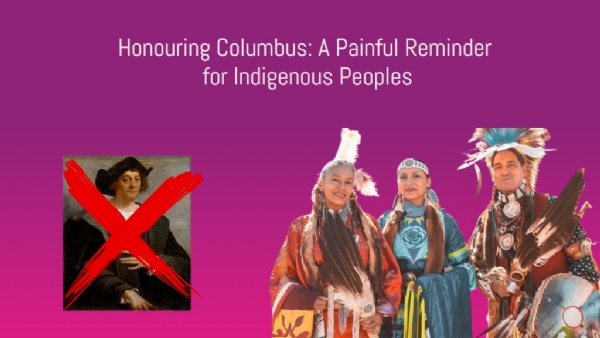
The reported plan by former United States President Donald Trump to install a statue of Christopher Columbus within the White House premises should not be seen as a simple act of honouring a historical figure. Instead, it is a political move that attempts to present Columbus as a hero, even though many Indigenous people of the Americas view him as the person responsible for the beginning of their suffering. For them, Columbus is not a symbol of discovery or progress, but someone whose arrival marked the beginning of European conquest and colonisation of their lands.
When Columbus reached the Americas in 1492, it opened the doors for European imperial powers to enter and gradually take control of the continent. This process led to a long period of violence, displacement, and exploitation of Indigenous populations. European colonisers treated the American continent as if it was empty land available for occupation. In reality, Indigenous societies had lived there for centuries with their own systems of governance, economy, and culture. However, European powers followed the idea of terra nullius, which means “nobody’s land.” This belief allowed them to justify taking over native lands as if they belonged to no one.
Because of this mindset, Indigenous communities were forced to leave their ancestral homes through violence, deception, and military force. Many were pushed into remote and difficult terrains where survival became extremely hard. Their traditional ways of life were disrupted through missionary activities, expansion of European settlements, and forced assimilation policies. In many cases, these actions resulted in what can be described as ethnic cleansing. Large numbers of Indigenous people died due to diseases brought by Europeans, wars, and forced labour. Along with physical loss, their languages, belief systems, and cultural practices were also gradually destroyed.
This painful historical experience is the reason why statues of Christopher Columbus became the focus of protests in recent years. One of the most notable incidents took place on July 4, 2020, in Baltimore, Maryland. During nationwide protests following the death of George Floyd, demonstrators protesting against racism and colonial symbols pulled down a statue of Columbus. After toppling it, they dragged the statue and threw it into the Inner Harbor. For many protestors, the statue represented not exploration but the beginning of centuries of oppression faced by Indigenous communities.
The statue that was pulled down had originally been unveiled in 1984 by then US President Ronald Reagan. Its removal in 2020 symbolised a wider public rejection of glorifying historical figures associated with conquest and colonisation. Later, a group of Italian-American community leaders, businessmen, and local politicians recovered the broken pieces of the statue from the harbour. With the help of sculptors and restoration experts, they reconstructed the damaged statue as a mark of cultural pride, arguing that Columbus is an important symbol for their immigrant heritage.
It is this reconstructed statue that is reportedly being considered for installation within the White House grounds. Donald Trump has repeatedly spoken in favour of Columbus as a figure who represents courage, determination, and the spirit of adventure. During his presidency and later political campaigns, Trump positioned himself as a defender of traditional American symbols that he believes are under attack. He has often criticised the removal of historical statues, arguing that such actions erase national heritage. In 2020, he also issued an executive order proposing the creation of a “National Garden of American Heroes,” in which Columbus was included among figures to be honoured.
However, reinstalling a statue of Columbus at the centre of American political power may have deep emotional consequences for Indigenous communities. For many, such a move may reopen historical wounds and send a message that their suffering and displacement are still not being taken seriously. Honouring Columbus in this manner may make Indigenous peoples feel ignored and marginalised in a country that claims to stand for equality and justice.
Moreover, the debates surrounding Columbus are not only about the past but also about how history is remembered in the present. Public monuments often reflect the values that societies choose to celebrate. For Indigenous groups and many activists, removing Columbus statues was a way to challenge a long-standing narrative that praises conquest while ignoring its human cost.
In recent years, several American states and cities have even replaced Columbus Day with Indigenous Peoples’ Day in order to recognise the history and contributions of native communities. This shift reflects a growing effort to present a more balanced understanding of history.
It is therefore important to critically examine attempts to glorify figures associated with imperial conquest. Installing Columbus’s statue at the White House would not just honour an explorer, but may also appear as support for a colonial past that caused deep harm to Indigenous peoples and their cultures. In a modern democratic society that seeks to promote inclusion and historical justice, such actions risk deepening divisions rather than promoting unity.
Ultimately, the debate over Columbus’s legacy highlights the need to remember history in a way that respects both achievements and suffering. Recognising the pain experienced by Indigenous communities is an essential step towards building a more just and inclusive future.
When Columbus reached the Americas in 1492, it opened the doors for European imperial powers to enter and gradually take control of the continent. This process led to a long period of violence, displacement, and exploitation of Indigenous populations. European colonisers treated the American continent as if it was empty land available for occupation. In reality, Indigenous societies had lived there for centuries with their own systems of governance, economy, and culture. However, European powers followed the idea of terra nullius, which means “nobody’s land.” This belief allowed them to justify taking over native lands as if they belonged to no one.
Because of this mindset, Indigenous communities were forced to leave their ancestral homes through violence, deception, and military force. Many were pushed into remote and difficult terrains where survival became extremely hard. Their traditional ways of life were disrupted through missionary activities, expansion of European settlements, and forced assimilation policies. In many cases, these actions resulted in what can be described as ethnic cleansing. Large numbers of Indigenous people died due to diseases brought by Europeans, wars, and forced labour. Along with physical loss, their languages, belief systems, and cultural practices were also gradually destroyed.
This painful historical experience is the reason why statues of Christopher Columbus became the focus of protests in recent years. One of the most notable incidents took place on July 4, 2020, in Baltimore, Maryland. During nationwide protests following the death of George Floyd, demonstrators protesting against racism and colonial symbols pulled down a statue of Columbus. After toppling it, they dragged the statue and threw it into the Inner Harbor. For many protestors, the statue represented not exploration but the beginning of centuries of oppression faced by Indigenous communities.
The statue that was pulled down had originally been unveiled in 1984 by then US President Ronald Reagan. Its removal in 2020 symbolised a wider public rejection of glorifying historical figures associated with conquest and colonisation. Later, a group of Italian-American community leaders, businessmen, and local politicians recovered the broken pieces of the statue from the harbour. With the help of sculptors and restoration experts, they reconstructed the damaged statue as a mark of cultural pride, arguing that Columbus is an important symbol for their immigrant heritage.
It is this reconstructed statue that is reportedly being considered for installation within the White House grounds. Donald Trump has repeatedly spoken in favour of Columbus as a figure who represents courage, determination, and the spirit of adventure. During his presidency and later political campaigns, Trump positioned himself as a defender of traditional American symbols that he believes are under attack. He has often criticised the removal of historical statues, arguing that such actions erase national heritage. In 2020, he also issued an executive order proposing the creation of a “National Garden of American Heroes,” in which Columbus was included among figures to be honoured.
However, reinstalling a statue of Columbus at the centre of American political power may have deep emotional consequences for Indigenous communities. For many, such a move may reopen historical wounds and send a message that their suffering and displacement are still not being taken seriously. Honouring Columbus in this manner may make Indigenous peoples feel ignored and marginalised in a country that claims to stand for equality and justice.
Moreover, the debates surrounding Columbus are not only about the past but also about how history is remembered in the present. Public monuments often reflect the values that societies choose to celebrate. For Indigenous groups and many activists, removing Columbus statues was a way to challenge a long-standing narrative that praises conquest while ignoring its human cost.
In recent years, several American states and cities have even replaced Columbus Day with Indigenous Peoples’ Day in order to recognise the history and contributions of native communities. This shift reflects a growing effort to present a more balanced understanding of history.
It is therefore important to critically examine attempts to glorify figures associated with imperial conquest. Installing Columbus’s statue at the White House would not just honour an explorer, but may also appear as support for a colonial past that caused deep harm to Indigenous peoples and their cultures. In a modern democratic society that seeks to promote inclusion and historical justice, such actions risk deepening divisions rather than promoting unity.
Ultimately, the debate over Columbus’s legacy highlights the need to remember history in a way that respects both achievements and suffering. Recognising the pain experienced by Indigenous communities is an essential step towards building a more just and inclusive future.

Vivekanand Nartam
Mr. Vivekanand Nartam is an Assistant Professor in the Department of Political Science in the Shyam Lal College, University of Delhi. He originally comes from Gadchiroli district in the sate of Maharashtra and did his graduation from Ferguson College in Pune University. Later he did his MA and M. Phil. in International Relations and International Organization respectively from Jawaharlal Nehru University, New Delhi. He regularly participates in TV pannel discussions as a Political Analyst in various national news channels.