Greener pastures, a great getaway for the youth today
NewsBharati 26-Feb-2026 12:23:30 PM
Total Views |


But the grass ain't always greener on the other side, It's green where you water it - Justin Bieber
The problem of unemployability and the road ahead for sure
Approximately 1 crore (10 million) students graduate in India every year, approximately 1.5 million engineering graduates every year. The majority struggles for jobs- the white-collar job that people aspire to.
There is a push to create skills enabled youth rather than those with meaningless degrees.
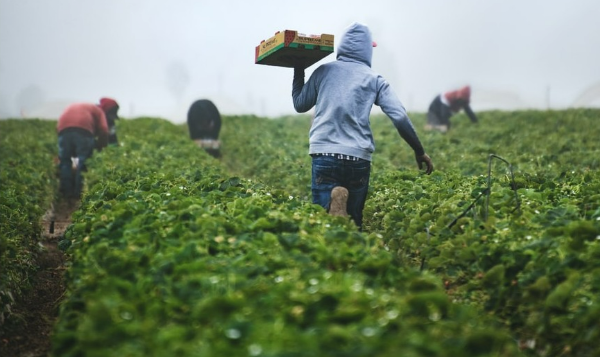
The so-called educated graduates first look for a government job. The second option is a managerial job in the corporate sector. Those who want to start a business, which can generate employment for others, also get into metro centric verticals, which are related to software, marketing or eatery business. These opportunities are getting very crowded with fierce competition and dwindling margins.
People should look at opportunities outside of big cities that are increasingly overstrained and struggling even for clean air, with AQI shooting beyond 350! You should get into areas which have less competition and more opportunities.
There are three important points getting into any new venture. First, to identify the right opportunity, second is to establish that there is a demand and third is where the government is investing. All these are tick-marked for agriculture.
Now, agriculture is not only about ‘kheti badee’ as most people understand, which is growing rice, wheat or pulses. It has a huge canvas. It broadly entails growing crops, fishery and dairy. Each has a very huge value chain. These are ‘virgin opportunities’ calling you to step into.
The contribution of agriculture is just around 18% to GDP in Bharat. Yet 44% to 47% of the total workforce is directly employed in agriculture and allied activities. Almost half the country lives on agriculture. Yet many farmers struggle to survive. Many of these small farms can be viewed as ‘sick units.’
Though sick unit is a corporate jargon applicable to corporate entities, it can definitely define state of affairs in other sectors too.
These sick units need to produce more and better stuff. Market with disposable income and aspiring, middle class is looking for good food stuff. Properly cleaned, packed a nourishing healthy option. Therefore, there is a lot of scope to turn this sector around and educated tech savvy youth can contribute effectively.
A "sick unit" is typically defined by its inability to service debt and be profitable.
According to recent Situation Assessment Surveys (SAS), roughly 50.2% to 52% of all agricultural households in India are in debt. Over 85% of India's farmers fall into the "small and marginal" category (owning less than 2 hectares). These farmers are most susceptible to becoming "sick" because their cost of production often exceeds their return on investment.
Here are the best areas in the dairy, fishery, and agriculture sectors that thrive on less than 2 acres.
When land is limited, the goal is verticality and quick turnover.
Microgreens & Sprouts: You can grow these in racks indoors or in a small greenhouse. They have a 7–14-day growth cycle and sell for premium prices to restaurants.
Mushroom Farming: Since mushrooms grow in bags or trays stacked vertically, you can produce thousands of kilos in a 1,000 sq. ft. shed.
Greenhouse Hydroponics: Growing leafy greens (lettuce, kale) or strawberries hydroponically allows you to stack layers, effectively tripling your "acreage".
Apiculture (Beekeeping): Hives take up very little ground space. A 1-acre plot with diverse flowering plants can support dozens of hives.
Traditional cattle ranching requires vast grazing land, but intensive systems allow for smaller footprints.
Goat Dairy: Goats are much more efficient than cows. You can comfortably house and manage a high-producing dairy goat herd (20–30 heads) on less than an acre if you use a "stall-fed" (zero-grazing) system.
Quail or Duck Eggs: These require significantly less space than chickens and often command a higher price in niche health markets.
Rabbitry: Rabbits have a high feed-to-meat conversion ratio and can be housed in vertical cage systems within a small barn.
Advanced Fishery (Aquaculture)
Traditional ponds take up a lot of space, but modern technology has changed the game.
Bio floc Technology (BFT): This is a high-density fish farming method where you grow fish in circular tanks. You can fit several large tanks on just half an acre, producing the same yield as a massive 5-acre traditional pond.
Aquaponics: This combines fish farming (aquaculture) with soil-less plant farming (hydroponics). The fish waste fertilizes the plants, and the plants clean the water for the fish. It is a closed-loop system perfect for small plots.
Ornamental Fish Breeding: Breeding "aquarium" fish (like Koi, Goldfish, or Betta) requires very small tanks and focuses on the high aesthetic value per fish rather than meat weight.
While agriculture was once seen as a fallback for those without other options, in 2026, it is increasingly viewed as high-potential opportunity.
Reverse brain movement
The influx of educated youth is transforming Indian agriculture from traditional to agri-entrepreneurship.
I have interviewed more than a dozen guys from IITs, IIMs and London School of economics who got into agriculture leaving their jobs. Fellows from, ISB Hyderabad, Kingston University London, and Delhi university, previously having occupied high paying jobs in organisations like Amazon, Citi Bank, HSBC, DBS, HDFC, Ernst and young, Accenture, IBM, Lucent, PWC, Siemens, Tata Consultancy Services (TCS) and ICICI bank to name a few.
Educated individuals can bring a "C-suite" mindset to the farming sector. They aren't just growing crops; they are managing data, supply chains, and brands. When, I talk about a "C-suite mindset" in agriculture, it means moving away from seeing farming as a labour blue collar work and instead seeing it as an organised business entity with professionalism.
In a traditional sense, the "C-suite" refers to the top-ranking senior executives in an organization—those with "Chief" in their titles (CEO, CFO, COO, CTO).
Here is what that mindset actually helps in practice for an educated agri-entrepreneur.
You have the "Educated" edge and you can fully deploy your management skills to optimise and scaleup. You can navigate and get subsidies, grants which most traditional farmers don’t have. You can easily adapt the technology coming your way. The money is not only in soil but the ecosystem you create. Dairy is a good start- Total for 100 Cows roughly requires 8,000 to 10,000 square feet, fraction of an acre. Total Monthly Gross Income RS 13.9 Lakh – Rs20.9 Lakh. Yearly Rs 1.6 crore to Rs 2.4 crore.
“If somebody offers you an amazing opportunity but you are not sure you can do it, say yes— then learn how to do it later.” Richard Branson
Where the "Real" Money Is?
Exotic Fruits & Horticulture: Crops like Dragon Fruit, Rambutan, and Custard Apple are yielding much higher returns than traditional staples. For instance, MBA-educated farmers have reported earning up to INR 6 lakh per acre by switching to high-demand fruits.
The "Red Gold" & Mushrooms: Saffron (indoor hydroponic) and Mushroom cultivation are high-profit favourites because they require less land. Mushroom units can generate ₹3 lakh per month in relatively small indoor spaces.
Allied Sectors (Livestock & Fisheries): The 2026 Economic Survey shows these sectors growing at 7%–9%, far outpacing traditional crop growth.
Educated youth are moving into processing—selling cold-pressed oils, millet snacks, or organic turmeric directly to urban consumers or even exporting to the US and Europe.
‘It may be nearly impossible to create a blade of grass in a laboratory, but Cow dung and cow urine mixed with the soil can give fresh food for millions of us’
“Aajkal paise peid par he ugtey hain”
The subsidy push
There is no tax on agricultural income which is a major incentive. There is subsidy on fertilizer, tractors and several other support systems.
Bharat-VISTAAR Launched in early 2026, Bharat-VISTAAR (Virtually Integrated System to Access Agricultural Resources) is a cornerstone of India’s AI-driven agriculture.
Robotics where AI-powered machinery is addressing labour shortages. Tractors using GPS-guidance, can plant seeds with a precision of 0.01 cm, cutting work time by nearly half.
Drones distinguish between crops and weeds, spraying herbicides only on the weeds, saving on chemical costs.
Government provides up to 90% subsidy on drip irrigation systems.
The sector is so huge, you can get into any slot of the value chain- from farm to the fork. High-Value Farming entails Moving away from wheat and rice to "sunrise" sectors like hydroponics, organic farming, medicinal plants, and floriculture. You do not require 50 acres to start; you can get into contract farming. You can have vertical farming on 2 Acres land. Do research and learn. Government runs courses on mushroom farming and other related areas at subsidised or no cost. Make use of this- upskill here instead of struggling with AI and new computer languages and data analysis.
There is scope for exports too. If your product is world class, you have a huge market. This is almost a virgin market/profession.
As of 2026, the business potential of India’s agriculture sector is vast, transitioning from a traditional production-heavy industry to a technology-driven value chain. The total market size is currently valued at approximately USD 471 billion. With three major "billion-dollar" pillars: the core agricultural market, the food processing industry, and the rapidly growing aggrotech segment.
Ranch life in India can you ever imagine?
Time to stop smelling the coffee; smell the soil.
Ranch-type living is the ultimate architectural "deep breath." Defined by its signature single-story layout and long, low profile, it prioritizes accessibility and an effortless flow between rooms. It’s a style that trades vertical grandeur for horizontal harmony.
The Heart of the Ranch
At its core, ranch living is about the open-concept lifestyle. Without stairs to act as barriers, the kitchen, dining, and living areas blend into one cohesive "great room." This makes the home feel expansive and incredibly social—perfect for keeping an eye on the family or hosting a dinner party where the cook is never isolated from the conversation.
Modern ranch living leans heavily into the "California Method":
Large Windows: Sliding glass doors and floor-to-ceiling glass invite natural light.
Seamless Transitions: The indoor living space often spills directly onto a patio or deck.
Connection to Nature: Because every room is on the ground floor, you’re never more than a few steps away from the yard.
It is a grounded, functional way of life that values simplicity over fuss. Whether it’s a classic mid-century rambler or a modern farmhouse, a ranch home offers a peaceful, "stair-free" sanctuary that ages gracefully with its inhabitants. You can never get this dream in a metro. Best is that your home and workplace is the same!
Virender Kapoor
A thinker, educationist and an inspirational guru. Kapoor is an Indian who wears many hats. An educationist of repute, he was the Director of a prestigious management Institute under the Symbiosis umbrella. He has emerged as a leading think tank in human behavior, motivation and success. As a celebrity author, his name appears with the likes of Thomas Friedman and Dale Carnegie. He has authored more than 30 books as of now which are on Amazon worldwide and several of his books are in the pipeline.