My Journey Through Kashi and Ayodhya: Faith Restored, Much Still to Improve
NewsBharati 25-Mar-2026 10:10:55 AM
Total Views |


Last time I visited Varanasi, there was a lot of curiosity. The new corridor had recently been completed, and I had read many stories about the land acquisition. Many small temples were discovered; there must have been some difficulties, but they were dealt with effectively. The Kashi Vishwanath temple, which was destroyed and later rebuilt, has been a centre of reverence for centuries. It used to be very small, yet people from every corner of the country visited it in large numbers. Now that a grand corridor has been built, the number of devotees has increased many times over.
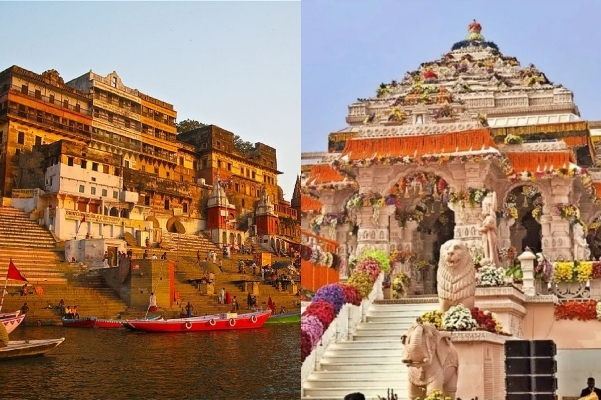
The visit offers a sense of contentment, as the partial distortion seems to have been corrected, at least to some extent.
Earlier, when I saw the Nandi that does not face the present Shiv idol, it created a psychological whirlwind. Some believed that the idol was originally in front of the Nandi, but at that time, no survey had been ordered or completed. It was a matter of deep faith. This time, however, the situation was different. A small passage is now open, from where a couple of pillars of an old temple can be seen. Entry is not allowed, as it is part of the Gyanvapi mosque premises. There now stands what many consider irrefutable evidence, visible. Several typical religious symbols are carved on the walls, which can be easily noticed. The Shiv idol is believed to have been discovered during the survey under the water of the Vaju Khana (ablution tank), and the Nandi appears to face it. Most devotees observe the carvings and pillars with conviction.
This time, a larger number of police personnel were deployed, as the enthusiasm of devotees knew no bounds. A complete cross-section of society is always present, and many consider themselves fortunate to witness this transformation.
Of course, the city’s infrastructure has changed, and many improvements are visible. However, as devotees, one expects more. E-rickshaws and regular rickshaws make travel through the narrow bylanes somewhat easier, but fares are not fixed, and there is no fare chart to guide tourists. Charging by meter would help greatly. Even taxis should operate with meters.
In most cities, airport drop charges are significantly higher. Why not implement meter-based fares here, especially since a large number of people visit these cities? Considering all factors, better discipline is required. Tourists may not mind spending, as many visit Kashi only once or twice in their lifetime, but the issue of taxi and e-rickshaw fares should not be ignored.
Reaching destinations should be made simpler and more convenient. City hygiene also needs much greater attention.
There is no Uttar Pradesh government emporium in the city. No showroom where all types of artefacts are displayed and available for purchase. A few such emporiums are needed. Perhaps the cooperative sector could run these stores, offering authentic speciality fabrics and other products.
The hotel industry also needs better regulation. Standardisation should be considered, and hotels should focus more on serving local flavours.
Most tourists wish to attend the Ganga Aarti. Thousands gather every day, and hundreds of boats assemble near the ghats, often filled. The event likely needs better facilities. Devotees could be encouraged to actively participate, perhaps by chanting shlokas together. The lyrics of the Aarti could be displayed on screens to help people sing along. More large screens and additional seating arrangements could be provided. The boats near the ghats should also be better regulated.
The Jal Board could organise ferry services, standardising boats, facilities, and seating capacity. Cleanliness standards must be enforced. Drinking water should be made available on well-covered boats, and their appearance should be improved. Fares should be linked to distance, and route maps along with fare charts should be displayed at every ghat.
Commuting in Kashi is not easy. Lane discipline is hardly observed, and constant honking, whether necessary or not, seems to be the only language on the roads.
Reaching temples like Kal Bhairav is quite difficult. The lanes are extremely narrow, if one stretches both arms, one can touch the walls on either side. Yet, people and two-wheelers navigate these lanes together without colliding. Shops and eateries line both sides of these narrow passages.
The next destination was Ayodhya. The temple of Prabhu Shri Ram is now complete, though many other facilities are still under construction. The complex has ample space, so even large crowds of devotees do not cause inconvenience.
The darshan of Ram Lala is an experience beyond words. People of our country waited patiently for centuries. There was a time when the idol was kept behind barriers, and later, devotees had to pass through long, cage-like pathways to reach it. There were very limited exits, mainly for security personnel. In a later phase, the idol was placed outside, allowing a more comfortable viewing from a short distance.
Now, a beautiful and spacious temple stands ready. Devotees from all sections of society are present. We travelled to Ayodhya by Vande Bharat Express, getting down at the newly built Ayodhya Dham station, which can easily accommodate large crowds. Most devotees arrive, visit the temple, and return to board their trains. Many rest on the platforms; despite the heat, their devotion remains unwavering.
All arrangements at the temple are well managed. At the exit, everyone is offered prasad.
This practice should ideally be followed at all temples. Even the Kashi Vishwanath temple should offer prasad to every devotee. Most Gurudwaras already follow this tradition.
E-rickshaws operate in Ayodhya as well, and they too should have meters. Information about places to visit should be displayed at all entry points to assist devotees. Fixed-rate tour options could also be introduced. While most roads are good, further improvements are needed. At the very least, one must offer respect to all those who made this possible.
In Maharashtra, many temples provide simple meals at minimal cost, which devotees accept as prasad. Similarly, Gurudwaras run langars. Perhaps such practices could be adopted more widely across temples.
Many traditions can certainly be revived or introduced.
Foreign rulers in the past attempted to destroy cultural and religious symbols and traditions, distancing people from their roots. These traditions played a vital role in our social life. It is important for us to reconnect with our roots, as it will strengthen our social fabric.
The visit offers a sense of contentment, as the partial distortion seems to have been corrected, at least to some extent.
Earlier, when I saw the Nandi that does not face the present Shiv idol, it created a psychological whirlwind. Some believed that the idol was originally in front of the Nandi, but at that time, no survey had been ordered or completed. It was a matter of deep faith. This time, however, the situation was different. A small passage is now open, from where a couple of pillars of an old temple can be seen. Entry is not allowed, as it is part of the Gyanvapi mosque premises. There now stands what many consider irrefutable evidence, visible. Several typical religious symbols are carved on the walls, which can be easily noticed. The Shiv idol is believed to have been discovered during the survey under the water of the Vaju Khana (ablution tank), and the Nandi appears to face it. Most devotees observe the carvings and pillars with conviction.
This time, a larger number of police personnel were deployed, as the enthusiasm of devotees knew no bounds. A complete cross-section of society is always present, and many consider themselves fortunate to witness this transformation.
Of course, the city’s infrastructure has changed, and many improvements are visible. However, as devotees, one expects more. E-rickshaws and regular rickshaws make travel through the narrow bylanes somewhat easier, but fares are not fixed, and there is no fare chart to guide tourists. Charging by meter would help greatly. Even taxis should operate with meters.
In most cities, airport drop charges are significantly higher. Why not implement meter-based fares here, especially since a large number of people visit these cities? Considering all factors, better discipline is required. Tourists may not mind spending, as many visit Kashi only once or twice in their lifetime, but the issue of taxi and e-rickshaw fares should not be ignored.
Reaching destinations should be made simpler and more convenient. City hygiene also needs much greater attention.
There is no Uttar Pradesh government emporium in the city. No showroom where all types of artefacts are displayed and available for purchase. A few such emporiums are needed. Perhaps the cooperative sector could run these stores, offering authentic speciality fabrics and other products.
The hotel industry also needs better regulation. Standardisation should be considered, and hotels should focus more on serving local flavours.
Most tourists wish to attend the Ganga Aarti. Thousands gather every day, and hundreds of boats assemble near the ghats, often filled. The event likely needs better facilities. Devotees could be encouraged to actively participate, perhaps by chanting shlokas together. The lyrics of the Aarti could be displayed on screens to help people sing along. More large screens and additional seating arrangements could be provided. The boats near the ghats should also be better regulated.
The Jal Board could organise ferry services, standardising boats, facilities, and seating capacity. Cleanliness standards must be enforced. Drinking water should be made available on well-covered boats, and their appearance should be improved. Fares should be linked to distance, and route maps along with fare charts should be displayed at every ghat.
Commuting in Kashi is not easy. Lane discipline is hardly observed, and constant honking, whether necessary or not, seems to be the only language on the roads.
Reaching temples like Kal Bhairav is quite difficult. The lanes are extremely narrow, if one stretches both arms, one can touch the walls on either side. Yet, people and two-wheelers navigate these lanes together without colliding. Shops and eateries line both sides of these narrow passages.
The next destination was Ayodhya. The temple of Prabhu Shri Ram is now complete, though many other facilities are still under construction. The complex has ample space, so even large crowds of devotees do not cause inconvenience.
The darshan of Ram Lala is an experience beyond words. People of our country waited patiently for centuries. There was a time when the idol was kept behind barriers, and later, devotees had to pass through long, cage-like pathways to reach it. There were very limited exits, mainly for security personnel. In a later phase, the idol was placed outside, allowing a more comfortable viewing from a short distance.
Now, a beautiful and spacious temple stands ready. Devotees from all sections of society are present. We travelled to Ayodhya by Vande Bharat Express, getting down at the newly built Ayodhya Dham station, which can easily accommodate large crowds. Most devotees arrive, visit the temple, and return to board their trains. Many rest on the platforms; despite the heat, their devotion remains unwavering.
All arrangements at the temple are well managed. At the exit, everyone is offered prasad.
This practice should ideally be followed at all temples. Even the Kashi Vishwanath temple should offer prasad to every devotee. Most Gurudwaras already follow this tradition.
E-rickshaws operate in Ayodhya as well, and they too should have meters. Information about places to visit should be displayed at all entry points to assist devotees. Fixed-rate tour options could also be introduced. While most roads are good, further improvements are needed. At the very least, one must offer respect to all those who made this possible.
In Maharashtra, many temples provide simple meals at minimal cost, which devotees accept as prasad. Similarly, Gurudwaras run langars. Perhaps such practices could be adopted more widely across temples.
Many traditions can certainly be revived or introduced.
Foreign rulers in the past attempted to destroy cultural and religious symbols and traditions, distancing people from their roots. These traditions played a vital role in our social life. It is important for us to reconnect with our roots, as it will strengthen our social fabric.
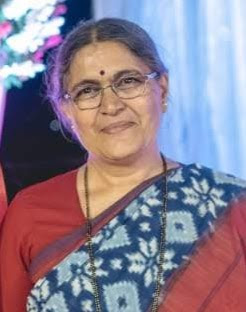
Prof. Vidya Deshpande
Professor Vidya Deshpande has had a journey of more than four decades in the field of education. Her main expertise is in the subject of Philosophy, and she has worked as a teacher of philosophy and logic with Nowrosjee Wadia college for 36 years. She has been associated with the Janakalyan Blood bank for last for 38 years and has also carried out the responsibility as a management committee member of Karve Stree Shikshan Sanstha for 10 years. Her special fields of interest are Philosophy of social sciences, school education, development of skills for self reliance, and top up skills to make students profession ready,