Ban or Balance? The big debate over social media for children under 16
Total Views |


-Kajal Bhalerao
There have been several reports across the world suggesting that social media usage may be restricted or banned for younger age groups under 15 or 16 years. This move is increasingly being seen as necessary in many countries to ensure healthy mental and physical development among children and adolescents. Similarly, in India, too, states such as Karnataka and Andhra Pradesh have announced a proposed ban for children under 16.
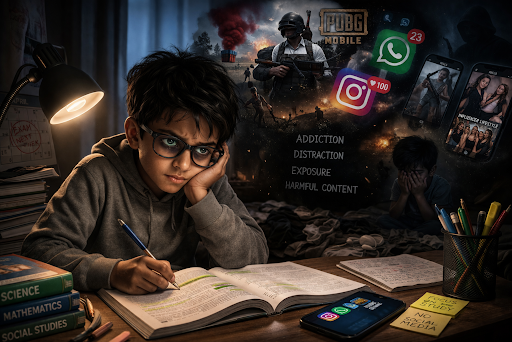
With growing concerns over issues such as anxiety, depression, cyberbullying, and screen addiction, governments are beginning to prioritise the well-being of young users over unregulated digital access.
Malaysia has taken steps to address the rising mental health crisis among youth by considering stricter regulations on social media use. Similarly, Australia has reportedly removed millions of underage accounts, highlighting serious enforcement efforts to control unauthorised access by minors.
In Europe, countries such as France, Spain, Italy, Denmark, and Greece are working together to develop a new age-verification system. This initiative aims to make it easier to enforce minimum age limits and ensure that younger users are protected from harmful online exposure.
Meanwhile, in the United States, debates suggest that children under 14 should not be allowed on social media at all, while those aged 15–16 should only be permitted access with parental consent. In Brazil, frameworks such as the Marco Civil da Internet emphasise digital rights and responsibilities, contributing to ongoing discussions around youth protection online.
Overall, these global efforts reflect a common understanding that while social media is an integral part of modern life, regulating its use among young individuals is crucial to ensuring a healthier, safer, and more balanced digital environment.
In the case of India, there is growing discussion around implementing KYC-based verification systems to regulate access. Additionally, concerns have been raised at the state level, particularly in Karnataka and Andhra Pradesh, where proposals have emerged to restrict social media use for those under 16 years of age.
Almost a decade ago, as ‘Blue Whale’, a virtual dare game alleged to be behind several suicides among teenagers, sent shockwaves across India. The Supreme Court had also noted, stating it as a "national problem". It emphasised that anything endangering lives must be prohibited, urging immediate measures to block the game and increase public awareness.
Speaking of recent instances, three minor sisters aged 12, 13 and 16 in Ghaziabad committed suicide, with Ghaziabad Police stating the reason behind their suicides was that their parents objected to their intense obsession with Korean culture and an online task-based "love game".
Looking at the current scenario, it is important to consider both sides of the issue. As times change, so do needs and patterns of development. Society has already shifted from traditional methods such as writing and maintaining records in notebooks to a more digital way of learning and communication. In this context, completely distancing young individuals from digital platforms may not always be practical.
On one hand, restricting or banning social media for underage users can be beneficial for their mental health and natural learning processes. It encourages face-to-face interaction, better concentration, and reduces exposure to harmful online content. However, on the other hand, strict bans may lead to unintended consequences. Young users might try to bypass restrictions by creating fake accounts, hacking systems, finding alternative ways to access social media, or this may also increase the number of criminal behaviours. This, in itself, becomes a more serious concern.
Therefore, rather than relying solely on bans, the role of schools and parents becomes crucial. Parents should monitor and regulate their children’s screen time, avoid providing personal mobile devices at a very young age, and ensure limited and guided access to digital platforms. Similarly, schools should also take responsibility by minimising the use of digital platforms for academic communication, especially for younger students. Educational institutions should aim to provide all necessary resources during school hours instead of making students dependent on online tools or parent-based digital groups.
A balanced approach is essential, one that combines reasonable restrictions with proper guidance and supervision to ensure the healthy development of children in an increasingly digital world.
There have been several reports across the world suggesting that social media usage may be restricted or banned for younger age groups under 15 or 16 years. This move is increasingly being seen as necessary in many countries to ensure healthy mental and physical development among children and adolescents. Similarly, in India, too, states such as Karnataka and Andhra Pradesh have announced a proposed ban for children under 16.
With growing concerns over issues such as anxiety, depression, cyberbullying, and screen addiction, governments are beginning to prioritise the well-being of young users over unregulated digital access.
Status abroad
Malaysia has taken steps to address the rising mental health crisis among youth by considering stricter regulations on social media use. Similarly, Australia has reportedly removed millions of underage accounts, highlighting serious enforcement efforts to control unauthorised access by minors.
In Europe, countries such as France, Spain, Italy, Denmark, and Greece are working together to develop a new age-verification system. This initiative aims to make it easier to enforce minimum age limits and ensure that younger users are protected from harmful online exposure.
Meanwhile, in the United States, debates suggest that children under 14 should not be allowed on social media at all, while those aged 15–16 should only be permitted access with parental consent. In Brazil, frameworks such as the Marco Civil da Internet emphasise digital rights and responsibilities, contributing to ongoing discussions around youth protection online.
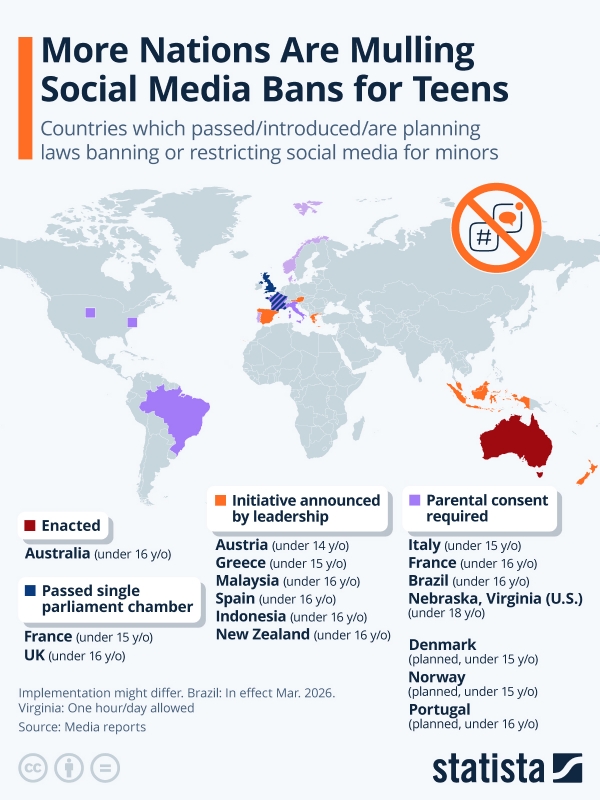
Overall, these global efforts reflect a common understanding that while social media is an integral part of modern life, regulating its use among young individuals is crucial to ensuring a healthier, safer, and more balanced digital environment.
Social media ban in the Indian context
In the case of India, there is growing discussion around implementing KYC-based verification systems to regulate access. Additionally, concerns have been raised at the state level, particularly in Karnataka and Andhra Pradesh, where proposals have emerged to restrict social media use for those under 16 years of age.
Almost a decade ago, as ‘Blue Whale’, a virtual dare game alleged to be behind several suicides among teenagers, sent shockwaves across India. The Supreme Court had also noted, stating it as a "national problem". It emphasised that anything endangering lives must be prohibited, urging immediate measures to block the game and increase public awareness.
Speaking of recent instances, three minor sisters aged 12, 13 and 16 in Ghaziabad committed suicide, with Ghaziabad Police stating the reason behind their suicides was that their parents objected to their intense obsession with Korean culture and an online task-based "love game".
Challenges Ahead
Looking at the current scenario, it is important to consider both sides of the issue. As times change, so do needs and patterns of development. Society has already shifted from traditional methods such as writing and maintaining records in notebooks to a more digital way of learning and communication. In this context, completely distancing young individuals from digital platforms may not always be practical.
On one hand, restricting or banning social media for underage users can be beneficial for their mental health and natural learning processes. It encourages face-to-face interaction, better concentration, and reduces exposure to harmful online content. However, on the other hand, strict bans may lead to unintended consequences. Young users might try to bypass restrictions by creating fake accounts, hacking systems, finding alternative ways to access social media, or this may also increase the number of criminal behaviours. This, in itself, becomes a more serious concern.
Therefore, rather than relying solely on bans, the role of schools and parents becomes crucial. Parents should monitor and regulate their children’s screen time, avoid providing personal mobile devices at a very young age, and ensure limited and guided access to digital platforms. Similarly, schools should also take responsibility by minimising the use of digital platforms for academic communication, especially for younger students. Educational institutions should aim to provide all necessary resources during school hours instead of making students dependent on online tools or parent-based digital groups.
A balanced approach is essential, one that combines reasonable restrictions with proper guidance and supervision to ensure the healthy development of children in an increasingly digital world.