The quiet side of Kerala politics no one talks about
Total Views |


Kerala’s politics is often described as a clear battle between two sides. On one side stands the Left Democratic Front, and on the other, the Congress-led United Democratic Front. Every election season reinforces this image. Speeches become sharper, campaigns grow louder, and both sides present themselves as complete opposites.
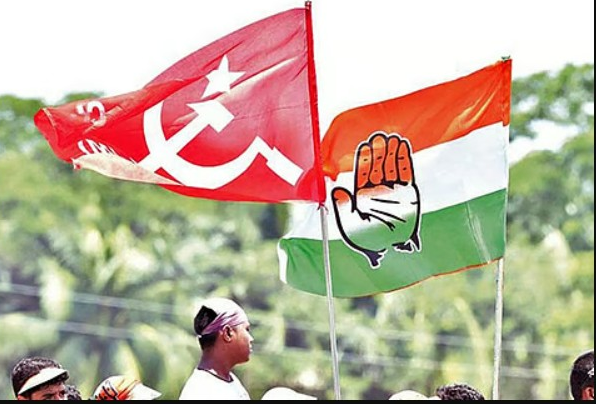
But politics is rarely only about what is said in public. It is also about what happens quietly when power is within reach. And when we take a closer look at those moments, the picture in Kerala begins to look more complicated.
There is a pattern that keeps appearing. A pattern that does not fully match the idea of two sides locked in constant conflict. Instead, there are times when both fronts seem to act to protect a shared political space, especially when a new challenger begins to emerge.
This is not a recent development. The relationship between the Congress and the Left has always had layers. At the national level, there was a time between 2004 and 2009 when Left parties supported a Congress-led government. Despite public differences, they worked together when it mattered. That phase showed that political rivals can also become partners when the situation demands it.
A similar pattern can be seen in Kerala, especially at the local level.
Take the example of Ayiroor Panchayat in Pathanamthitta during the 2025 local body elections. The BJP emerged as the single largest party. In most cases, that would have led to power. But here, it did not. Members from the LDF and UDF voted in a way that kept the BJP out. It was not about numbers. It was about the decision they made.
Something similar happened earlier in Thiruvanvandoor Panchayat in Alappuzha. Once again, the BJP-led group had the numbers advantage, yet power did not follow. The UDF supported the CPI M, and the final result reflected coordination rather than competition.
These are not one-off incidents. They point to a pattern that appears whenever a third force starts gaining ground. At that point, the rivalry seems to take a step back, and strategy comes forward.
Even in assembly elections, there are signs that raise questions. In Nemom in 2021, the focus of both major fronts seemed to shift toward defeating the BJP instead of each other. The outcome reflected that consolidation. In Manjeswaram, the margins were extremely narrow. In 2016, the BJP lost by just 89 votes. In 2021, the margin was 745 votes. These are numbers where even small shifts in voting behaviour can change the result. When such trends repeat, it becomes difficult to ignore them.
Beyond elections, there is also a noticeable similarity in policy positions. On major national issues like the Citizenship Amendment Act, National Register of Citizens, Uniform Civil Code, and National Education Policy, both fronts have often taken similar stands. Even on sensitive state matters such as Sabarimala or their stance on Governors, the differences are not always as sharp as they are made out to be.
Then comes governance.
Under the LDF government, there have been serious concerns. Delays in payments to pharmaceutical suppliers raised fears about medicine availability in government hospitals. The collapse of a block at Kottayam Medical College exposed gaps in infrastructure. There have also been allegations of corruption and questionable spending decisions.
However, the UDF’s record does not present a completely different picture. During its time in power, there were reports of irregularities in healthcare systems and corruption allegations in liquor licensing. The collapse of the Palarivattom flyover within a few years of construction raised serious concerns about planning and execution.
What stands out is not contrast, but similarity.
Many larger issues have remained unchanged across governments. Unemployment, especially among youth, continues to be a major challenge. Corruption allegations have surfaced under both fronts. Healthcare has faced issues in different forms over the years. Waste management and water supply continue to trouble many areas. Roads, recruitment, and administration have seen recurring problems.
This points to a deeper issue. The problem may not lie with one government or one front, but with a system that continues in the same way regardless of who is in power.
Political culture also reflects this continuity. Dynasty politics is visible on both sides, with family members of established leaders often entering the system. Public money has been spent heavily on publicity and campaigns by different governments. Promises are made during elections, but many do not fully translate into action.
All of this raises an important question for voters.
Is the political rivalry in Kerala as strong and absolute as it appears? Or is it a controlled contest where both sides compete, yet operate within certain limits to maintain the existing structure?
The answer may not be simple. Kerala’s politics still has real competition, real differences, and real debates. But alongside that, there are also moments of quiet understanding and strategic alignment.
What emerges is a picture that is more layered than it first seems. A system where rivalry is visible, but cooperation is not entirely absent. And as these patterns continue to repeat, it becomes harder to ignore the possibility that Kerala’s political divide may not be as clear cut as it is often presented.
But politics is rarely only about what is said in public. It is also about what happens quietly when power is within reach. And when we take a closer look at those moments, the picture in Kerala begins to look more complicated.
There is a pattern that keeps appearing. A pattern that does not fully match the idea of two sides locked in constant conflict. Instead, there are times when both fronts seem to act to protect a shared political space, especially when a new challenger begins to emerge.
This is not a recent development. The relationship between the Congress and the Left has always had layers. At the national level, there was a time between 2004 and 2009 when Left parties supported a Congress-led government. Despite public differences, they worked together when it mattered. That phase showed that political rivals can also become partners when the situation demands it.
A similar pattern can be seen in Kerala, especially at the local level.
Take the example of Ayiroor Panchayat in Pathanamthitta during the 2025 local body elections. The BJP emerged as the single largest party. In most cases, that would have led to power. But here, it did not. Members from the LDF and UDF voted in a way that kept the BJP out. It was not about numbers. It was about the decision they made.
Something similar happened earlier in Thiruvanvandoor Panchayat in Alappuzha. Once again, the BJP-led group had the numbers advantage, yet power did not follow. The UDF supported the CPI M, and the final result reflected coordination rather than competition.
These are not one-off incidents. They point to a pattern that appears whenever a third force starts gaining ground. At that point, the rivalry seems to take a step back, and strategy comes forward.
Even in assembly elections, there are signs that raise questions. In Nemom in 2021, the focus of both major fronts seemed to shift toward defeating the BJP instead of each other. The outcome reflected that consolidation. In Manjeswaram, the margins were extremely narrow. In 2016, the BJP lost by just 89 votes. In 2021, the margin was 745 votes. These are numbers where even small shifts in voting behaviour can change the result. When such trends repeat, it becomes difficult to ignore them.
Beyond elections, there is also a noticeable similarity in policy positions. On major national issues like the Citizenship Amendment Act, National Register of Citizens, Uniform Civil Code, and National Education Policy, both fronts have often taken similar stands. Even on sensitive state matters such as Sabarimala or their stance on Governors, the differences are not always as sharp as they are made out to be.
Then comes governance.
Under the LDF government, there have been serious concerns. Delays in payments to pharmaceutical suppliers raised fears about medicine availability in government hospitals. The collapse of a block at Kottayam Medical College exposed gaps in infrastructure. There have also been allegations of corruption and questionable spending decisions.
However, the UDF’s record does not present a completely different picture. During its time in power, there were reports of irregularities in healthcare systems and corruption allegations in liquor licensing. The collapse of the Palarivattom flyover within a few years of construction raised serious concerns about planning and execution.
What stands out is not contrast, but similarity.
Many larger issues have remained unchanged across governments. Unemployment, especially among youth, continues to be a major challenge. Corruption allegations have surfaced under both fronts. Healthcare has faced issues in different forms over the years. Waste management and water supply continue to trouble many areas. Roads, recruitment, and administration have seen recurring problems.
This points to a deeper issue. The problem may not lie with one government or one front, but with a system that continues in the same way regardless of who is in power.
Political culture also reflects this continuity. Dynasty politics is visible on both sides, with family members of established leaders often entering the system. Public money has been spent heavily on publicity and campaigns by different governments. Promises are made during elections, but many do not fully translate into action.
All of this raises an important question for voters.
Is the political rivalry in Kerala as strong and absolute as it appears? Or is it a controlled contest where both sides compete, yet operate within certain limits to maintain the existing structure?
The answer may not be simple. Kerala’s politics still has real competition, real differences, and real debates. But alongside that, there are also moments of quiet understanding and strategic alignment.
What emerges is a picture that is more layered than it first seems. A system where rivalry is visible, but cooperation is not entirely absent. And as these patterns continue to repeat, it becomes harder to ignore the possibility that Kerala’s political divide may not be as clear cut as it is often presented.