'Surrendered' Maoist Bhupathi: Emphasis on violence & failure to correctly assess changing scenario led to fall of Naxalism
Total Views |


In an exclusive interview to ‘NewsBharati’, surrendered Maoist ‘brain’ Mallojula Venugopal Rao alias Sonu Dada alias Bhupathi reveals reasons behind failure of Maoism in India
- By Kartik Lokhande
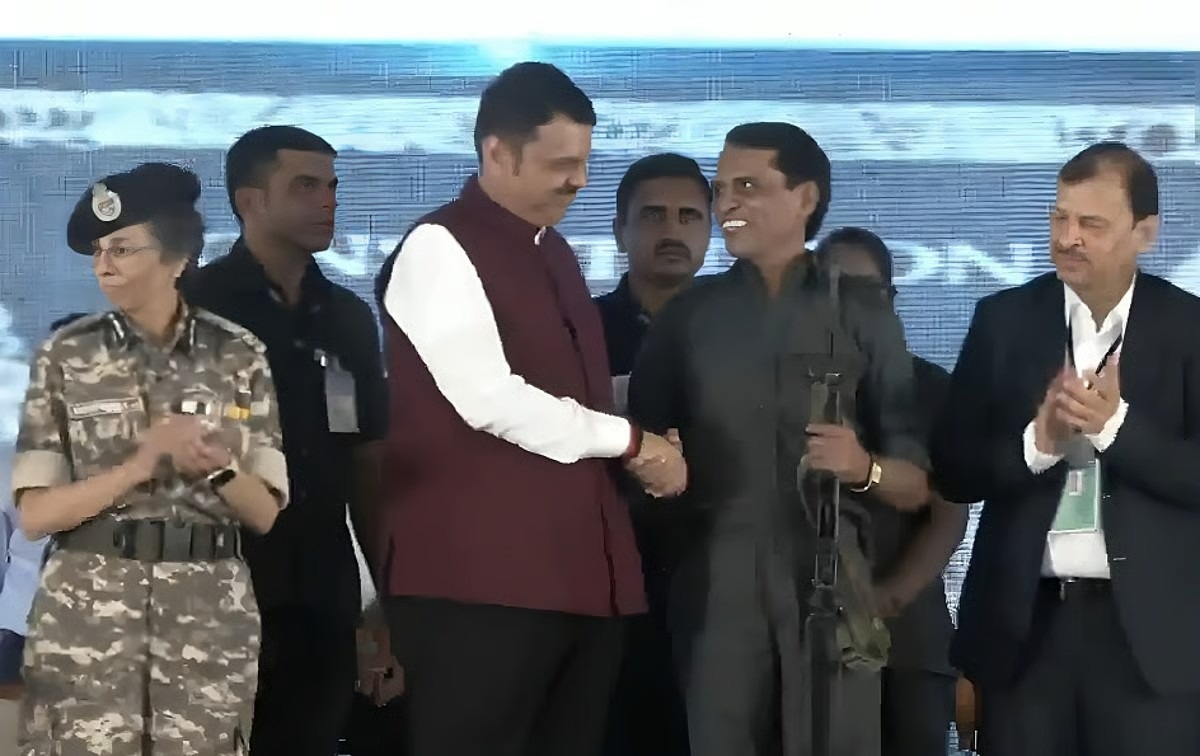
The man well past 70 years of age, dressed in simple shirt and trousers, wearing a faint yellow scarf around his neck, with a broad grin on his face and briskness in his walk, was a part of the powerful Central Committee of the proscribed organisation Communist Party of India (Maoist) … till he surrendered last year before Chief Minister Devendra Fadnavis at Gadchiroli in Maharashtra. His surrender made national and international news, because he was treated as the ‘brain’ or ‘ideological teacher’ of the Maoists in India. And, rightly so, his surrender marked the beginning of the end of Naxalism or Maoism in India. Because, soon after, several top Maoists either surrendered or got killed in encounters across India. Now, much before the March 2026 deadline set by Union Home Minister Amit Shah, armed Maoism is on its deathbed.
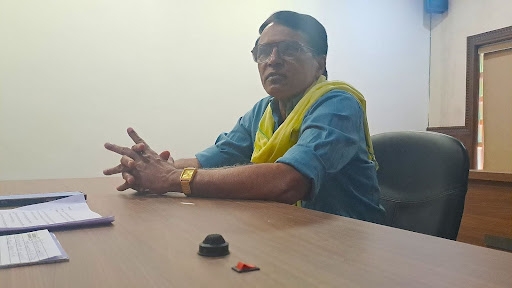
However, what led to the fall of Maoism in India, apart from the resolute action and developmental push by the government under Prime Minister Narendra Modi? What marked the end of what was referred to as ‘romanticism of guns’ that once led to spread of the violent menace of Naxalism? When ‘NewsBharati’ travelled to Gadchiroli and interviewed Bhupathi, he revealed the answer to this as well as other questions.
In Bhupathi’s own admission, “Emphasis on violence or military action, and failure to correctly assess the changing scenario led to the fall of Maoism in India.”
“Ideology must develop and evolve with changing social realities. If it does not adapt to change, it loses relevance. In the 1990s came liberalisation policy, followed by its progression and impact on society. We failed in bringing about change in accordance with this, and could not change the ideology to give ‘appropriate direction’ to the ‘struggling masses’. I debated on various ideological points, pitched for change, analysed the impact of various laws including the Panchayat Extension to Scheduled Areas (PESA) Act and Forest Rights Act and tried to convince Maoist ranks and file to work for implementation of these laws so that it could benefit the people and thus increase mass base of the Maoists. However, CPI-Maoist leadership focussed mostly on military tactics and did not adapt to changing scenarios,” he elaborated.
The key figures behind the Left-Wing Extremist violence that first took place at Naxalbari in West Bengal in 1967, were Charu Mazumdar and Kany Sanyal. Later on, differences emerged between them because Mazumdar was in favour of ‘annihilation policy’ (violence and killing) and Sanyal favoured ‘mass line’ (increasing mass base). Did this ideological rift continue through the history of Naxalism to the present-day Maoists?
Bhupathi responds to the question with a serious tone, “In 1975, we prepared a Self-Critical Report to analyse Charu Mazumdar, who had said that ‘China’s Chairman is Our Chairman’. During that period, several statues of reformers were demolished in West Bengal. Our party identified the problems, and reached out to people post-Emergency. This had its impact and Naxalites expanded to more than 150 districts in 16 States. But, when PLGA was formed after the emergence of CPI-Maoist through the merger of Maoist Communist Centre of India active in the north and People’s War active in Maharashtra and the south, focus again shifted to militarisation. And, this proved to be a detriment.”
Though Bhupathi has surrendered, abjuring the path of violence, he has been saying that he would ‘continue working for the people’. So, has he really left the violent ideology? He replies, “Situation has changed and ideology could not keep up. We had joined the ‘revolution’ for the people and hence grabbed the gun. Now, the situation has changed and hence we have left the gun and taken the Constitution in hand.”
The response this question evokes from the seasoned ideologue leaves one thinking what exactly does he mean. This leads to another question: What exactly does he mean when he spoke about continuing to ‘work for the people’? “We will continue working for people, in accordance with the Constitution. We will take up issues of people and try to resolve those through lawful means. We will work on the Forest Rights Act, PESA Act, education rights, fundamental rights etc. We will work in whatever the capacity the Constitution permits. We may even contest elections, and participate in making laws. We wish to lead people towards an exploitation-free society, that is without discrimination on gender and such issues,” says Bhupathi. To many, this sounds as if the surrendered Naxalites/Maoists have not left their ideology but are hinting at adoption of Constitutional methods. But, he does not give any direct answer to questions in this regard.
Among the actions taken by the government that hit the Maoists hard was demonetisation. Some of the surrendered Maoists have stated that demonetisation actually hit their funding very hard. Bhupathi, however, tries to downplay the impact and says, “People fund the Maoists. Demonetisation did have an impact on funding. But, despite the demonetisation in 2016, I survived, and surrendered only nine years later in 2025. We survived despite demonetisation as funds are available. The only thing is that people moved away from armed methods and we pursued another direction. This created a gap between us and the people.”
Did people move away from the Maoists because of developmental push by the Modi Government? Bhupathi nods in admission but fails to get rid of ideological bias that gets reflected in his reply, “We need to take people towards better development. World Bank, IMF reports show that income inequalities are increasing even as the country is witnessing fast pace of development.”
This drives to another question, whether the Maoists treat the ruling party BJP and the opposition party Congress differently? The Maoists’ documents categorise the ruling party as ‘primary enemy’ and the opposition as ‘secondary enemy’. Another factor that prompts this question is the allegations that there were ‘Urban Naxals’ in Congress leader Rahul Gandhi’s ‘Bharat Jodo Yatra’. He laughs, trying to dismiss the question, and says, “Only Rahul Gandhi will know that. I was in the jungle not aware of these things.” Later, Bhupathi adds, “We treat every political party as the ruling class. What is the difference between the policies of Congress and BJP? One party moves slowly, and another takes a faster route to development. All are implementing the economic liberalisation policies.” Highlighting the Maoist document ‘Strategy & Tactics’, he makes a curious supplementary statement that when serious crises came, even the arch enemies joined hands and became allies. Similarly, if the situation demands, Maoists also were not, and are not, averse to joining hands with the ruling classes, he adds.
‘Maoists failed to ‘utilise’ people’s agitations’
Popularly known as ‘Sonu Dada’ among the Maoist cadres in the Dandakaranya belt, Bhupathi observes that the Maoists failed to ‘utilise’ the people’s agitations. He elaborates that popular agitations reflect the sentiment of the society and offer the best opportunity to reach out to them and influence them. Citing some examples, he said that Maoists failed to make use of veteran social worker Anna Hazare’s agitation against corruption when it had become a national talking point. “Since 1975, people have participated in or supported various agitations ranging from railway workers’ agitation led by George Fernandes, Sampoorna Kranti agitation led by J P Narayan, farmers’ agitations etc. We failed to utilise these agitations to rally people,” he added.
But, Maoists had expelled their cadre named Darshan Pal from Punjab because he had participated in the farmers’ agitation of 2020-2021. Doesn’t this prove that Maoists did participate in farmers’ agitation?
Bhupathi admitted reluctantly, and quickly said that Darshan Pal had participated because he had ‘thought differently’ from the Maoist line. This exposed the gap between theory and practice of ideology. “It is one thing to say something in public domain, and another to practice ideology. People went in one direction, and we went in the direction of military action. We failed to understand the State and security forces, ignored their strength, and hence we shrunk. We even dismissed the Tactical United Front plan in practice, though it was there in documents,” he explains.
One tends to take this statement of ‘everything in documents, little in practice’ with a pinch of salt, given the network of front organisations taking up a variety of issues that aim at achieving ‘tactical unity’ with other organisations with anti-government sentiments.
Irrespective of skepticism, Bhupathi continues that when he tried to convince the Central Committee of CPI-Maoist to support implementation of PESA Act and rules regarding allotting land titles to tribals etc, he was branded as a ‘reformist’. In Gadchiroli, which was under the command of Bhupathi in a banned Maoist organisation, the PESA Act was implemented and it yielded good results, he says. But, due to opposition of the Maoists, it did not get implemented in Bastar in the adjoining state of Chhattisgarh. “Except in Gadchiroli, our party opposed its implementation elsewhere. But only Maoists are not responsible for non-implementation of the PESA Act. The government did not implement the laws sincerely, and the blame was pinned on Naxalites. Why was the law not implemented in Nandurbar, Bhandara, Gondia etc not affected by Naxalites?” he asks.
‘There is only one Maoism’
Confronted about the urban spread of Naxalites/Maoists, Sonu Dada said, “What is jungle Maoism, urban Maoism, and such shades? There is only one Maoism. as only one Mao existed. There cannot be different shades of Gandhian Socialism, Gandhian Marxism etc… only Gandhian thought. Similarly, there can’t be Urban Maoism, Jungle Maoism, Rural Maoism etc… there is only one Maoism.”
When the Maoist document ‘Urban Perspective: Our Work in Urban Areas’ focusses specifically on urban work, how can one deny the existence of ‘Urban Naxalism’ or Urban Maoism’?
In response to this confronting question, Bhupathi admitted that Maoists do have the ‘Urban Perspective’ document. But, he adds, “After our Unity Congress in 2007, our Urban In-charge Cherukuri Rajkumar alias Azad was killed in an encounter. Others also got killed gradually. This affected implementation of whatever has been said in our documents. We have lots of documents ranging from ‘Urban Perspective’, ‘Financial Policy’, ‘Woman Perspective’… but we could not implement those.”
If the document’s agenda could not be implemented, how some students who had been to Radical Students’ Union (that he had joined in his youth like many other educated Maoist leaders) raised slogans to glorify Maoist military commander Madvi Hidma during so-called air pollution protests in Delhi?
“It is different to raise slogans in cities, and to work on the field. The fact remains that Hidma could not be saved. We could not save even our General Secretary (Nambala Kesava Rao alias Basavraju),” Bhupathi replied, reflecting cynicism about urban supporters not joining underground work in jungles. This cynicism comes out directly next, “Lots of people write, think, speak. It has become fashionable for people to express themselves on social media. Due to this, Hidma also has become a commodity… someone writes and composes songs on Hidma, posts on YouTube, and tries to gain popularity and money. No one from urban areas remains in jungles…”
Those coming from urban areas claim to give money to the ‘movement’, but do they really give money to Naxalites in jungles, Bhupathi asks. Suddenly, as if something in this context cropped up in his mindscape, he referred to ‘a scandal’ involving hundreds of crores of rupees when Congress leader Bhupesh Baghel was Chief Minister of Chhattisgarh, and said, “Where does money go from the corporates and other entities?” Coming to the consciousness of the present, Bhupathi then offers no answer to his own question.
‘Rest assured that armed Maoism won’t
be there for at least two generations’
Now that several of top Maoist leaders like Basavraju, Madvi Hidma, Modem Balkrishna were killed in encounter with security forces, and hundreds of others including Bhupathi, Rupesh, Devji, Chandranna surrendering themselves before police, CPI-Maoist is facing an unprecedented leadership crisis. In fact, Maoism in India is on death-bed.
Asked about this leadership vacuum and if there is any plan at work among the Maoists, Bhupathi replied, “You can rest assured that armed Maoism will not be there for at least two generations. I may not be there to predict what happens next.” Also, he appealed to the lone surviving top Maoist leader Misir Besra to surrender and was confident that Besra would surrender soon. There are a lot of theories circulating about the old Maoist leader and former ‘Supreme Commander’ Ganapathy. Some say he is alive. Some suspect that he had moved to Nepal or the Philippines. On this, Bhupathi said that he last met Ganapathy in 2018. “I cannot say whether he also will surrender. I am not aware of his location,” he added.
“I have been telling many others to surrender, but they did not listen. There was a discussion once about Maoists dispersing in different directions due to increasing pressure from the security forces, and to stay in hiding in different parts of the country. I had cautioned that this would prove detrimental. Because, to live among the people even in hiding, one needs identity documents like Aadhaar Card. How would we get it? For our tribal comrades, this situation would have proved more dangerous. Devji and Hidma both had differences with me on this. After I surrendered, some called me traitor. After my surrender, differences developed between Devji and Hidma also. Had my proposal for surrender been considered, Hidma might have been alive,” he said, giving a nuanced understanding of the situation within CPI-Maoist over the issue of surrender.
On Che Guevara, Bhagat Singh, Dr. Ambedkar…
Naxalites in India have come a long way – from Marxism to Leninism to Maoism. What next? Who are they looking for as their next ideological icon? Some say it may be Che Guevara. Bhupathi smiles first in reply to a question in this regard, and then stonewalls, “Can’t say. In Maoist party, there was no discussion till the time I was there.”
As is common knowledge, Maoists often use the names of Bhagat Singh, Dr. Babasaheb Ambedkar to seek support of youths and other sections of the society. But, in their analyses, Maoists treat many reformers and freedom fighters as ‘bourgeoisie’. Asked about his take on these figures, Bhupathi ‘the Maoist ideology teacher’ replies, “We cannot call Bhagat Singh a Maoist. Everyone becomes revolutionary before becoming Bhagat Singh. Also, every true revolutionary is Periyar, Jyotiba Phule, Ambedkar, Alluri Sitaram Raju, Baburao Shedmake, Gundadhur etc. We should learn from everyone who has contributed to the cause of the people of this country, sacrificed for people. But, our party was opposed to these people. In my opinion, we should learn from Gandhi, Tilak, Savarkar and everyone in respect of their contribution to the cause of the people. Out of this viewpoint only, I initiated observance of the death anniversary of Savitribai Phule in Gadchiroli.”
“We are opposed to Jihadists’
Years ago, it had made headlines that some LTTE cadres had come to India to train the Naxalites in certain tactics. Having worked in the Naxalite/Maoist fold for over 40 years, Bhupathi reveals, “Some LTTE cadres were ideologically Marxists, and were opposed to its leader V Prabhakaran. After separating from Prabhakaran, they had come to India to give us training in tactics.”
Maoists have been allying with the separatists and their ‘front organisations’ had been instrumental in organising a convention in favour of ‘nationality struggles’ held in New Delhi in 2010. According to Bhupathi, “We had a seminar in Delhi way back in 1996. The ‘Seminar on Nationality Question’ was attended by delegates from the Communist International and others. We support federalism unlike Shiv Sena leaders like Bal Thackeray who had raised the slogan ‘Uthao Lungi, Bajao Pungi’ against South Indians. Today, politicians from Tamil Nadu and Bihar also are giving chauvinistic slogans. We do not support that. We support Buddha, who was in favour of federalism. Prime Minister Narendra Modi also has been trying to deepen integration of different parts of the country. We support this.”
However, support for ‘separatism’ in the name of ‘nationality struggles’ is different from federalism. Asked about this, Bhupathi replies, “We support self-determination, but do not support a region joining Pakistan. If some part of the country wants to exercise autonomy, there should be scope for it. We never supported terrorism in any of our resolutions, only referred to their demands.” Then, does he condemn the Jihadists? He says firmly, “We are opposed to Jihadists, terrorists.”
As far as the caste issue is concerned, Bhupathi says, “We favour casteless society. We consider Dr. Ambedkar’s approach of annihilation of caste. The government also is promoting inter-caste marriages … it takes a lot of time to bring about a change.” When pointed out that Dr Ambedkar carefully distinguished between Marxism and Buddhism and embraced the path of Buddha, Bhupathi candidly admitted that “Some people have distorted and misinterpreted Dr. Ambedkar’s thoughts to blend it with Marxism.”
To another question about ‘Liberation Theology’, some of the practitioners of which have been supportive of Maoists, he said that a lot of people in the world ‘practised different things for liberation’. To a question about Maoists’ stand on LGBTQIA++, Bhupathi gave a hearty laugh, folded his hands to avoid answering the question but gives a witty parting reply marking the end of the conversation, “I belong to the Boomer generation, and this question is about Gen-Z.”
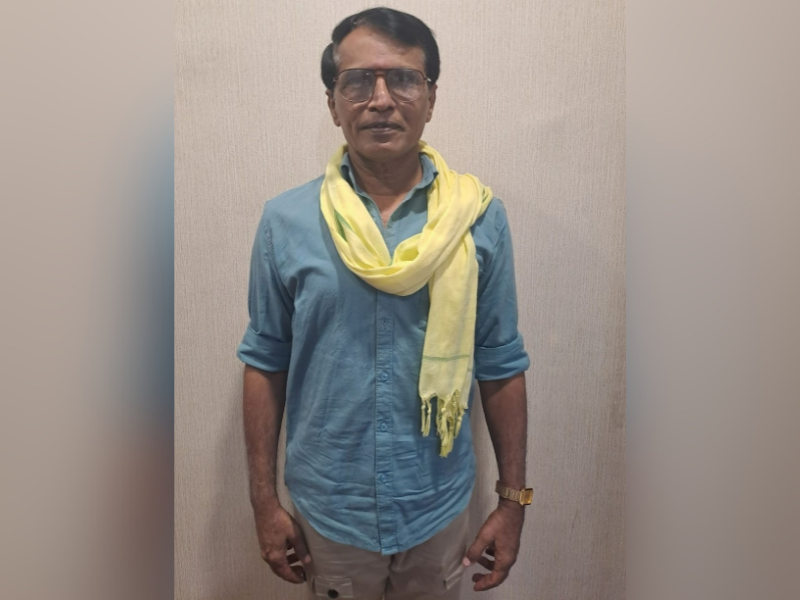
Mallojula Venugopal Rao, alias Bhupathi, also known as Sonu Dada, hails from Peddapalli in the erstwhile Karimnagar district of Andhra Pradesh. Today, Peddapalli is a separate district in Telangana.
Recalling his early life, he said, “My father was a freedom fighter and a Congress party worker, while my mother held progressive views. We lived a life of dignity as a middle-class family. However, witnessing feudal tendencies in the area where we lived drew me towards socialism.”
Bhupathi studied up to Class 12 in Peddapalli, pursued a course at an Industrial Training Institute, and worked as an apprentice before completing his B.Com from a college.
His brother, Mallojula Koteshwara Rao, alias Kishenji, who was later killed in an encounter in Lalgarh, West Bengal, had entered the Naxalite/Maoist fold at an early stage. Bhupathi, too, joined the Radical Students’ Union in the early 1970s. With what he describes as “increased political sensitivity,” he eventually became part of the Naxalite movement.
Kishenji was much senior within the organisation, serving as the Andhra Pradesh State Committee Secretary, while Bhupathi began as an “ordinary worker” in the Naxalite fold.
“I was involved in military activities for the first one-and-a-half years, but later spent most of my life in the Naxalite fold, primarily in Gadchiroli forests, in political (ideological) roles,” he said.
- By Kartik Lokhande
The man well past 70 years of age, dressed in simple shirt and trousers, wearing a faint yellow scarf around his neck, with a broad grin on his face and briskness in his walk, was a part of the powerful Central Committee of the proscribed organisation Communist Party of India (Maoist) … till he surrendered last year before Chief Minister Devendra Fadnavis at Gadchiroli in Maharashtra. His surrender made national and international news, because he was treated as the ‘brain’ or ‘ideological teacher’ of the Maoists in India. And, rightly so, his surrender marked the beginning of the end of Naxalism or Maoism in India. Because, soon after, several top Maoists either surrendered or got killed in encounters across India. Now, much before the March 2026 deadline set by Union Home Minister Amit Shah, armed Maoism is on its deathbed.
However, what led to the fall of Maoism in India, apart from the resolute action and developmental push by the government under Prime Minister Narendra Modi? What marked the end of what was referred to as ‘romanticism of guns’ that once led to spread of the violent menace of Naxalism? When ‘NewsBharati’ travelled to Gadchiroli and interviewed Bhupathi, he revealed the answer to this as well as other questions.
In Bhupathi’s own admission, “Emphasis on violence or military action, and failure to correctly assess the changing scenario led to the fall of Maoism in India.”
“Ideology must develop and evolve with changing social realities. If it does not adapt to change, it loses relevance. In the 1990s came liberalisation policy, followed by its progression and impact on society. We failed in bringing about change in accordance with this, and could not change the ideology to give ‘appropriate direction’ to the ‘struggling masses’. I debated on various ideological points, pitched for change, analysed the impact of various laws including the Panchayat Extension to Scheduled Areas (PESA) Act and Forest Rights Act and tried to convince Maoist ranks and file to work for implementation of these laws so that it could benefit the people and thus increase mass base of the Maoists. However, CPI-Maoist leadership focussed mostly on military tactics and did not adapt to changing scenarios,” he elaborated.
The key figures behind the Left-Wing Extremist violence that first took place at Naxalbari in West Bengal in 1967, were Charu Mazumdar and Kany Sanyal. Later on, differences emerged between them because Mazumdar was in favour of ‘annihilation policy’ (violence and killing) and Sanyal favoured ‘mass line’ (increasing mass base). Did this ideological rift continue through the history of Naxalism to the present-day Maoists?
Bhupathi responds to the question with a serious tone, “In 1975, we prepared a Self-Critical Report to analyse Charu Mazumdar, who had said that ‘China’s Chairman is Our Chairman’. During that period, several statues of reformers were demolished in West Bengal. Our party identified the problems, and reached out to people post-Emergency. This had its impact and Naxalites expanded to more than 150 districts in 16 States. But, when PLGA was formed after the emergence of CPI-Maoist through the merger of Maoist Communist Centre of India active in the north and People’s War active in Maharashtra and the south, focus again shifted to militarisation. And, this proved to be a detriment.”
Bhupathi along with 60 cadres surrendered before Maharashtra Chief Minister Devendra Fadnavis in Gadchiroli, in October 2025. Source: X
Though Bhupathi has surrendered, abjuring the path of violence, he has been saying that he would ‘continue working for the people’. So, has he really left the violent ideology? He replies, “Situation has changed and ideology could not keep up. We had joined the ‘revolution’ for the people and hence grabbed the gun. Now, the situation has changed and hence we have left the gun and taken the Constitution in hand.”
The response this question evokes from the seasoned ideologue leaves one thinking what exactly does he mean. This leads to another question: What exactly does he mean when he spoke about continuing to ‘work for the people’? “We will continue working for people, in accordance with the Constitution. We will take up issues of people and try to resolve those through lawful means. We will work on the Forest Rights Act, PESA Act, education rights, fundamental rights etc. We will work in whatever the capacity the Constitution permits. We may even contest elections, and participate in making laws. We wish to lead people towards an exploitation-free society, that is without discrimination on gender and such issues,” says Bhupathi. To many, this sounds as if the surrendered Naxalites/Maoists have not left their ideology but are hinting at adoption of Constitutional methods. But, he does not give any direct answer to questions in this regard.
Among the actions taken by the government that hit the Maoists hard was demonetisation. Some of the surrendered Maoists have stated that demonetisation actually hit their funding very hard. Bhupathi, however, tries to downplay the impact and says, “People fund the Maoists. Demonetisation did have an impact on funding. But, despite the demonetisation in 2016, I survived, and surrendered only nine years later in 2025. We survived despite demonetisation as funds are available. The only thing is that people moved away from armed methods and we pursued another direction. This created a gap between us and the people.”
Did people move away from the Maoists because of developmental push by the Modi Government? Bhupathi nods in admission but fails to get rid of ideological bias that gets reflected in his reply, “We need to take people towards better development. World Bank, IMF reports show that income inequalities are increasing even as the country is witnessing fast pace of development.”
This drives to another question, whether the Maoists treat the ruling party BJP and the opposition party Congress differently? The Maoists’ documents categorise the ruling party as ‘primary enemy’ and the opposition as ‘secondary enemy’. Another factor that prompts this question is the allegations that there were ‘Urban Naxals’ in Congress leader Rahul Gandhi’s ‘Bharat Jodo Yatra’. He laughs, trying to dismiss the question, and says, “Only Rahul Gandhi will know that. I was in the jungle not aware of these things.” Later, Bhupathi adds, “We treat every political party as the ruling class. What is the difference between the policies of Congress and BJP? One party moves slowly, and another takes a faster route to development. All are implementing the economic liberalisation policies.” Highlighting the Maoist document ‘Strategy & Tactics’, he makes a curious supplementary statement that when serious crises came, even the arch enemies joined hands and became allies. Similarly, if the situation demands, Maoists also were not, and are not, averse to joining hands with the ruling classes, he adds.
‘Maoists failed to ‘utilise’ people’s agitations’
Popularly known as ‘Sonu Dada’ among the Maoist cadres in the Dandakaranya belt, Bhupathi observes that the Maoists failed to ‘utilise’ the people’s agitations. He elaborates that popular agitations reflect the sentiment of the society and offer the best opportunity to reach out to them and influence them. Citing some examples, he said that Maoists failed to make use of veteran social worker Anna Hazare’s agitation against corruption when it had become a national talking point. “Since 1975, people have participated in or supported various agitations ranging from railway workers’ agitation led by George Fernandes, Sampoorna Kranti agitation led by J P Narayan, farmers’ agitations etc. We failed to utilise these agitations to rally people,” he added.
But, Maoists had expelled their cadre named Darshan Pal from Punjab because he had participated in the farmers’ agitation of 2020-2021. Doesn’t this prove that Maoists did participate in farmers’ agitation?
Bhupathi admitted reluctantly, and quickly said that Darshan Pal had participated because he had ‘thought differently’ from the Maoist line. This exposed the gap between theory and practice of ideology. “It is one thing to say something in public domain, and another to practice ideology. People went in one direction, and we went in the direction of military action. We failed to understand the State and security forces, ignored their strength, and hence we shrunk. We even dismissed the Tactical United Front plan in practice, though it was there in documents,” he explains.
One tends to take this statement of ‘everything in documents, little in practice’ with a pinch of salt, given the network of front organisations taking up a variety of issues that aim at achieving ‘tactical unity’ with other organisations with anti-government sentiments.
Irrespective of skepticism, Bhupathi continues that when he tried to convince the Central Committee of CPI-Maoist to support implementation of PESA Act and rules regarding allotting land titles to tribals etc, he was branded as a ‘reformist’. In Gadchiroli, which was under the command of Bhupathi in a banned Maoist organisation, the PESA Act was implemented and it yielded good results, he says. But, due to opposition of the Maoists, it did not get implemented in Bastar in the adjoining state of Chhattisgarh. “Except in Gadchiroli, our party opposed its implementation elsewhere. But only Maoists are not responsible for non-implementation of the PESA Act. The government did not implement the laws sincerely, and the blame was pinned on Naxalites. Why was the law not implemented in Nandurbar, Bhandara, Gondia etc not affected by Naxalites?” he asks.
‘There is only one Maoism’
Confronted about the urban spread of Naxalites/Maoists, Sonu Dada said, “What is jungle Maoism, urban Maoism, and such shades? There is only one Maoism. as only one Mao existed. There cannot be different shades of Gandhian Socialism, Gandhian Marxism etc… only Gandhian thought. Similarly, there can’t be Urban Maoism, Jungle Maoism, Rural Maoism etc… there is only one Maoism.”
When the Maoist document ‘Urban Perspective: Our Work in Urban Areas’ focusses specifically on urban work, how can one deny the existence of ‘Urban Naxalism’ or Urban Maoism’?
In response to this confronting question, Bhupathi admitted that Maoists do have the ‘Urban Perspective’ document. But, he adds, “After our Unity Congress in 2007, our Urban In-charge Cherukuri Rajkumar alias Azad was killed in an encounter. Others also got killed gradually. This affected implementation of whatever has been said in our documents. We have lots of documents ranging from ‘Urban Perspective’, ‘Financial Policy’, ‘Woman Perspective’… but we could not implement those.”
If the document’s agenda could not be implemented, how some students who had been to Radical Students’ Union (that he had joined in his youth like many other educated Maoist leaders) raised slogans to glorify Maoist military commander Madvi Hidma during so-called air pollution protests in Delhi?
“It is different to raise slogans in cities, and to work on the field. The fact remains that Hidma could not be saved. We could not save even our General Secretary (Nambala Kesava Rao alias Basavraju),” Bhupathi replied, reflecting cynicism about urban supporters not joining underground work in jungles. This cynicism comes out directly next, “Lots of people write, think, speak. It has become fashionable for people to express themselves on social media. Due to this, Hidma also has become a commodity… someone writes and composes songs on Hidma, posts on YouTube, and tries to gain popularity and money. No one from urban areas remains in jungles…”
Those coming from urban areas claim to give money to the ‘movement’, but do they really give money to Naxalites in jungles, Bhupathi asks. Suddenly, as if something in this context cropped up in his mindscape, he referred to ‘a scandal’ involving hundreds of crores of rupees when Congress leader Bhupesh Baghel was Chief Minister of Chhattisgarh, and said, “Where does money go from the corporates and other entities?” Coming to the consciousness of the present, Bhupathi then offers no answer to his own question.
‘Rest assured that armed Maoism won’t
be there for at least two generations’
Now that several of top Maoist leaders like Basavraju, Madvi Hidma, Modem Balkrishna were killed in encounter with security forces, and hundreds of others including Bhupathi, Rupesh, Devji, Chandranna surrendering themselves before police, CPI-Maoist is facing an unprecedented leadership crisis. In fact, Maoism in India is on death-bed.
Asked about this leadership vacuum and if there is any plan at work among the Maoists, Bhupathi replied, “You can rest assured that armed Maoism will not be there for at least two generations. I may not be there to predict what happens next.” Also, he appealed to the lone surviving top Maoist leader Misir Besra to surrender and was confident that Besra would surrender soon. There are a lot of theories circulating about the old Maoist leader and former ‘Supreme Commander’ Ganapathy. Some say he is alive. Some suspect that he had moved to Nepal or the Philippines. On this, Bhupathi said that he last met Ganapathy in 2018. “I cannot say whether he also will surrender. I am not aware of his location,” he added.
“I have been telling many others to surrender, but they did not listen. There was a discussion once about Maoists dispersing in different directions due to increasing pressure from the security forces, and to stay in hiding in different parts of the country. I had cautioned that this would prove detrimental. Because, to live among the people even in hiding, one needs identity documents like Aadhaar Card. How would we get it? For our tribal comrades, this situation would have proved more dangerous. Devji and Hidma both had differences with me on this. After I surrendered, some called me traitor. After my surrender, differences developed between Devji and Hidma also. Had my proposal for surrender been considered, Hidma might have been alive,” he said, giving a nuanced understanding of the situation within CPI-Maoist over the issue of surrender.
On Che Guevara, Bhagat Singh, Dr. Ambedkar…
Naxalites in India have come a long way – from Marxism to Leninism to Maoism. What next? Who are they looking for as their next ideological icon? Some say it may be Che Guevara. Bhupathi smiles first in reply to a question in this regard, and then stonewalls, “Can’t say. In Maoist party, there was no discussion till the time I was there.”
As is common knowledge, Maoists often use the names of Bhagat Singh, Dr. Babasaheb Ambedkar to seek support of youths and other sections of the society. But, in their analyses, Maoists treat many reformers and freedom fighters as ‘bourgeoisie’. Asked about his take on these figures, Bhupathi ‘the Maoist ideology teacher’ replies, “We cannot call Bhagat Singh a Maoist. Everyone becomes revolutionary before becoming Bhagat Singh. Also, every true revolutionary is Periyar, Jyotiba Phule, Ambedkar, Alluri Sitaram Raju, Baburao Shedmake, Gundadhur etc. We should learn from everyone who has contributed to the cause of the people of this country, sacrificed for people. But, our party was opposed to these people. In my opinion, we should learn from Gandhi, Tilak, Savarkar and everyone in respect of their contribution to the cause of the people. Out of this viewpoint only, I initiated observance of the death anniversary of Savitribai Phule in Gadchiroli.”
“We are opposed to Jihadists’
Years ago, it had made headlines that some LTTE cadres had come to India to train the Naxalites in certain tactics. Having worked in the Naxalite/Maoist fold for over 40 years, Bhupathi reveals, “Some LTTE cadres were ideologically Marxists, and were opposed to its leader V Prabhakaran. After separating from Prabhakaran, they had come to India to give us training in tactics.”
Maoists have been allying with the separatists and their ‘front organisations’ had been instrumental in organising a convention in favour of ‘nationality struggles’ held in New Delhi in 2010. According to Bhupathi, “We had a seminar in Delhi way back in 1996. The ‘Seminar on Nationality Question’ was attended by delegates from the Communist International and others. We support federalism unlike Shiv Sena leaders like Bal Thackeray who had raised the slogan ‘Uthao Lungi, Bajao Pungi’ against South Indians. Today, politicians from Tamil Nadu and Bihar also are giving chauvinistic slogans. We do not support that. We support Buddha, who was in favour of federalism. Prime Minister Narendra Modi also has been trying to deepen integration of different parts of the country. We support this.”
However, support for ‘separatism’ in the name of ‘nationality struggles’ is different from federalism. Asked about this, Bhupathi replies, “We support self-determination, but do not support a region joining Pakistan. If some part of the country wants to exercise autonomy, there should be scope for it. We never supported terrorism in any of our resolutions, only referred to their demands.” Then, does he condemn the Jihadists? He says firmly, “We are opposed to Jihadists, terrorists.”
As far as the caste issue is concerned, Bhupathi says, “We favour casteless society. We consider Dr. Ambedkar’s approach of annihilation of caste. The government also is promoting inter-caste marriages … it takes a lot of time to bring about a change.” When pointed out that Dr Ambedkar carefully distinguished between Marxism and Buddhism and embraced the path of Buddha, Bhupathi candidly admitted that “Some people have distorted and misinterpreted Dr. Ambedkar’s thoughts to blend it with Marxism.”
To another question about ‘Liberation Theology’, some of the practitioners of which have been supportive of Maoists, he said that a lot of people in the world ‘practised different things for liberation’. To a question about Maoists’ stand on LGBTQIA++, Bhupathi gave a hearty laugh, folded his hands to avoid answering the question but gives a witty parting reply marking the end of the conversation, “I belong to the Boomer generation, and this question is about Gen-Z.”
---------------- PROFILE-----------------
Bhupathi: From student activism to Maoist leadershipMallojula Venugopal Rao, alias Bhupathi, also known as Sonu Dada, hails from Peddapalli in the erstwhile Karimnagar district of Andhra Pradesh. Today, Peddapalli is a separate district in Telangana.
Recalling his early life, he said, “My father was a freedom fighter and a Congress party worker, while my mother held progressive views. We lived a life of dignity as a middle-class family. However, witnessing feudal tendencies in the area where we lived drew me towards socialism.”
Bhupathi studied up to Class 12 in Peddapalli, pursued a course at an Industrial Training Institute, and worked as an apprentice before completing his B.Com from a college.
His brother, Mallojula Koteshwara Rao, alias Kishenji, who was later killed in an encounter in Lalgarh, West Bengal, had entered the Naxalite/Maoist fold at an early stage. Bhupathi, too, joined the Radical Students’ Union in the early 1970s. With what he describes as “increased political sensitivity,” he eventually became part of the Naxalite movement.
Kishenji was much senior within the organisation, serving as the Andhra Pradesh State Committee Secretary, while Bhupathi began as an “ordinary worker” in the Naxalite fold.
“I was involved in military activities for the first one-and-a-half years, but later spent most of my life in the Naxalite fold, primarily in Gadchiroli forests, in political (ideological) roles,” he said.